Golf Cart Charging Time and Infrastructure
Charge times for lithium and lead-acid golf carts, how many bays a fleet needs, and the power, siting and safety questions to settle before installation.
Quick answer
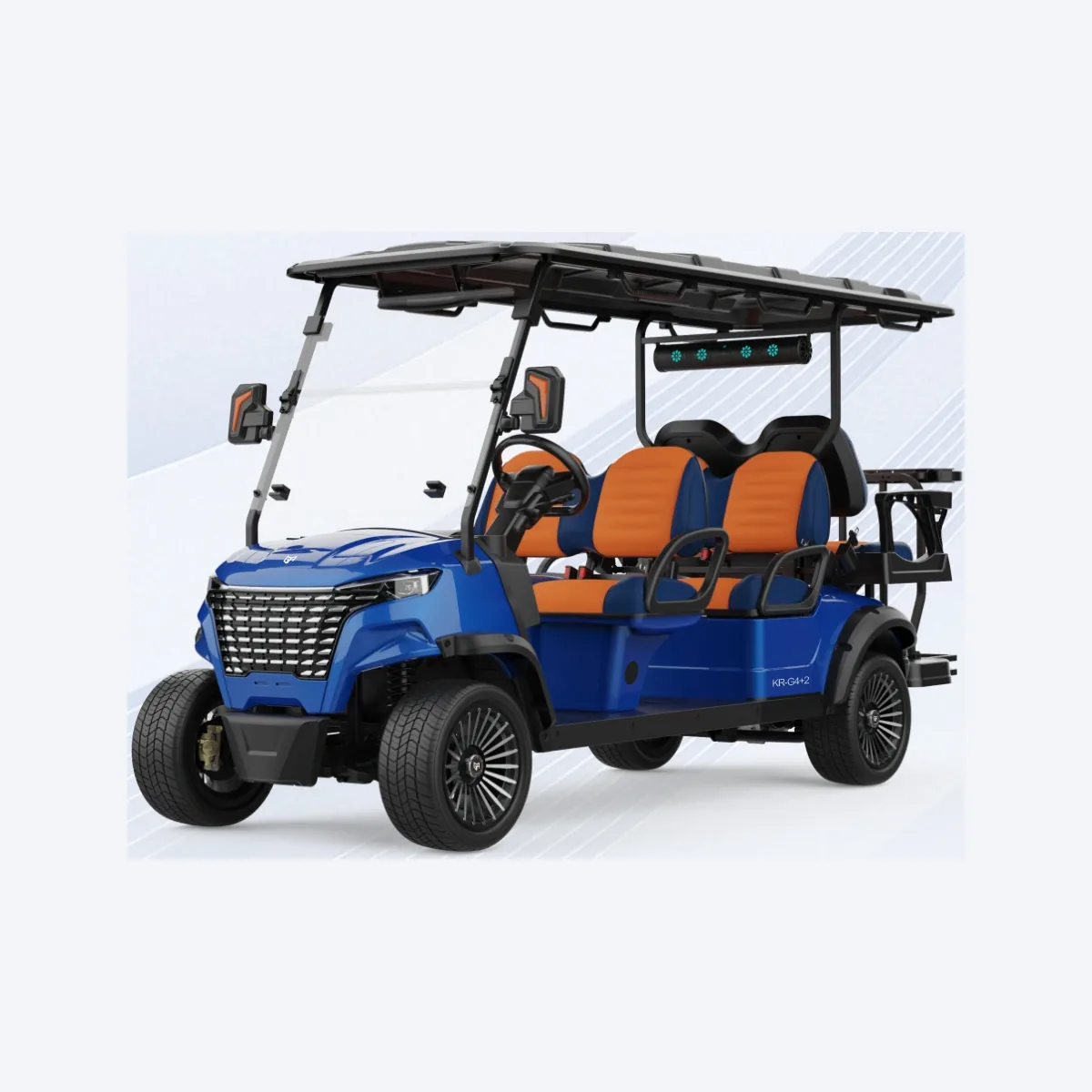
Ridge and Coast lithium models charge in 5 hours or less on a 48 V / 25 A charger; GC-A needs 6–8 hours and GC-B about 10 hours at AC 220 V. Size charging bays from the 5-hour window.
Charging time is not just a battery specification. It is a fleet capacity figure. A cart that needs ten hours to recharge cannot cover a second shift, however good its range looks on paper. A cart that recharges in five hours can, provided the site has a bay free and the power to run the charger.
This guide sets out the charge times quoted for the models in this catalogue, the infrastructure questions that follow from them, and the checks to complete before a charging area is built or expanded.
How long does each model take to charge?
The numbers are stated per model family, because the pack and charger are matched at the factory.
| Model family | Pack | Charger | Charge time | Rated range |
|---|---|---|---|---|
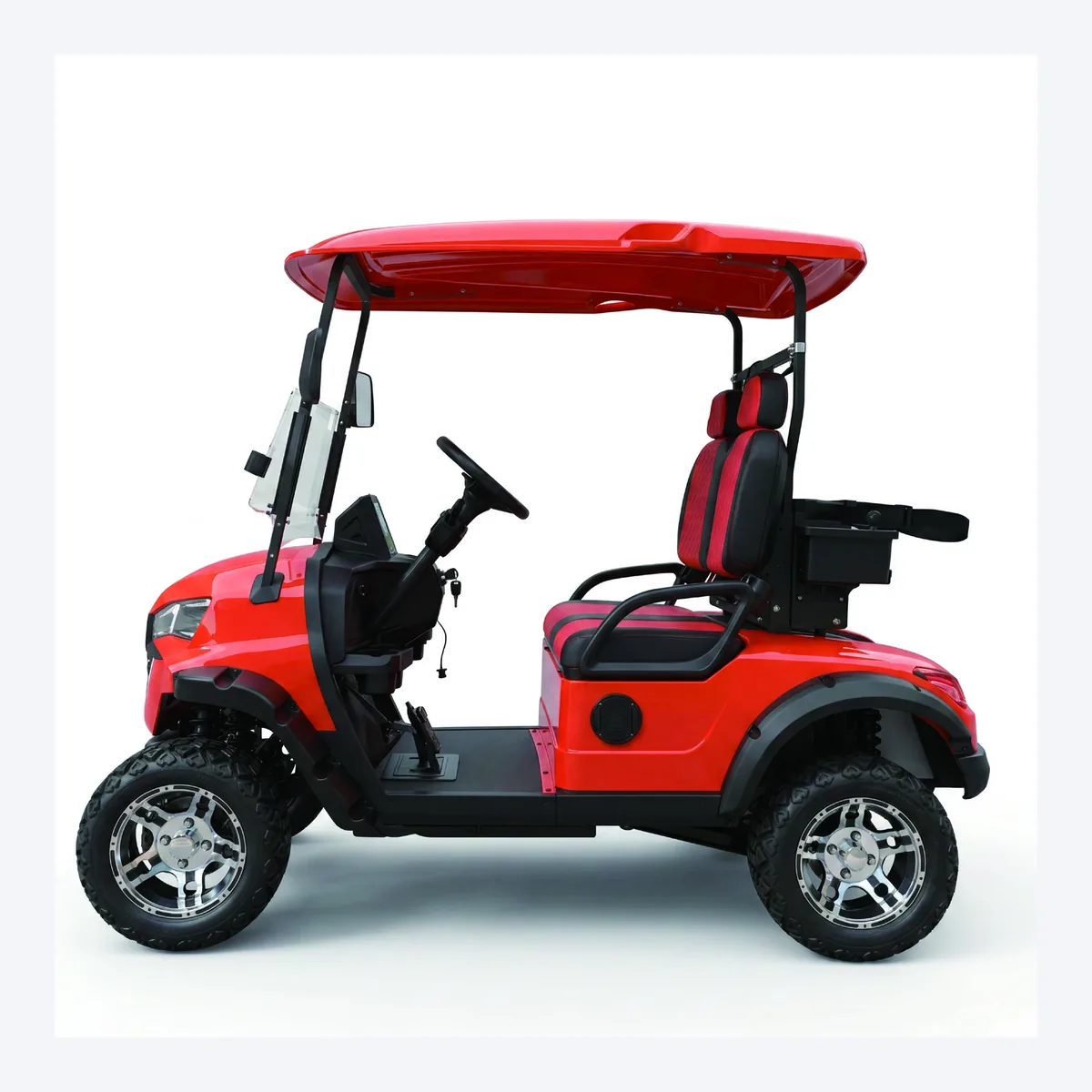
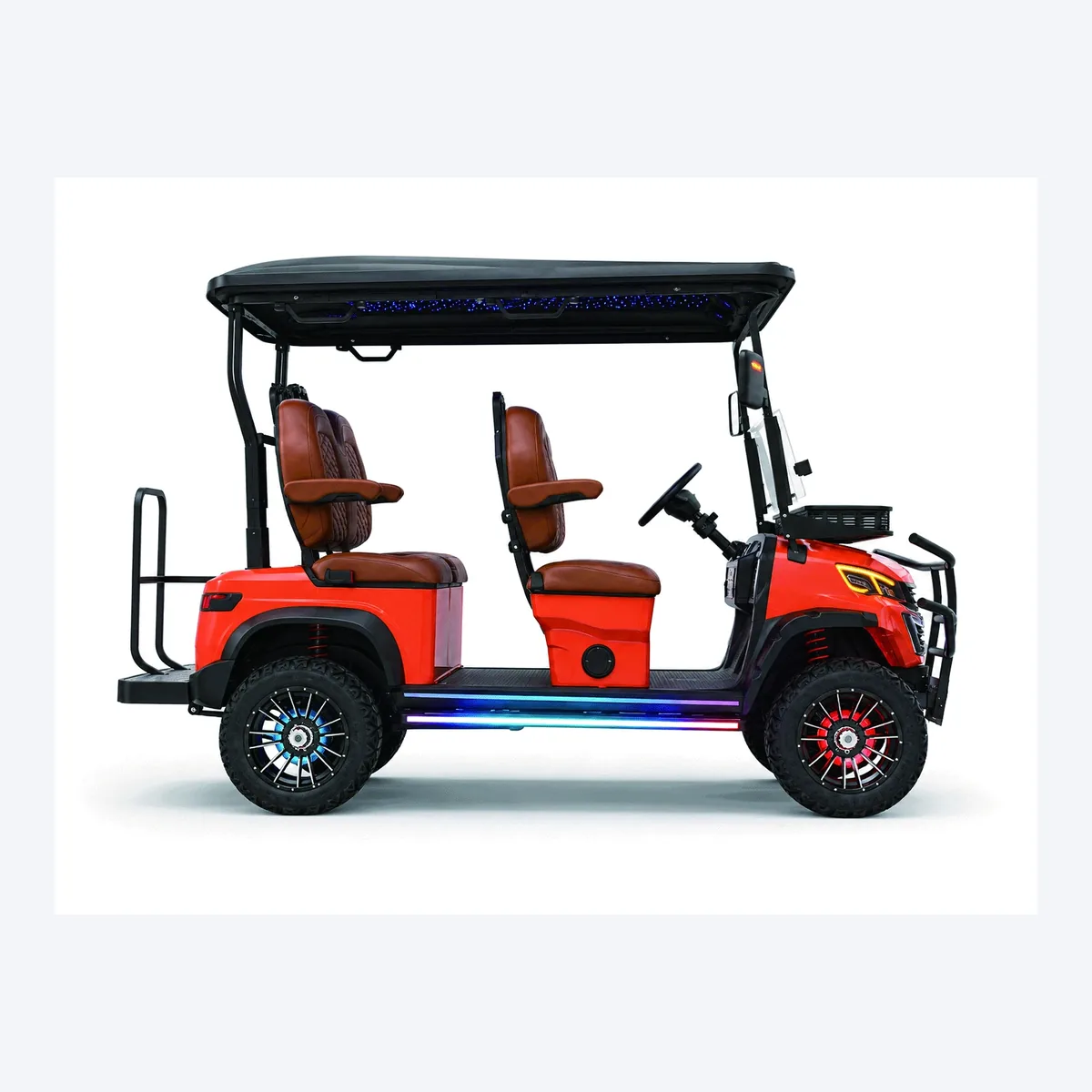
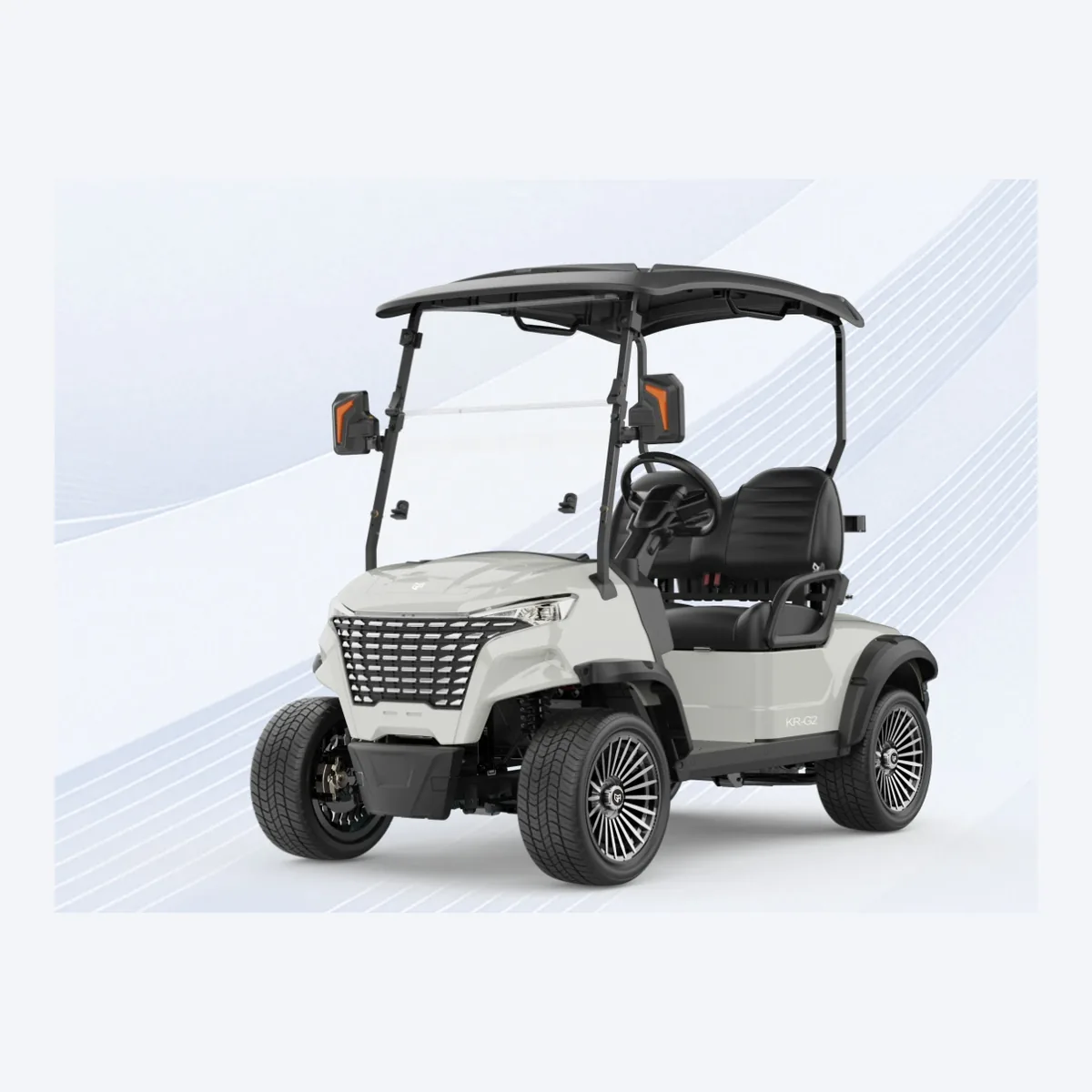
| Ridge and Coast (KR-G2, KR-G4+2, KR-P6, KC-G2+2H, KC-P4, KC-P6H) | 51.2V 105Ah LiFePO4 | 48V / 25A onboard | ≤ 5 hours | 30–35 miles (48–56km) |
| GC-A | Lead-acid or LiFePO4 | Onboard, AC 220V | 6–8 hours | 80–100km |
| GC-B | 60V 105Ah lead-acid | Onboard, AC 220V | 10 hours | 60km |
These are full-charge times from a discharged pack. A cart returned at half charge will finish sooner, and a cold pack may take longer. Quote the full-charge figure when planning, because it is the worst case a shift plan has to absorb.
What actually sets the charging time?
Four things: the capacity of the pack in amp-hours, the output current of the charger, the state of charge at plug-in, and the temperature. The charge profile also matters, because the last part of a charge tapers to protect the cells.
The arithmetic is simple. A 25A charger moving 105Ah needs a little over four hours of bulk charge; the quoted five-hour figure allows for the taper and for the pack not being perfectly empty. That is why the 48V / 25A onboard charger and the 51.2V 105Ah pack should be treated as one unit. Fitting a larger charger is not a drop-in upgrade: the inlet, wiring, BMS limits and thermal design all have to support it.
A longer charge time is not a defect. The GC-B’s ten-hour charge at AC 220V is the natural match for a lead-acid pack on a fixed overnight routine. The mistake is buying that routine for a site that needs the cart back in the afternoon.
How many carts can one charging area serve?
Start with the return pattern, not the fleet total. If six carts come back at the end of the day and each needs five hours, one bay can charge roughly four carts in a 24-hour period, but all six need to be ready by morning. Six bays finish the job in five hours; three bays finish in two batches, around ten hours; two bays take about fifteen hours and leave no margin.
For a ten-hour lead-acid charge, the same six carts need six bays to be ready overnight, or a longer window. That is the hidden cost of a slow charger: not the electricity, but the concrete and the real estate.
Opportunity charging changes the sum. If carts rotate through one bay during the day, a five-hour pack can take a top-up between guest waves and leave the evening peak smaller. A lead-acid pack on a ten-hour charge cannot do that without disrupting the next departure.
Do we need three-phase power?
The GC-A and GC-B are quoted with AC 220V charging on a single-phase supply, and their charge times assume that supply. The Ridge and Coast models use an onboard 48V / 25A charger; confirm its input voltage and current for the destination market, and do not assume that a charger supplied for one market suits another.
A single 48V / 25A charger delivers about 1.2kW into the pack, and the input draw is slightly higher because of losses. One charger is a modest load. Six chargers running at once are not, and the total must be checked against the circuit, socket, cable and protection ratings.
Ask an electrician to design dedicated circuits from the charger nameplate. Do not daisy-chain multiple chargers from one domestic outlet, and do not assume that a circuit which runs a kettle will run a row of carts. RCD or GFCI protection, cable rating and local electrical rules all apply.
Where should charging bays go?
Put the bays where the carts already return, not where the power is easiest to reach. A bay that adds driving time for every cart, every day, is a bay the drivers will avoid.
The practical requirements are:
- a level, drained surface under cover or with weather protection;
- enough length for the longest model, up to 3.78m, plus clearance to walk around;
- cable reach without crossing a walkway or a vehicle route;
- ventilation if lead-acid packs charge there, because charging can release gas;
- clear labelling of voltage and chemistry, especially in a mixed fleet;
- fire equipment and signage to local rules;
- no blocking of emergency access or fire exits.
Charging is also a parking decision. If the bay doubles as overnight parking, the layout must let every cart leave in the morning without moving several others.
When is opportunity charging worth it?
Opportunity charging is worth planning when the site has a midday lull and the carts use lithium packs. The five-hour charge and the tolerance for partial charging make a top-up practical: a cart can take a short charge on the bay while the driver has a break, and return to service with more margin for the afternoon.
It is not worth forcing on a lead-acid fleet with a ten-hour charge and a fixed route. There, the better investment is usually enough bays to charge everything overnight, plus a spare vehicle for the occasional cart that misses its slot.
Write the charging plan before the vehicle order: charge time, bay count, input voltage, circuit capacity, siting and the shift pattern the site actually runs. The pack and the charger are supplied together; the infrastructure around them is the buyer’s half of the system.
The questions that decide the order.
How long does a golf cart take to charge?
The Ridge and Coast lithium models charge in five hours or less on the onboard 48V / 25A charger. The GC-A quotes 6–8 hours at AC 220V and the GC-B quotes 10 hours at AC 220V. Actual time depends on the starting state of charge and temperature.
How many charging bays does a fleet need?
Count the carts that return within the same window, divide by the number that can charge at once, and compare the result with the hours available before the next shift. A five-hour charge makes a single bay serve more carts per day than a ten-hour charge.
Can several carts charge on one circuit?
Only after a load calculation. Each charger draws current, and the total must stay within the circuit, socket and protection ratings. Ask an electrician to size dedicated circuits from the charger nameplate rather than adding carts to an existing outlet.
Is three-phase power required?
The GC-A and GC-B are quoted with AC 220V charging on a single-phase supply. The Ridge and Coast onboard charger input should be confirmed for the destination market. Several chargers running together still need a proper load and circuit design.