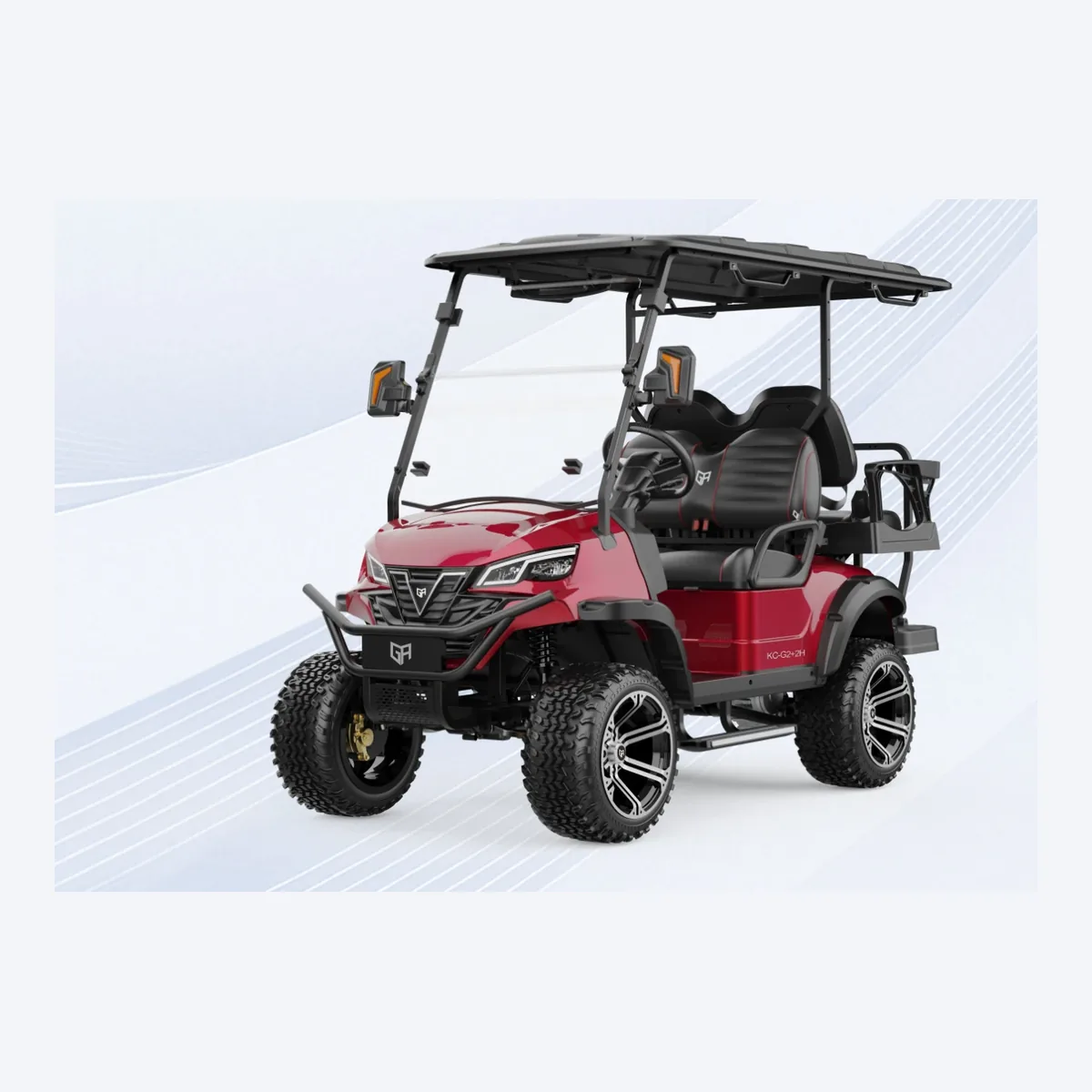
LiFePO4 vs Lead-Acid Golf Cart Batteries
A fleet buyer's comparison of the two battery chemistries used in this catalogue: charge time, weight, maintenance routine and the duty each pack suits.
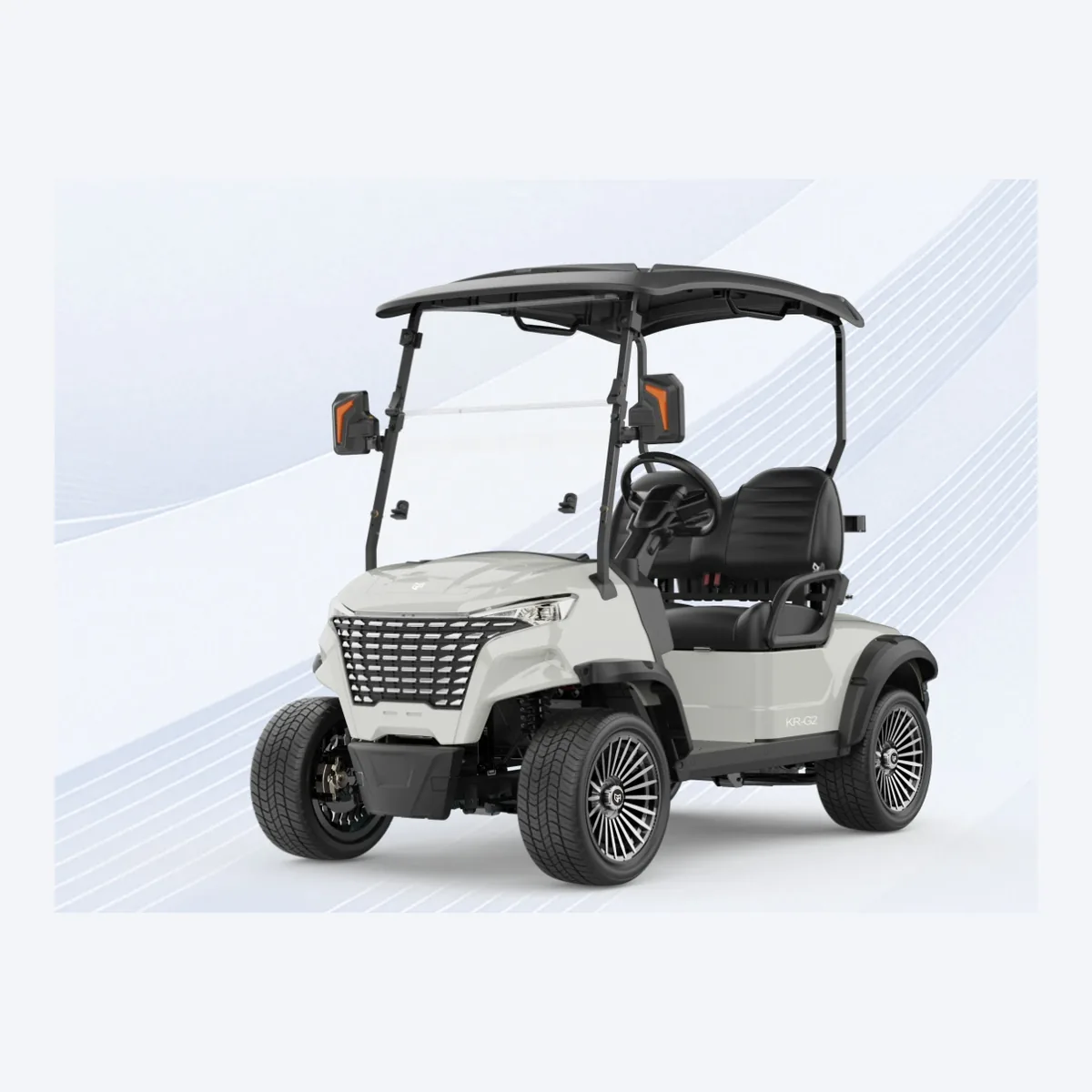
Chemistry is usually presented as a price question. In practice it is a scheduling question. The pack decides how long the cart is out of service, how much weight sits on the tyres, and what the maintenance team does between shifts. Two carts can share a body, a motor and a paint colour and still need completely different operating routines.
This guide compares the two packs offered in this catalogue — a 51.2V 105Ah LiFePO4 pack on the Ridge and Coast models and a 60V 105Ah lead-acid pack on the GC-B — and explains which duty each one fits.
What changes in daily use?
A lead-acid pack is built from lead plates and an acid electrolyte. It has the lower purchase price, it is familiar to most golf-cart technicians, and it prefers to be returned to full charge and kept there. It is also heavy and needs periodic checks of terminals and, on packs that require it, electrolyte level.
A LiFePO4 pack is sealed, uses lithium iron phosphate cells, and relies on a battery management system to protect the cells and report state of charge. It is lighter for the same usable energy, charges faster and tolerates partial charging better. On the Ridge platform the BMS supports Bluetooth monitoring.
The practical difference appears in the schedule. A lead-acid cart that takes ten hours to charge cannot cover a second shift without a second vehicle. A lithium cart that charges in five hours or less can.
Which pack suits a fixed route with overnight charging?
The GC-B is the clearest lead-acid case. Its 60V 105Ah pack, 60V 4kW motor and 10-hour charge at AC 220V suit a cart that leaves the same bay each morning, runs a predictable route and returns before the evening charge. A typical 18-hole course loop is 8–15km per round, so a 60km rating covers several loops rather than a single one.
The GC-A can also be specified with lead-acid, with a 6–8 hour charge at AC 220V and an 80–100km rating. That makes it the choice for a course or estate that runs a full-day loop and wants to keep the purchase price down.
The condition is discipline: the cart must come back to the charger, and the charger must be matched to the pack. A lead-acid pack left partially charged for long periods is not a good use of the chemistry.
Which pack suits multi-shift and opportunity charging?
The Ridge and Coast models use the 51.2V 105Ah LiFePO4 pack, a 48V / 25A onboard charger and a charging time of five hours or less. The rated range is 30–35 miles (48–56km) on a flat road. That combination is what makes a midday top-up practical: a resort can recharge between the morning and afternoon guest waves, and a campus can rotate carts through a bay while the crew takes a break.
Partial charging matters here. Carts do not always return at the same state of charge, and a chemistry that tolerates being topped up — rather than demanding a full cycle — is easier to schedule. That is the operational advantage of LiFePO4, more than any single headline number.
| Factor | 51.2V 105Ah LiFePO4 | 60V 105Ah lead-acid |
|---|---|---|
| Models in this catalogue | Ridge and Coast passenger and utility models | GC-B |
| System voltage | 48V | 60V |
| Charger | 48V / 25A onboard | 220V onboard |
| Charge time | ≤ 5 hours | 10 hours |
| Rated range | 30–35 miles (48–56km) | 60km |
| Weight | Lighter for the same usable energy | Heavier; exact pack weight on the datasheet |
| Partial charging | Tolerated; suits top-ups | Prefers a full charge |
| Routine work | Sealed pack, terminal and charger checks | Terminal checks, plus electrolyte checks where specified |
| Best fit | Resorts, campuses, multi-shift fleets | Fixed short route, overnight charging |
How does weight change the vehicle?
A lighter pack reduces total vehicle weight, and that changes acceleration, braking distance and ground pressure. In this catalogue, curb weights excluding the battery range from about 390kg for the two-seat KR-G2 to about 550kg for the six-seat KC-P6H. The pack adds weight on top, so compare complete configurations rather than bare chassis figures.
Do not choose a chemistry only to save weight. Tyre choice, suspension design and the route surface affect turf damage and ride quality more than a few kilograms. Choose the pack for the charging model, then confirm that the axle, tyres and brakes are matched to the loaded weight.
What maintenance does each pack need?
Lead-acid maintenance is conventional: keep the terminals clean and tight, check the electrolyte level if the pack requires top-up, keep the charger profile correct, and charge in a ventilated area. The battery datasheet states the interval and the limits; follow it rather than a generic rule.
LiFePO4 maintenance is lighter but not absent. The pack is sealed, so there is no water to add. Check the enclosure and terminals, keep the charger and its connections in good condition, and watch the state-of-charge reading. The BMS protects against over-charge and over-discharge, but it does not clean a corroded terminal or repair a damaged cable.
Both chemistries share the same discipline: charge with the correct charger, avoid leaving the vehicle at extreme temperatures, and record any fault before it becomes a roadside stop.
Can a lead-acid cart be converted to lithium later?
Technically yes, but it is a system change rather than a battery swap. A conversion needs a compatible charger, a BMS that communicates with the vehicle, suitable mounting and hold-downs, and a controller whose low-voltage cut-off matches the new pack. It should be planned at order; retrofit details vary by pack and by local electrical rules.
If lithium is likely within the life of the vehicle, specify a lithium-native platform such as the Ridge or Coast models at the start. That avoids the mismatch between an old charger and a new battery, and it keeps one service procedure across the fleet.
The questions that decide the order.
Is LiFePO4 always the better choice?
No. LiFePO4 suits sites that need fast charging, opportunity charging or lower vehicle weight. Lead-acid often suits a short fixed route with overnight charging and a tight purchase budget. The duty cycle decides, not the chemistry label.
Can I use the same charger for both chemistries?
No. The charger must match the chemistry, pack voltage and battery management system. A lead-acid charger should not be connected to a lithium pack, and a 48V charger cannot charge a 60V pack. Use the onboard charger supplied with the vehicle.
Does a lithium pack need maintenance?
Less routine work than lead-acid, but not zero. Check the enclosure, terminals and charger, keep the pack within the operating limits in its datasheet, and use the BMS state-of-charge reading for planning. The BMS on the Ridge platform supports Bluetooth monitoring.
Which chemistry lasts longer?
LiFePO4 generally offers a longer cycle life and tolerates partial charging better. Actual service life depends on depth of discharge, temperature and charging habits. Ask for the battery datasheet, which states the test conditions and rated cycles for that specific pack.