Scenic Attractions
High-throughput shuttles and trains for visitor sites
Sightseeing carts and trains for parks, zoos, theme parks and heritage sites, configured around route, station and visitor flow.
Quick answer
A visitor site typically mixes 6-seat shuttles with an 8–23 seat sightseeing train. Size the fleet to peak-hour flow, allow 90-second station dwell and keep a 5-hour charging window between loops.
Updated 2026-11-03 · Export Desk
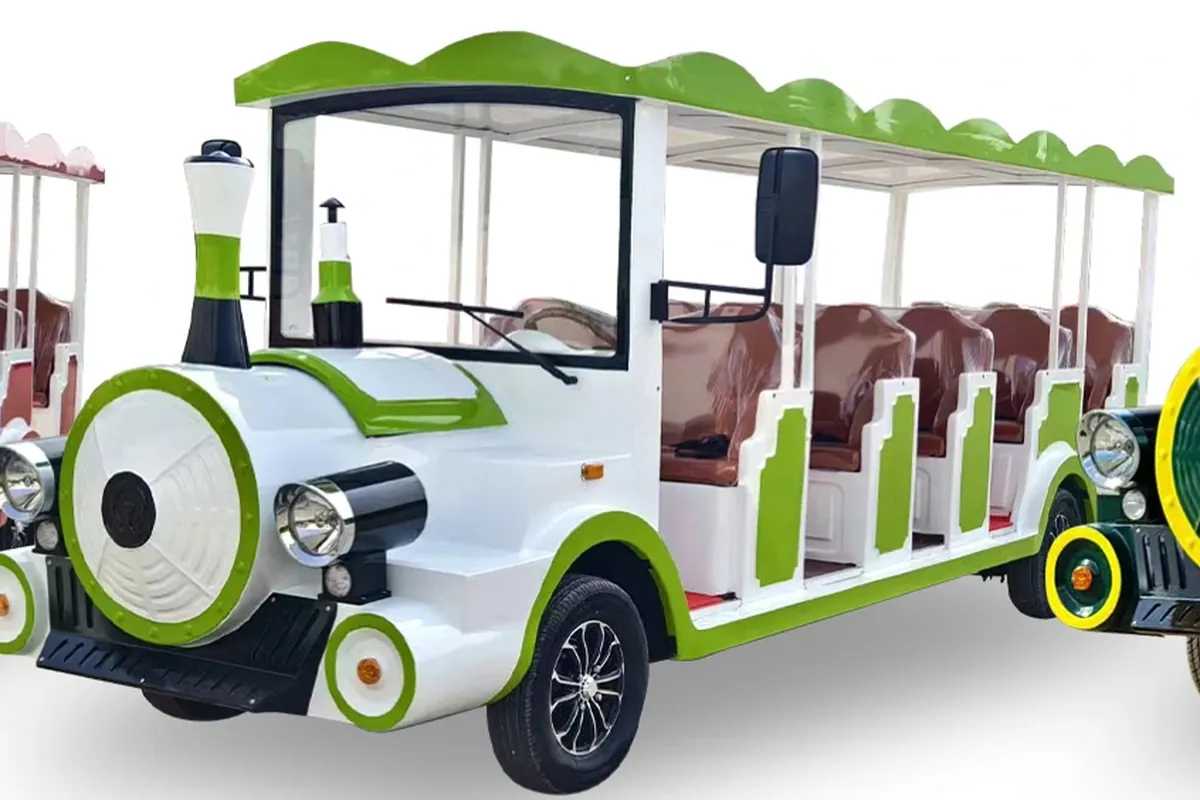
A visitor attraction has a throughput problem. The question is how many people can be moved per hour between the gate, the main exhibits and the exit without building a queue that ruins the experience. Vehicle length, station design and dispatch interval matter more than the vehicle’s top speed.
Open-sided sightseeing carts suit flexible routes and smaller groups; trains suit fixed loops with high volume. Both need a boarding plan: platform height, ticket control, accessibility and shelter. The vehicle specification should follow that plan, not precede it.
Seasonality changes the economics. A fleet sized for the peak season sits idle in low season; a fleet sized for the average creates queues at peak. Many operators mix a base fleet with short-term rental or phased delivery. Confirm the peak-week requirement before fixing the order.
Configuration starts from the site.
Route and station review
Gradient, surface and dwell time checked before specifying.
Fleet mix
Carts for flexible routes, trains for fixed loops.
Livery and theming
Vehicles matched to the attraction’s identity.
Models that fit this duty cycle.
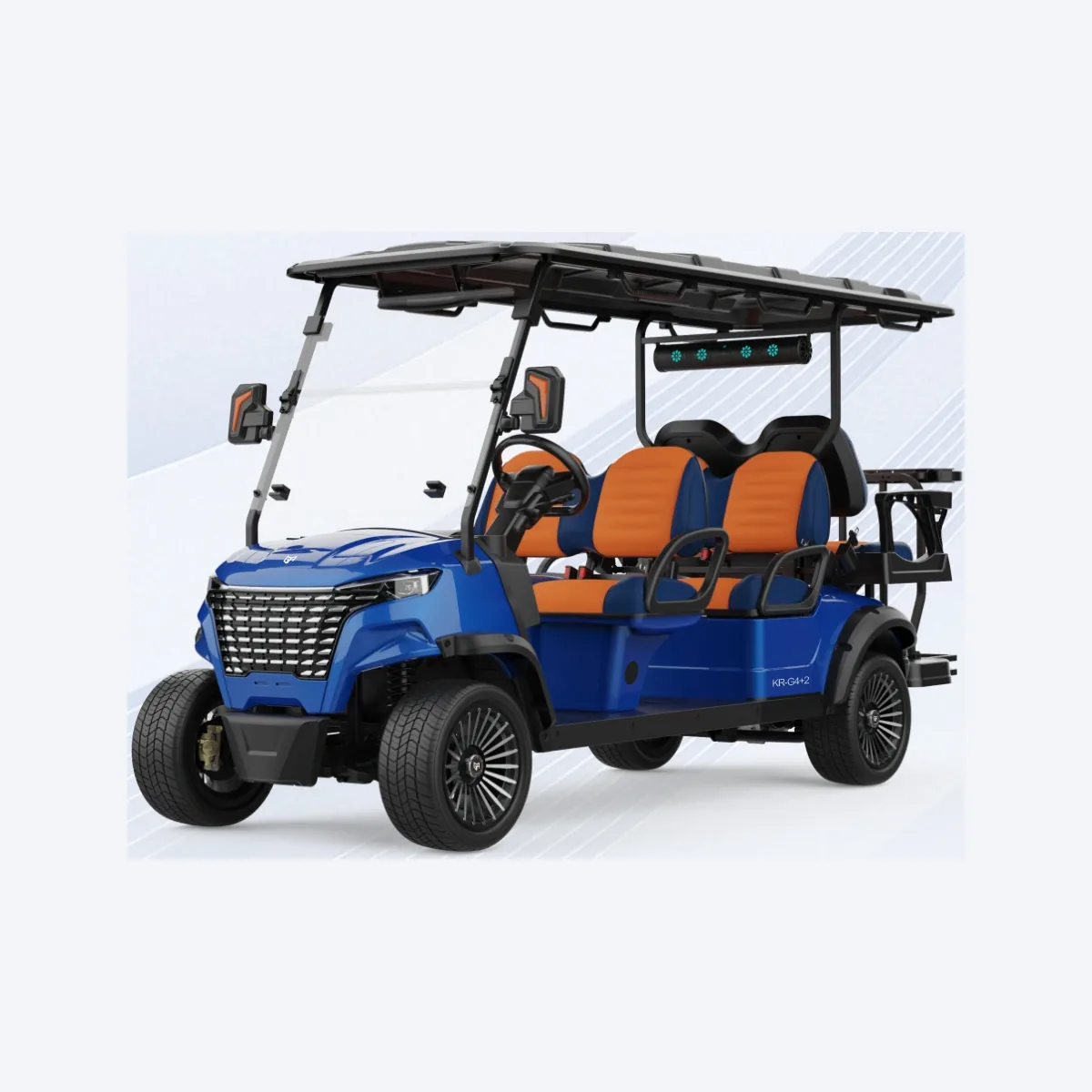
KR-G4+2 Ridge 6-Seat Lithium Golf Cart
Six seats on a 3.67 m lithium platform
- Range
- 30–35 mi
- Battery
- 51.2 V 105 Ah LiFePO4
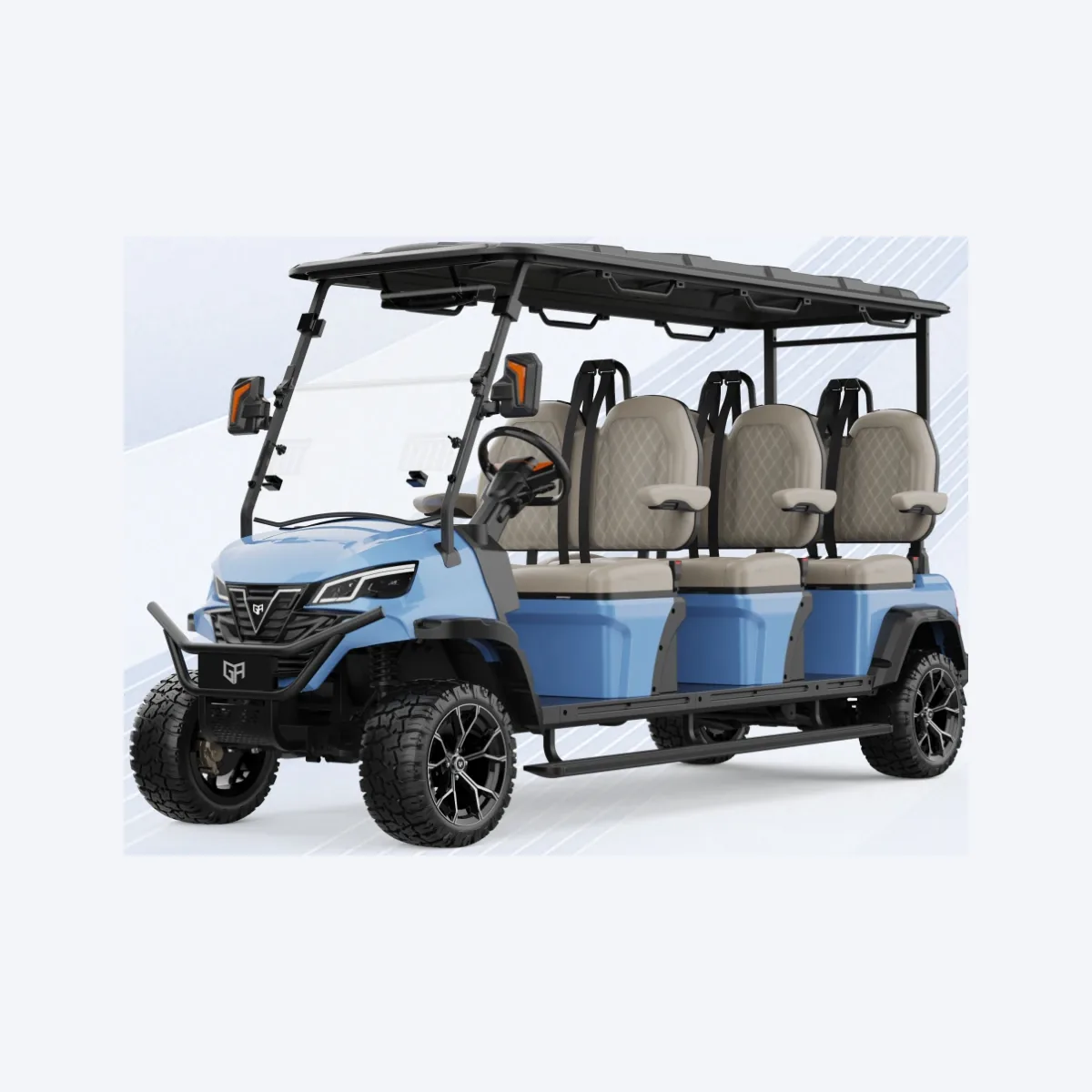
KC-P6H Coast Utility 6-Seat
Six seats, a flatbed and 190 mm clearance
- Bed
- Flatbed
- Clearance
- 190 mm
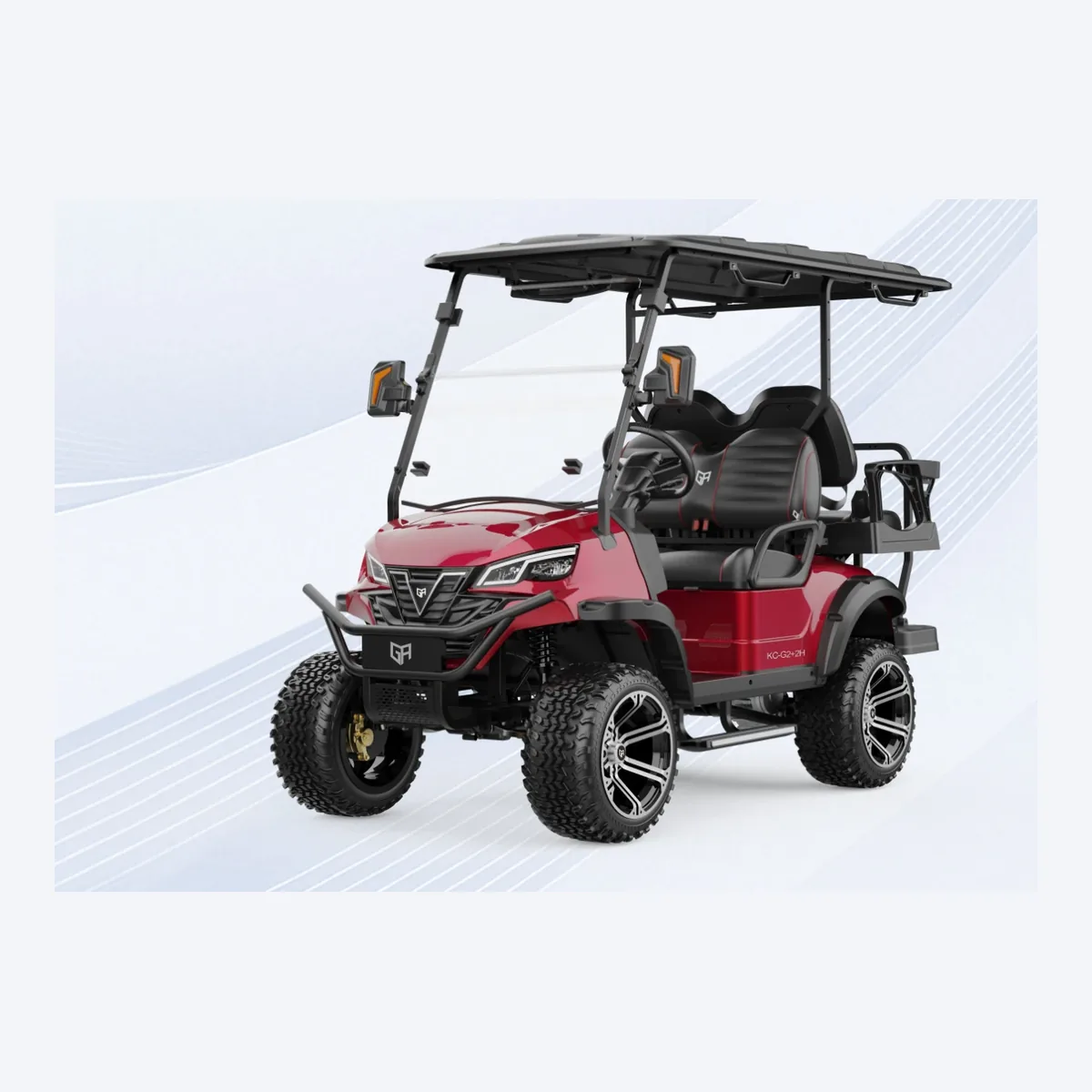
KC-G2+2H Coast 4-Seat Lithium Golf Cart
Compact four-seater with 190 mm clearance
- Range
- 30–35 mi
- Clearance
- 190 mm
The questions that decide the order.
How do I calculate the number of shuttles?
Divide peak-hour visitors by seats per vehicle, then multiply by the round-trip time divided by 60 minutes. Add a spare for maintenance. The result is a starting point; station capacity and ticketing often become the real constraint.
Are the vehicles accessible for wheelchairs?
Accessible layouts can be specified on some bodies, with wider openings, restraint points and a ramp or lift. Send the accessibility standard you need to meet; not every model can accommodate it, and the layout must be designed with the station.
Can the train run in the rain?
Open carriages can run in light rain with side curtains, but heavy weather may require enclosed carriages or suspension of service. Specify the climate and the operating policy before choosing the body.
What about seasonal storage?
Batteries should be stored at a partial state of charge in a dry, ventilated space, and the charging schedule maintained. Ask for the storage procedure for the specific battery chemistry before the low season.
Tell us the terrain, the seats and the port.
A useful quotation needs three things: where the golf cart will run, how many people it carries, and where it ships. Send those and we will come back with a configuration sheet.
Request a quote
Tell us the model, seating and destination. We will reply with a configuration sheet and quotation.