Electric Golf Cart & Golf Cart — 2, 4 and 6 Seater
An electric golf cart — also called a golf car in fleet and OEM use — is a low-speed battery vehicle for golf courses, resorts and campuses. This range covers 2-, 4- and 6-seat layouts, 48 V to 72 V systems, lead-acid or LiFePO4 packs, and ranges from about 48 km to 100 km depending on model and battery.
Updated 2026-11-03 · Export Desk
- 13
- Production models
- 2–8
- Seat layouts
- 48–72 V
- System voltage
- 2
- Battery chemistries
What is an electric golf cart?
An electric golf cart is a small, low-speed vehicle with a bench or row seat, a canopy and a battery-electric drivetrain. It is designed for short trips on private roads: golf courses, resorts, campuses, estates and attractions. Speeds are usually governed between 20 and 25 mph, and the vehicle is charged from a single-phase supply.
The format is simple, but the specification is not. Two carts that look identical can differ in seat count, battery chemistry, motor rating, ground clearance, braking and the documents supplied for export. Buyers should compare the order sheet, not the showroom photograph.
Is a golf cart the same as a golf car?
In everyday use, a golf cart and a golf car describe the same low-speed electric vehicle. “Golf cart” is the consumer term; “golf car” is common in OEM, fleet and industry documents. In the UK, Australia and New Zealand, “golf buggy” is the usual name.
The difference is naming and market expectation, not the drivetrain. A buyer sourcing a golf car for a resort fleet can use the same model pages. The dedicated Golf Car page explains the OEM and fleet angle; the Golf Buggy page covers the UK, Australia and New Zealand terminology.
- Golf cart: consumer and general search
- Golf car: OEM, fleet and industry usage
- Golf buggy: UK, Australia and New Zealand
How many seats do you need?
Seat count is the first decision. Two seats suit marshals, starters and maintenance. Four seats suit guest pairs and estate transfers. Six seats suit resort shuttles and tours. Eight-seat variants are available on request, but they need wider paths and a larger turning area.
The layout matters as much as the number. A 2+2 cart carries four people with two facing rearward; a 4+2 carries six. Rear-facing benches are popular in resorts, while golf courses usually prefer forward-facing layouts for bag access.
- 2 seats: staff and guest pairs
- 4 seats: 2+2 guest and estate use
- 6 seats: 4+2 resort shuttle
- 8 seats: on request
What voltage and battery should you choose?
This range uses 48 V, 60 V and 72 V systems. The 48 V lithium platform covers the Ridge and Coast models with a 51.2 V 105 Ah LiFePO4 pack and a five-hour charge. The Classic models offer 60 V lead-acid or lithium packs, with a 60–100 km range depending on configuration.
Lead-acid has the lower purchase price and suits overnight charging on fixed short routes. LiFePO4 costs more up front but charges faster, weighs less and tolerates partial charging, which matters for multi-shift sites and opportunity charging.
What range and speed can you expect?
Published range depends on the model and battery. The lithium Ridge and Coast models are rated at 30–35 miles (48–56 km) on flat ground. The GC-A classic is rated at 80–100 km with the larger battery option, and the GC-B lead-acid model at about 60 km.
Top speed is governed for site use. Most models are limited to 20–25 mph (32–40 km/h). Real range falls with load, gradient, temperature and stop-start duty, so a site with a 50 km daily route should plan an opportunity charge or a second pack.
What should you confirm before ordering?
Confirm the route, the charging window, the passenger count and the destination port. If the vehicle will use public roads, confirm the local vehicle category and registration requirements before production. Ask for the battery documents, packing list and inspection record with the quotation.
A complete order sheet should state the model, seats, battery, charger, tyres, clearance, options, Incoterm and documents. If a detail is not on the sheet, it is not part of the order.
The differences, in one table.
| Model | Seats | System | Range | Best for |
|---|---|---|---|---|
| GC-A | 2 | 60 V lead-acid / LiFePO4 | 80–100 km | Long course loops |
| GC-B | 4 | 60 V 105 Ah lead-acid | 60 km | Fixed short routes |
| KR-G2 | 2 | 48 V 5 kW / 51.2 V LiFePO4 | 30–35 mi | Marshal and guest pairs |
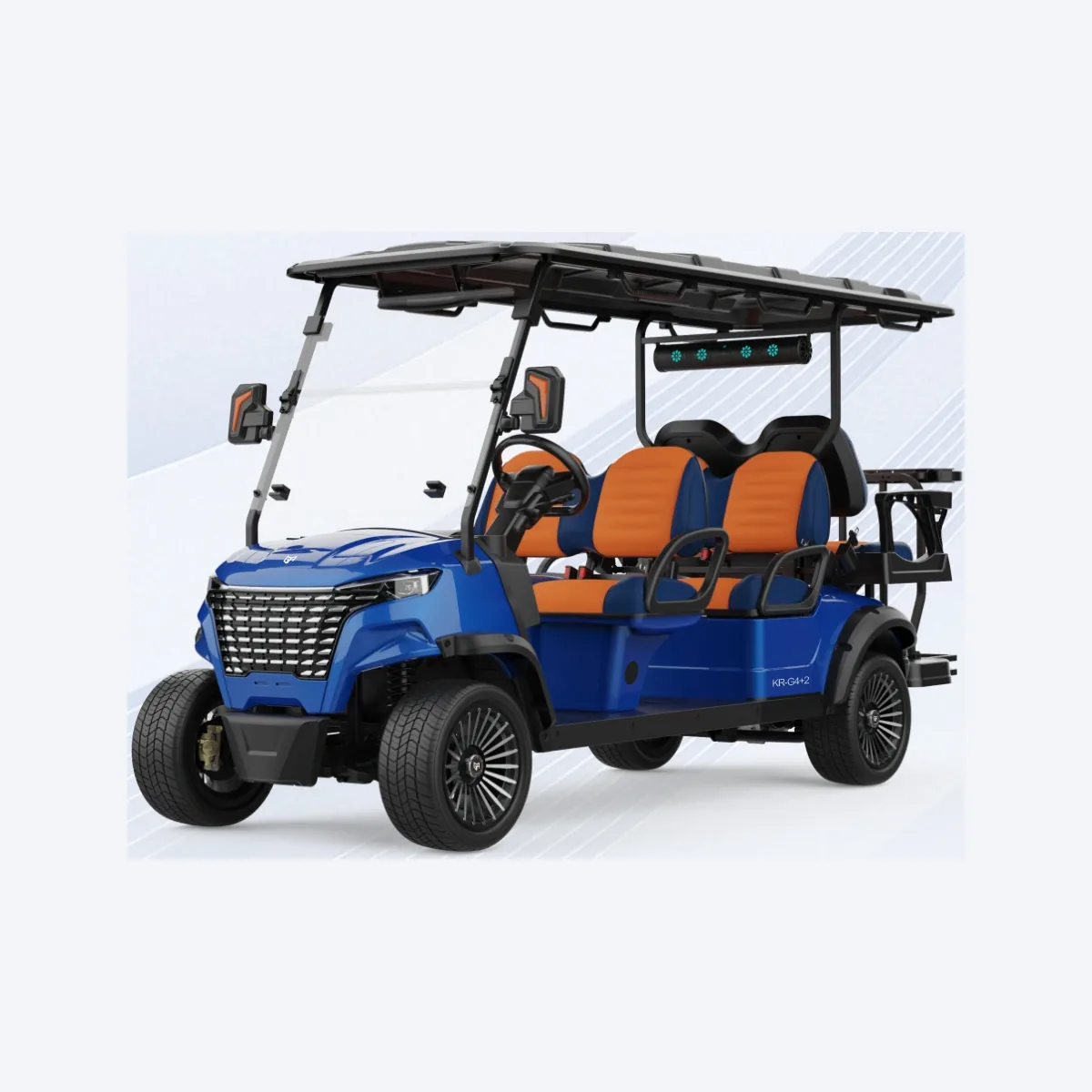
| KR-G4+2 | 6 | 48 V 5 kW / 51.2 V LiFePO4 | 30–35 mi | Resort and tour shuttle |
| KC-G2+2H | 4 | 48 V 5 kW / 51.2 V LiFePO4 | 30–35 mi | High-clearance guest cart |
Start with these models.
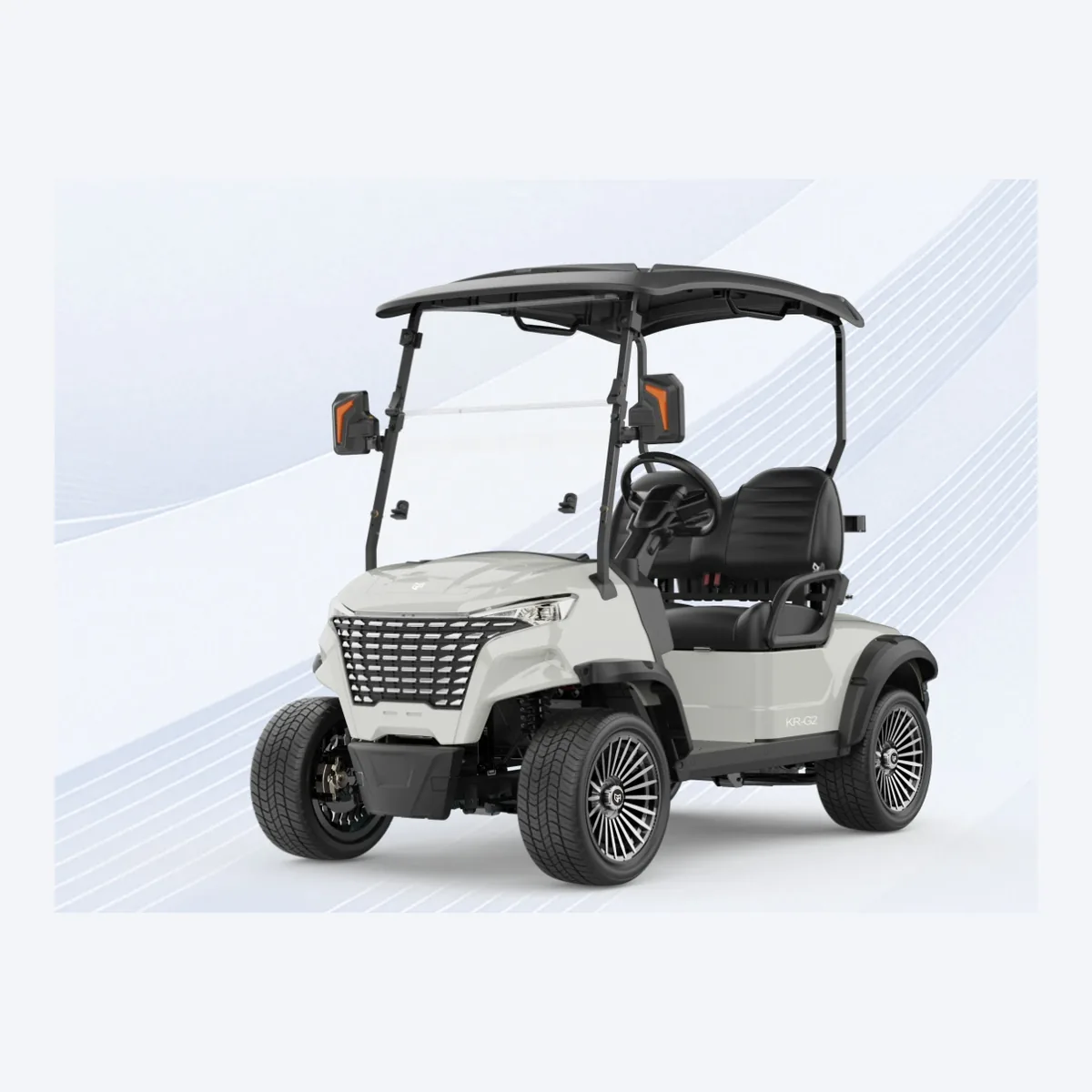
KR-G2 Ridge 2-Seat Lithium Golf Cart
Lithium two-seater with a 30–35 mile working range
- Range
- 30–35 mi
- Battery
- 51.2 V 105 Ah LiFePO4
KR-G4+2 Ridge 6-Seat Lithium Golf Cart
Six seats on a 3.67 m lithium platform
- Range
- 30–35 mi
- Battery
- 51.2 V 105 Ah LiFePO4
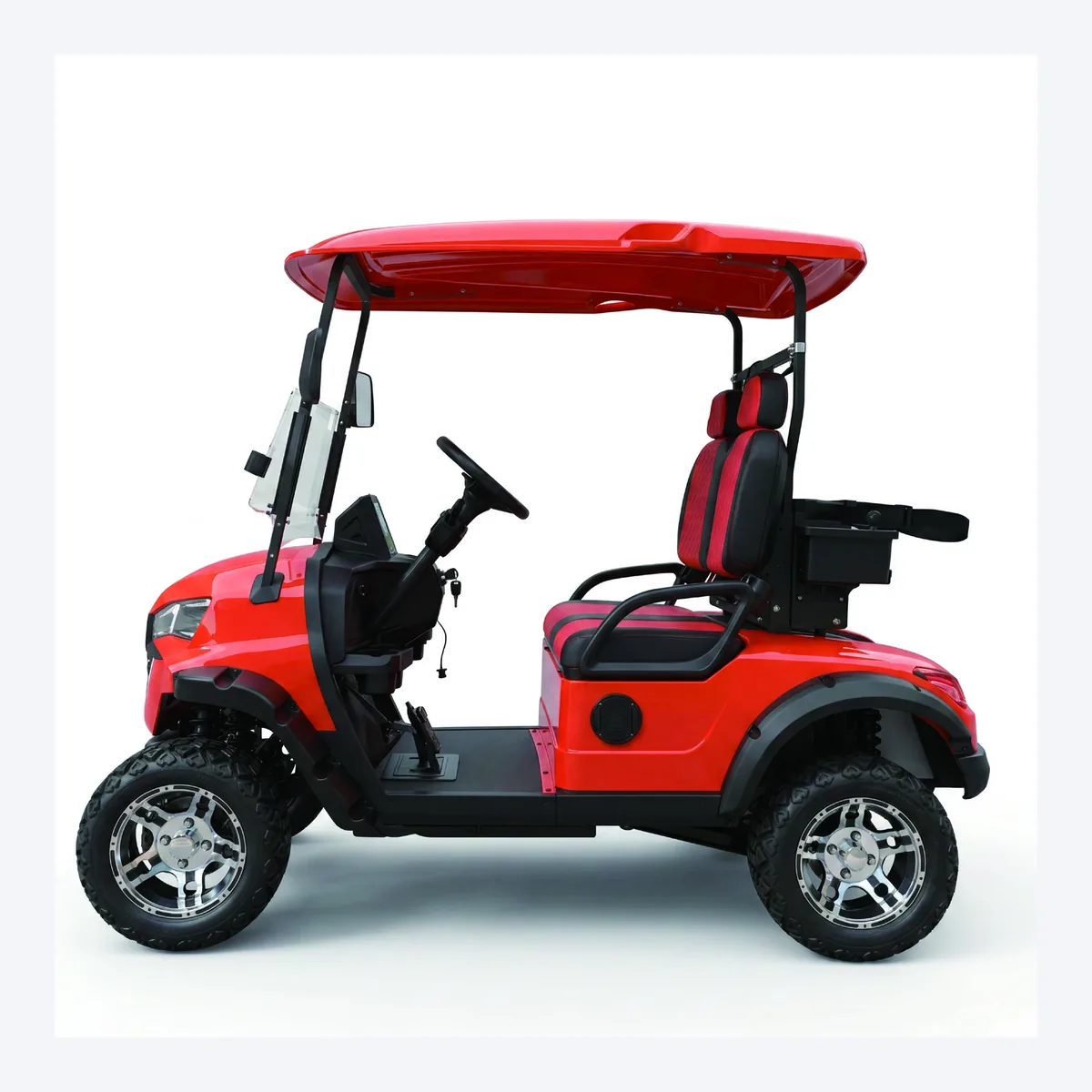
GC-A Classic 2-Seat Golf Cart
Long-range classic with lead-acid or lithium power
- Range
- 80–100 km
- Motor
- 4 / 5 / 7.5 kW
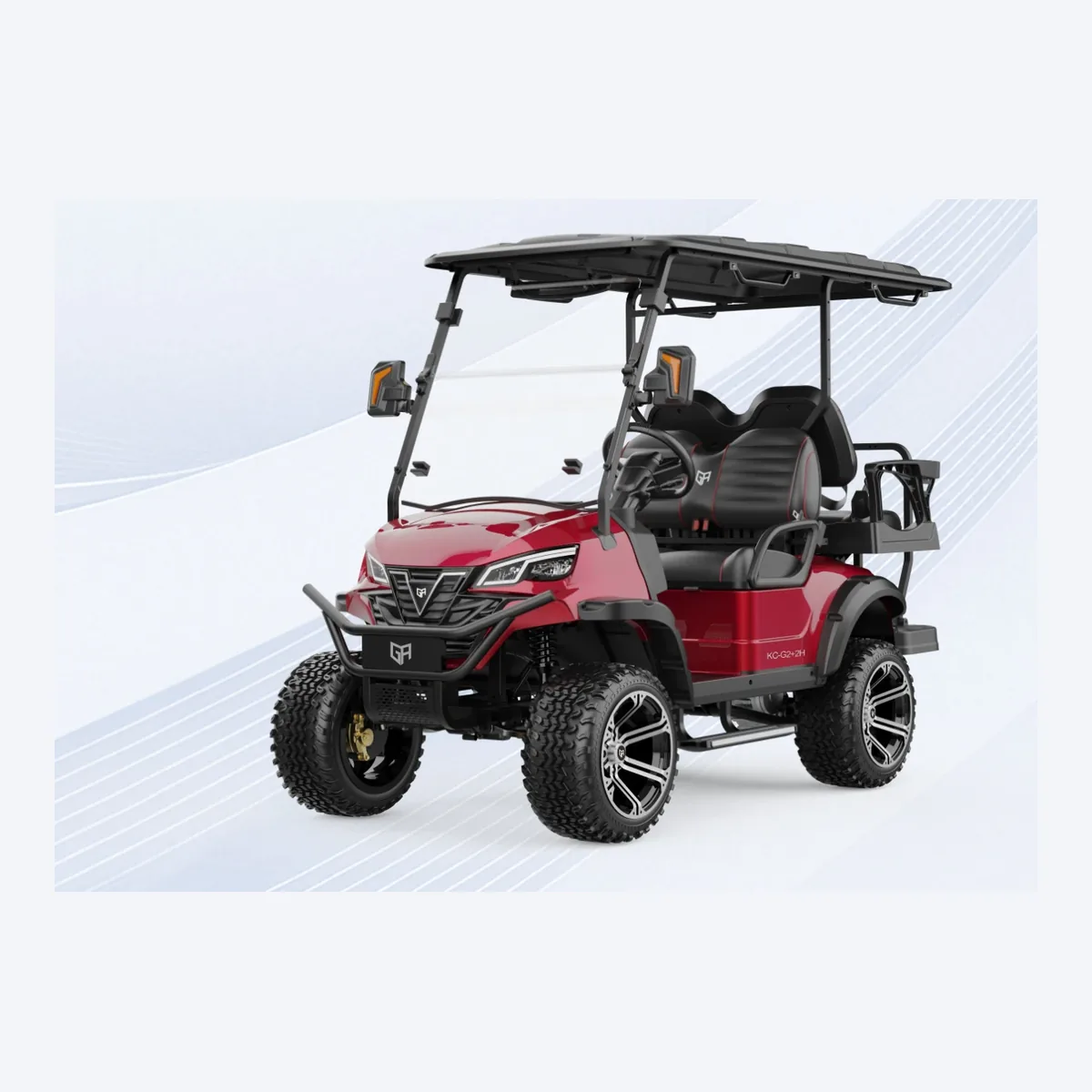
KC-G2+2H Coast 4-Seat Lithium Golf Cart
Compact four-seater with 190 mm clearance
- Range
- 30–35 mi
- Clearance
- 190 mm
The questions that decide the order.
How much does an electric golf cart cost?
Price depends on seat count, battery chemistry, motor rating, options, quantity and destination. We quote each configuration individually and list the included charger, documents and Incoterm, so offers can be compared on the same basis.
What is the difference between a golf cart and a golf car?
They usually describe the same vehicle. “Golf car” is common in OEM, fleet and industry usage; “golf cart” is the consumer term. We use both on this site because buyers search both, but the product and specification are the same.
Can an electric golf cart be used on public roads?
It depends on the destination market and the vehicle category. Many carts are used only on private courses, resorts and campuses. If road use is required, confirm the local LSV or registration rules before ordering; we do not claim street-legal status without the relevant documents.
Lead-acid or lithium?
Lead-acid suits fixed short routes with overnight charging and the lowest purchase price. LiFePO4 suits multi-shift use, opportunity charging and sites that need lower weight. The charging window and daily distance decide it.
What is the lead time?
Lead time is confirmed on the order confirmation and depends on the configuration and quantity. A production schedule with the inspection and dispatch dates is issued with the order.
Can I customise colour and logo?
Body colour, logo application, seat trim, wheels and some accessories can be specified at order. Send brand references before production; changes after the body is painted are limited.
What documents come with the order?
The order includes a packing list, commercial invoice, operation manual and battery UN38.3 and MSDS documents. Additional destination-specific documents are confirmed before shipment.
Do you supply spare parts?
Wear parts, lamps, mirrors, tyres and body panels can be ordered separately. A recommended spare-parts list is available with the quotation so the fleet can stock the most-consumed items.
Tell us the terrain, the seats and the port.
A useful quotation needs three things: where the golf cart will run, how many people it carries, and where it ships. Send those and we will come back with a configuration sheet.
Request a quote
Tell us the model, seating and destination. We will reply with a configuration sheet and quotation.