Golf Cart for Golf Course — Fleet Mix, Sizing and Turf
A golf course fleet usually mixes two-seat marshal cars, four-seat guest carts and a utility cart for the range. Size the fleet from peak tee-time dispatch, not total members. Turf pressure, turning radius and overnight charging matter more than top speed.
Updated 2026-11-03 · Export Desk
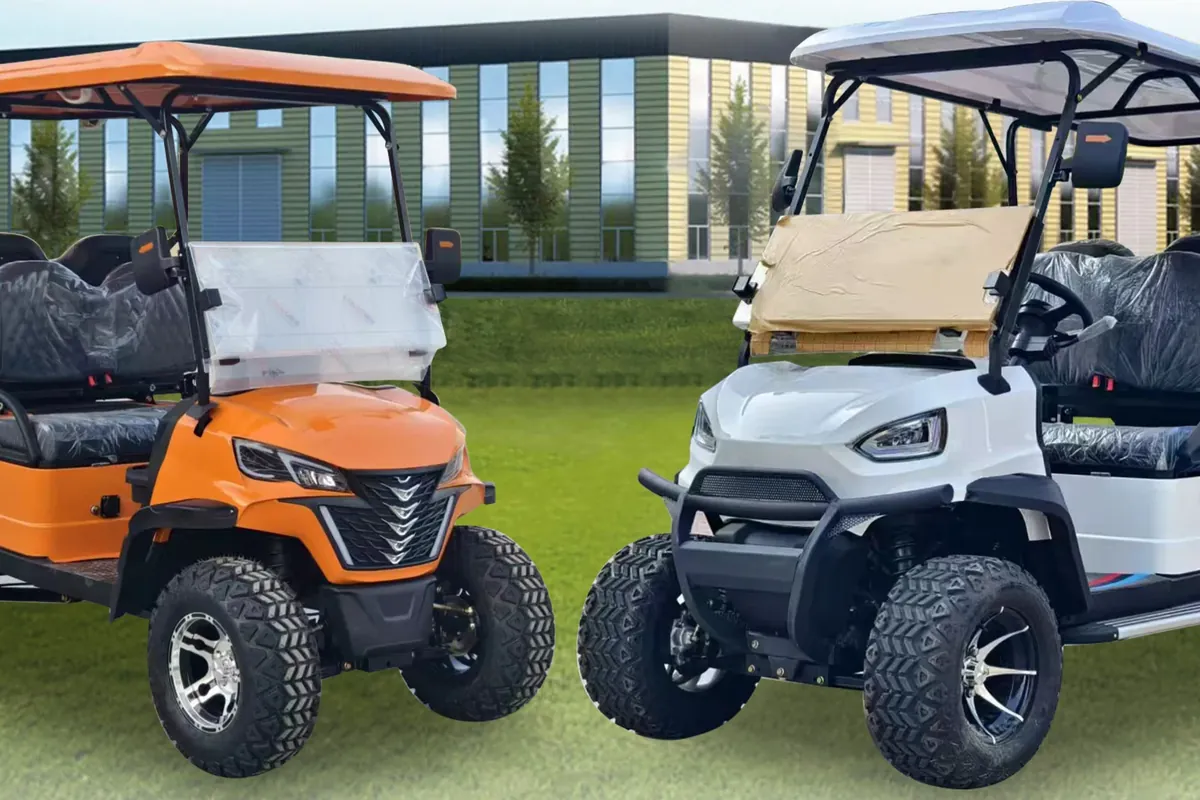
- 2/4/6
- Typical seats
- 4 m
- Turning radius
- 30–35 mi
- Lithium range
- Overnight
- Charging pattern
Which vehicles does a course need?
Most courses run three roles. Two-seat carts carry marshals, starters and maintenance staff. Four-seat carts carry guest pairs and bags. A utility cart handles range picking, supplies and event setup. Larger courses may add a six-seat shuttle for clubhouse transfers.
A mixed fleet works best when the vehicles share a platform. Common controllers, chargers and service procedures reduce training and spare-parts stock.
How many carts does a course need?
Start with the peak tee sheet. If the course dispatches a cart every 8–10 minutes in the busiest hour, the number of carts in play is the dispatch count multiplied by the round time. Add two to four spares for marshals, maintenance and breakdowns.
The fleet calculator on this site applies the same logic to holes, tee intervals, round time and spare ratio. Use it as a starting point, then check the cart path and parking capacity.
What matters for turf and charging?
Wide, low-pressure tyres and predictable torque reduce scuffing on fairways and approaches. Ground clearance of 140 mm suits paved paths; 190 mm suits gravel and kerbs. Confirm the course agronomist’s cart-path policy before choosing tyres.
Overnight charging on single-phase supply is the simplest pattern. Map the charging bays and confirm the outlet capacity before the fleet grows. Battery isolation switches and a written charging sequence are part of a safe yard.
Which models fit a course?
The KR-G2 is the lithium staff cart; the GC-A is the long-range classic for full 18-hole loops; the GC-B is the value four-seat lead-acid cart; the KR-P6 is the utility cart for range and supplies.
For a course that also runs resort transfers, the KR-G4+2 six-seater can cover guest groups. Keep it on the same lithium platform as the KR-G2 to share chargers and parts.
What should you do next?
Send the site brief for golf course: terrain, daily distance, passenger count, destination port and quantity. We will reply with a configuration sheet and quotation.
Request a quoteThe differences, in one table.
| Role | Model | Seats | Why |
|---|---|---|---|
| Marshal / starter | KR-G2 | 2 | Compact, lithium, 4 m turning |
| Guest pairs | GC-B | 4 | Value lead-acid, 60 km |
| Long loop | GC-A | 2 | 80–100 km range |
| Range / supplies | KR-P6 | 6 | Flatbed, lithium |
Start with these models.
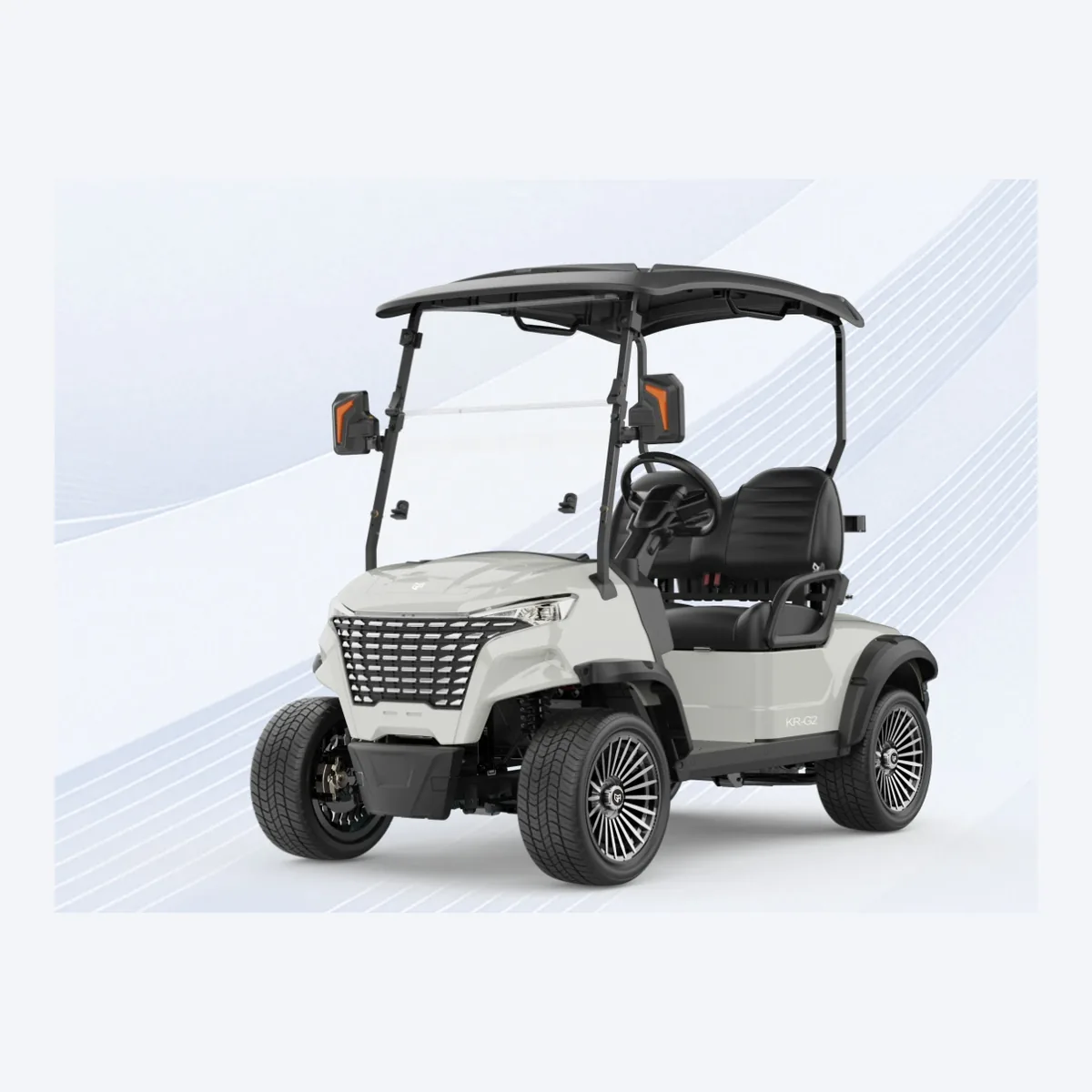
KR-G2 Ridge 2-Seat Lithium Golf Cart
Lithium two-seater with a 30–35 mile working range
- Range
- 30–35 mi
- Battery
- 51.2 V 105 Ah LiFePO4
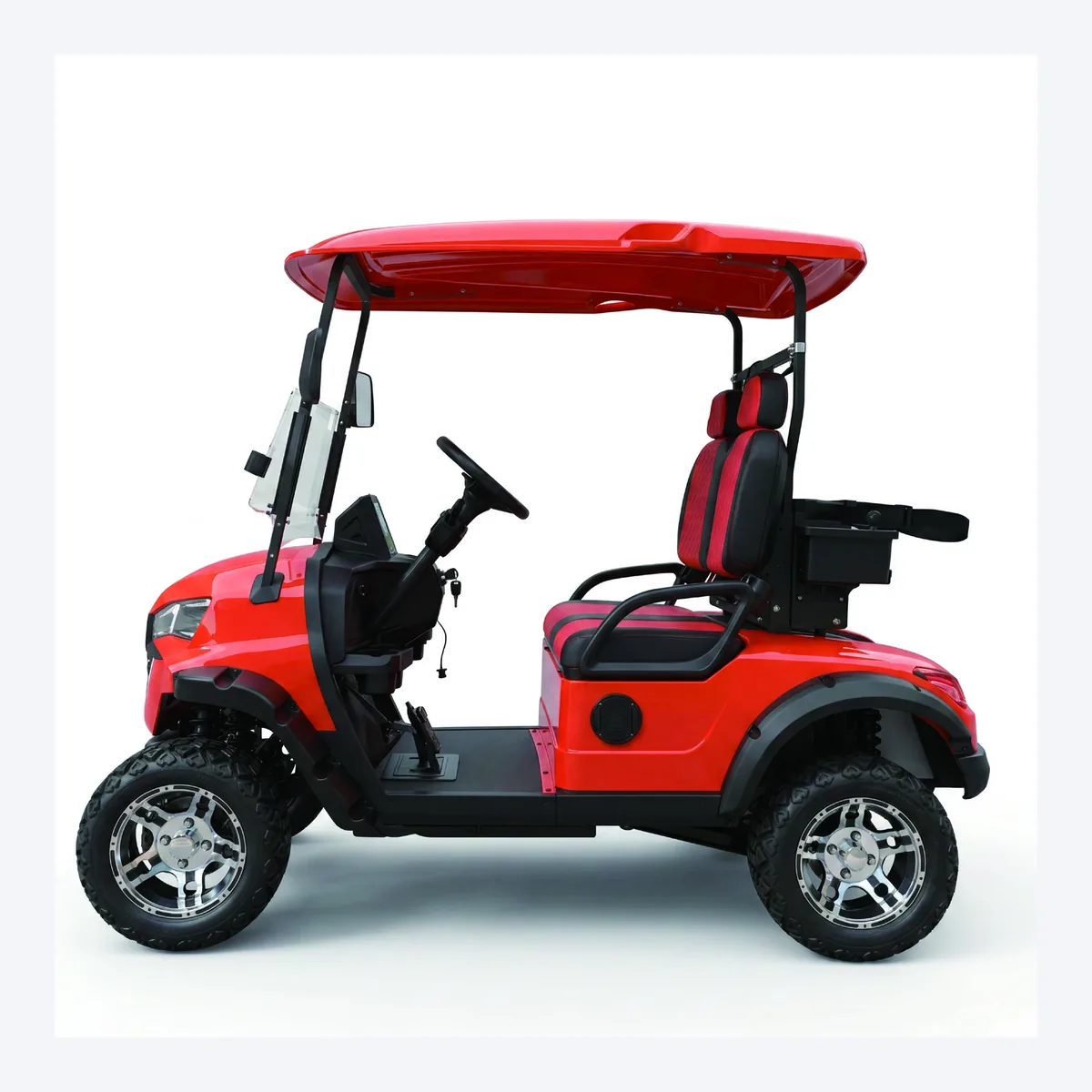
GC-A Classic 2-Seat Golf Cart
Long-range classic with lead-acid or lithium power
- Range
- 80–100 km
- Motor
- 4 / 5 / 7.5 kW
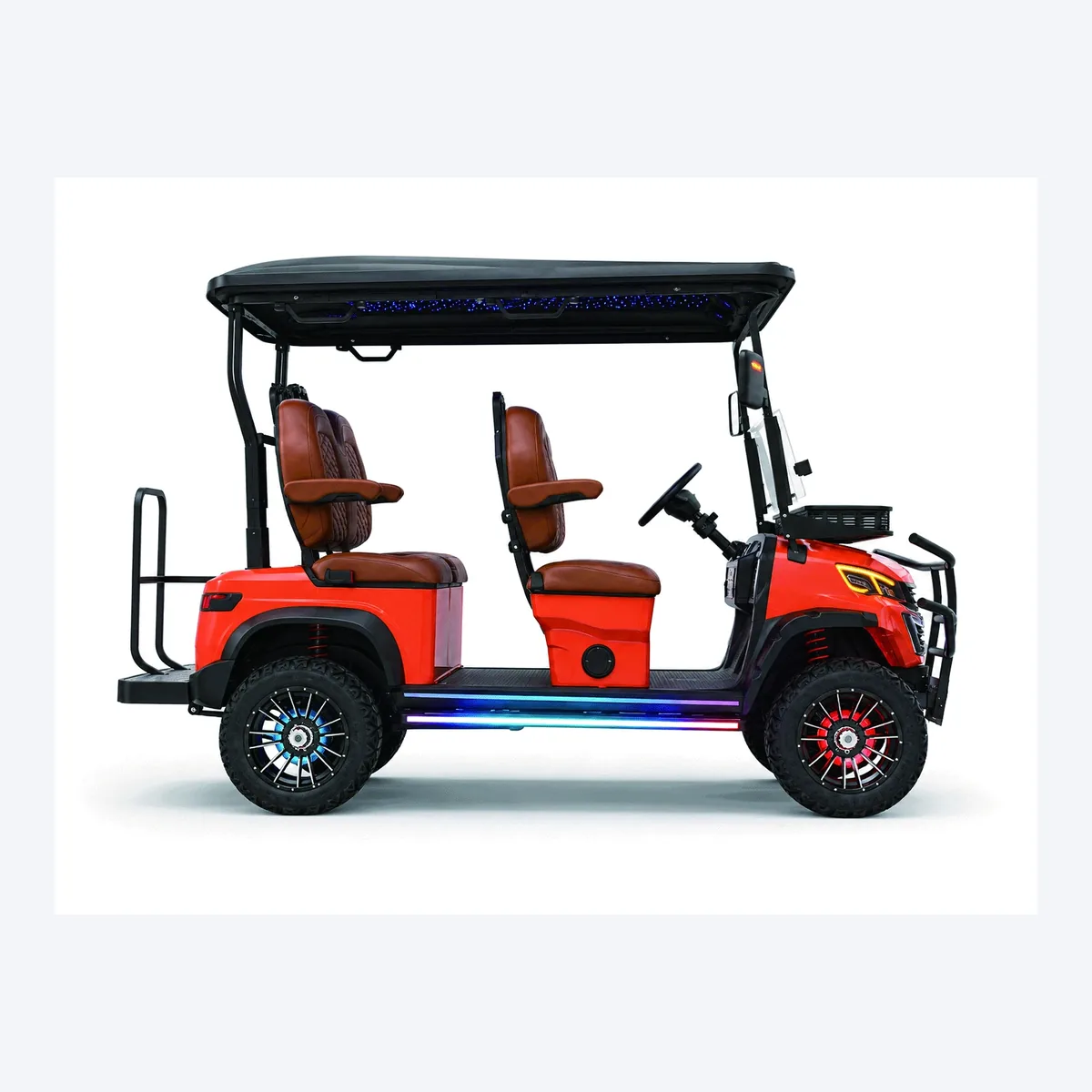
GC-B Classic 4-Seat Golf Cart
Four seats, 60 V lead-acid, straightforward ownership
- Range
- 60 km
- Motor
- 60 V 4 kW AC
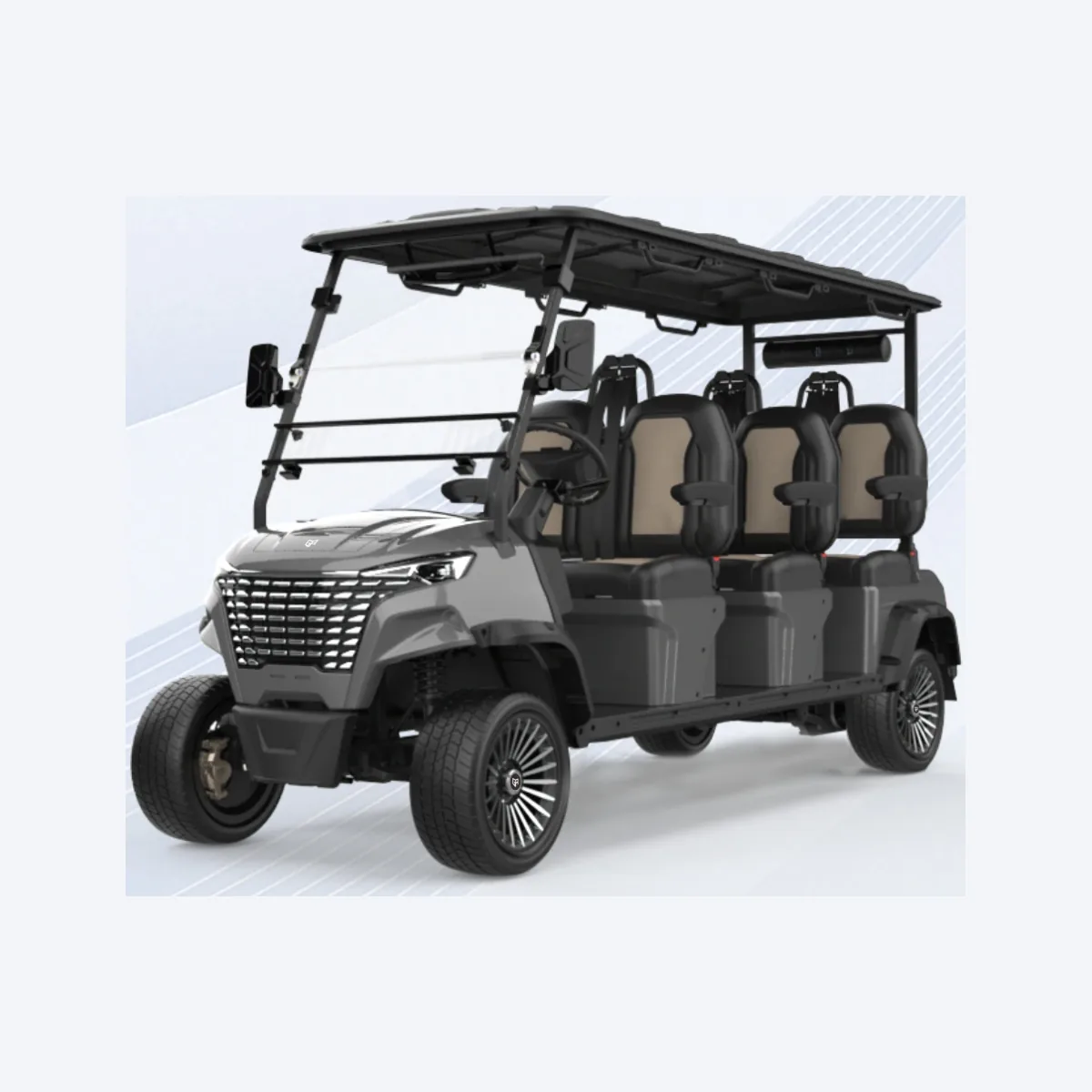
KR-P6 Ridge Utility 6-Seat
Six seats plus a flatbed on the long-wheelbase Ridge chassis
- Bed
- Flatbed
- Wheelbase
- 2860 mm
The questions that decide the order.
How many golf carts does an 18-hole course need?
It depends on tee-time spacing, round time and whether the course rents carts. A common starting point is one cart per two players in the peak hour plus two to four spares. Use the fleet calculator and check the cart path capacity.
Can carts be used on fairways?
That is a course policy decision. Low ground pressure and turf tyres reduce damage, but wet conditions still require cart-path rules.
What charging is required?
Most carts use an onboard single-phase charger. The number of outlets depends on fleet size and the charging window. Confirm the supply capacity with an electrician.
Lead-acid or lithium for a course?
Lead-acid suits fixed short loops with overnight charging. Lithium suits long loops, multi-shift use and sites that want faster charging. A mixed fleet can use both.
What about turf tyres?
Specify wide, low-pressure tyres for fairway use and confirm the course agronomist’s policy. Off-road tyres are for gravel and service roads, not manicured turf.
Can you supply course accessories?
Sand bottles, ball washers, bag racks, coolers and rain curtains can be specified. The order sheet states which are factory-fitted.
What is the price?
Price depends on the model, battery, options, quantity and destination. It is quoted per configuration.
Tell us the terrain, the seats and the port.
A useful quotation needs three things: where the golf cart will run, how many people it carries, and where it ships. Send those and we will come back with a configuration sheet.
Request a quote
Tell us the model, seating and destination. We will reply with a configuration sheet and quotation.