Sightseeing Trains
Multi-carriage trains for large attractions
Electric sightseeing trains with a tractor unit and passenger carriages for parks, zoos and large attractions.
Short answer: A sightseeing train pairs a 48–72 V tractor with passenger carriages for 8–23 passengers; confirm the route grade (the scenic reference uses 12%) and 90 s station dwell.
Updated 2026-11-03 · Export Desk
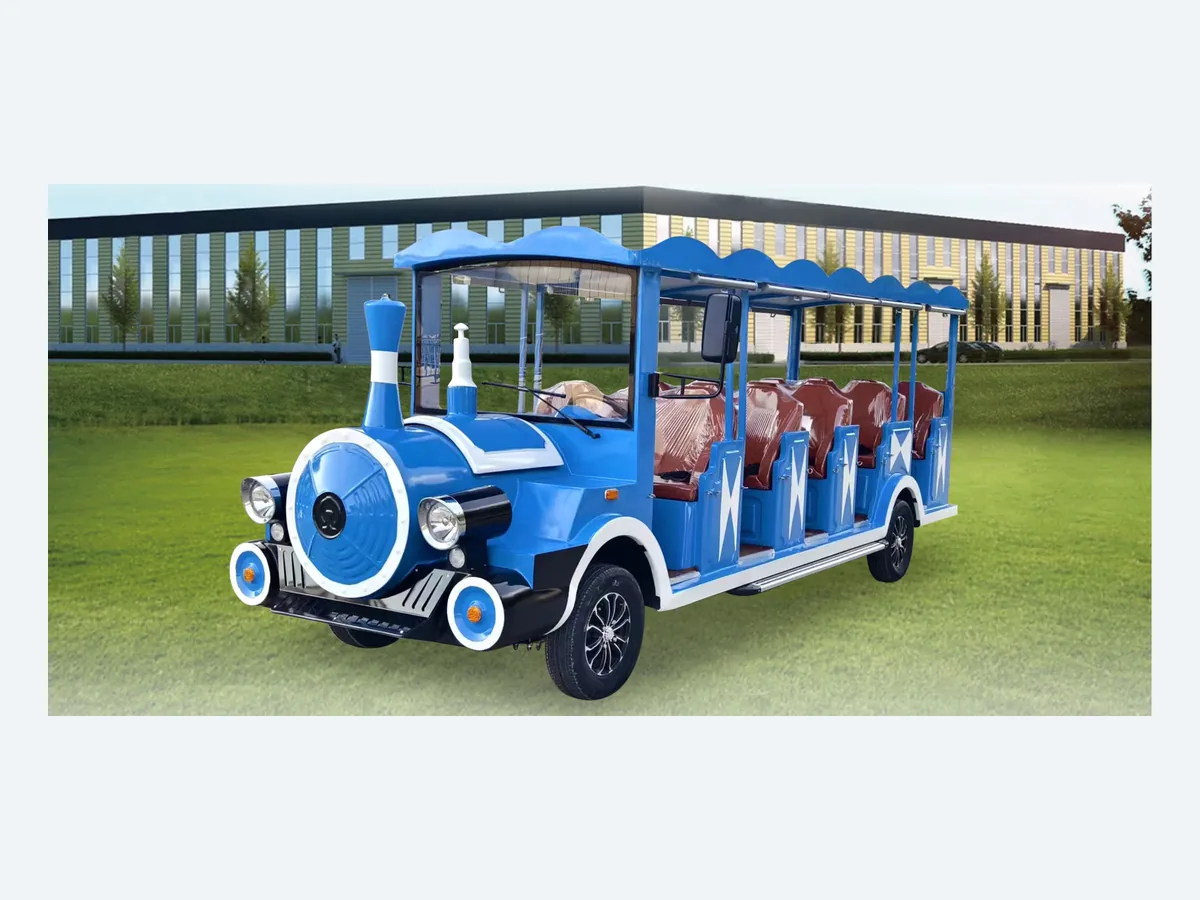
A sightseeing train solves a different problem from a shuttle: it moves a large number of visitors along a fixed loop with a single driver, and it becomes part of the attraction itself. The purchase decision is about route geometry, boarding stations, carriage count and the visual identity of the train.
The trains in this catalogue use an electric tractor unit with one or more passenger carriages. Carriage count, roof style, seating and livery are configured to the route. Because the train is a multi-unit vehicle, braking, coupling and station design must be reviewed together.
For smaller properties, a six-seat shuttle is usually more economical. A train makes sense when the visitor volume, route length and dwell time justify a dedicated loop.
The trade-offs that define this category.
Fixed-loop transport
One driver moves a full train along a defined route.
Multiple carriages
Carriage count configured to visitor volume.
Attraction identity
Livery and roof style become part of the visitor experience.
Station planning
Boarding height, dwell time and route geometry reviewed together.
The options that change the vehicle.
Carriage layout
Open or enclosed carriages, bench or bucket seating.
Livery and theming
Colour, signage and theming to match the attraction.
Audio and lighting
PA, route commentary and evening lighting.
Weather protection
Side curtains, roofs and rain covers.
Category at a glance.
| Category | Sightseeing Trains |
|---|---|
| Models | 0 model pages |
| Seats | 2–8 |
| Drive | A sightseeing train pairs a 48–72 V tractor with passenger carriages for 8–23 passengers; confirm the route grade (the scenic reference uses 12%) and 90 s station dwell. |
| Fixed-loop transport | One driver moves a full train along a defined route. |
| Multiple carriages | Carriage count configured to visitor volume. |
| Attraction identity | Livery and roof style become part of the visitor experience. |
| Station planning | Boarding height, dwell time and route geometry reviewed together. |
| Carriage layout | Open or enclosed carriages, bench or bucket seating. |
| Livery and theming | Colour, signage and theming to match the attraction. |
| Audio and lighting | PA, route commentary and evening lighting. |
| Weather protection | Side curtains, roofs and rain covers. |
| Typical use | Zoological and botanical gardens |
| Typical use | Theme parks and family attractions |
| Typical use | Large resorts and holiday villages |
| Typical use | Exhibitions and seasonal events |
The questions that decide the order.
How many carriages can a train pull?
Carriage count depends on the tractor unit, route gradient, passenger load and braking system. The configuration is confirmed after reviewing the route profile. Do not add carriages beyond the approved configuration.
Can the train climb hills?
Gradeability depends on the loaded train weight and the tractor specification. Send the route profile, including the steepest section and its length, so the drivetrain and braking can be sized correctly.
Is a train better than several shuttles?
A train is better when visitor volume is high, the route is fixed and the ride is part of the attraction. Several shuttles are more flexible and cheaper to start. Compare the peak-hour throughput, staffing and station capacity before deciding.
What about spare parts and service?
Wear parts, brake components, lamps and carriage fittings are available as separate order items. A recommended spare-parts kit can be quoted with the train order. Remote troubleshooting is available during the warranty period defined in the sales contract.
Tell us the terrain, the seats and the port.
A useful quotation needs three things: where the golf cart will run, how many people it carries, and where it ships. Send those and we will come back with a configuration sheet.
Request a quote
Tell us the model, seating and destination. We will reply with a configuration sheet and quotation.