48V vs 60V vs 72V Golf Cart Systems
48 V, 60 V and 72 V golf cart systems compared: motor power, range, charging, controller cost and the site conditions that justify each voltage.
Voltage is the first number buyers compare and the last one they fully understand. A 72V cart is not simply a faster or longer-range version of a 48V cart; it is a different electrical design with its own motor, controller, charger, wiring and service requirements. Two carts carrying the same voltage label can also behave very differently once load, gearing and terrain are involved.
This guide explains what the three common voltages mean on a golf cart, why a 48V system can carry a 51.2V LiFePO4 pack, and how to write a voltage specification that a supplier can quote against.
What do 48V, 60V and 72V mean on a golf cart?
The figure is a nominal system voltage: the design voltage the motor, controller and charger are built around, not a peak reading or a guaranteed value at every state of charge. A lead-acid pack reaches it with a series string of 12V blocks; a lithium pack reaches the same class with a series string of cells whose nominal voltages add up.
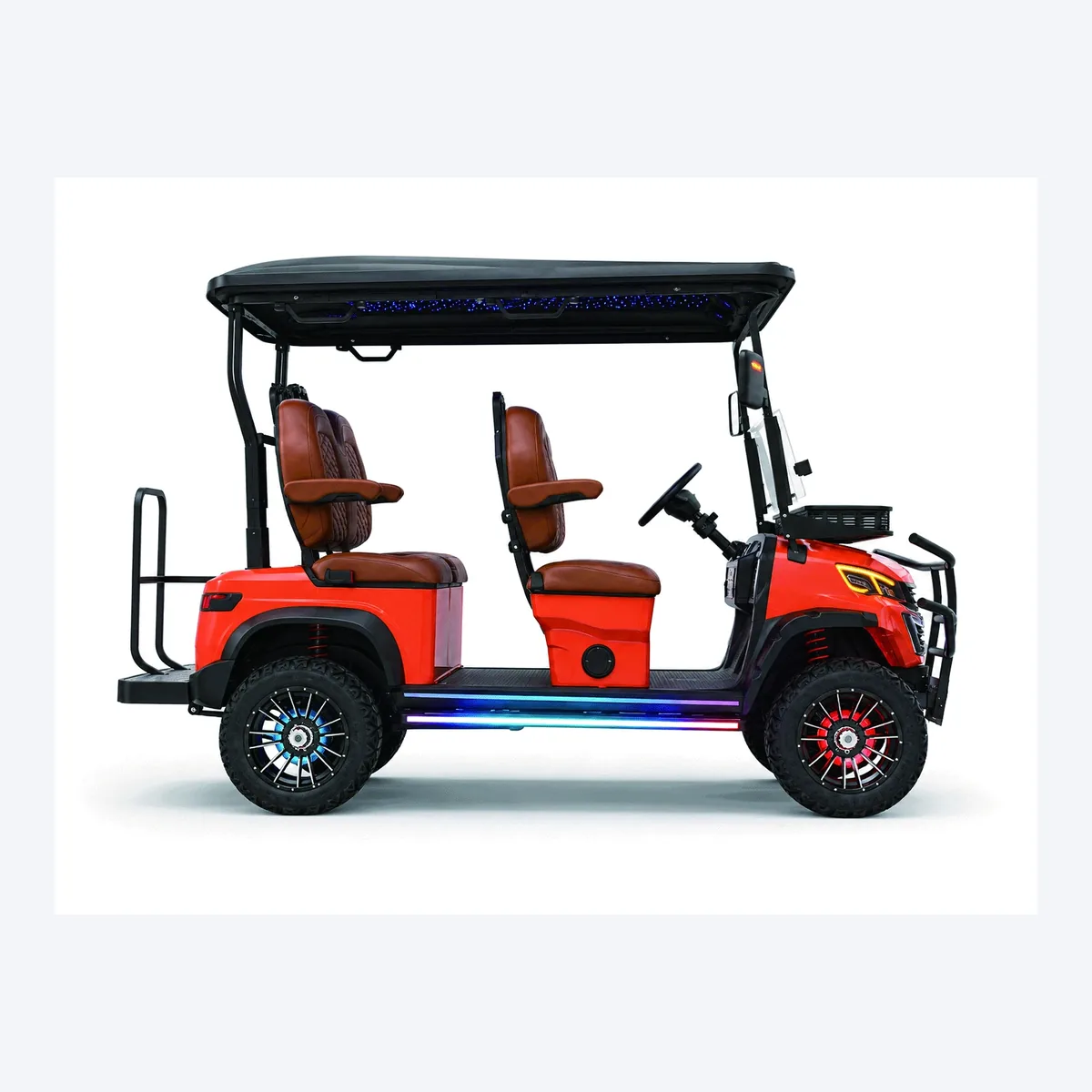
The two are described differently, which is where many specifications go wrong. A 16-cell LiFePO4 pack has a nominal voltage of 51.2V and is used in a vehicle described as a 48V system. That is not a contradiction. In this catalogue, the Ridge and Coast models pair a 51.2V 105Ah LiFePO4 pack with a 48V 5kW IP67 motor, a 48V 350A or 375A controller and a 48V / 25A onboard charger. The GC-B uses a 60V 105Ah lead-acid pack with a 60V 4kW motor. The GC-A is offered with lead-acid or LiFePO4 and a 4, 5 or 7.5kW motor.
Read the system label, the pack voltage and the charger voltage together. Any one of them alone is an incomplete specification.
How does voltage change power and current?
Power is voltage multiplied by current. For the same power, a higher-voltage system draws less current, which allows thinner cables, less resistive heating and smaller components. That is the engineering reason a heavy utility vehicle or a steep route may move to 72V.
Voltage does not create power on its own. A 48V cart with a 5kW motor and a 350A controller can be strong; a 72V cart with a small motor and a low-current controller may not be. Gradeability also depends on gearing, tyre size and load. The Ridge and Coast models are rated at 20% gradeability with the 48V 5kW drive, which covers the ramps, bridges and service roads most resorts and campuses use.
When a supplier quotes a voltage, ask for the motor kW, the controller current, the pack capacity and the loaded weight in the same document. A voltage label without those numbers cannot be compared with another offer.
Does a higher-voltage cart go faster or further?
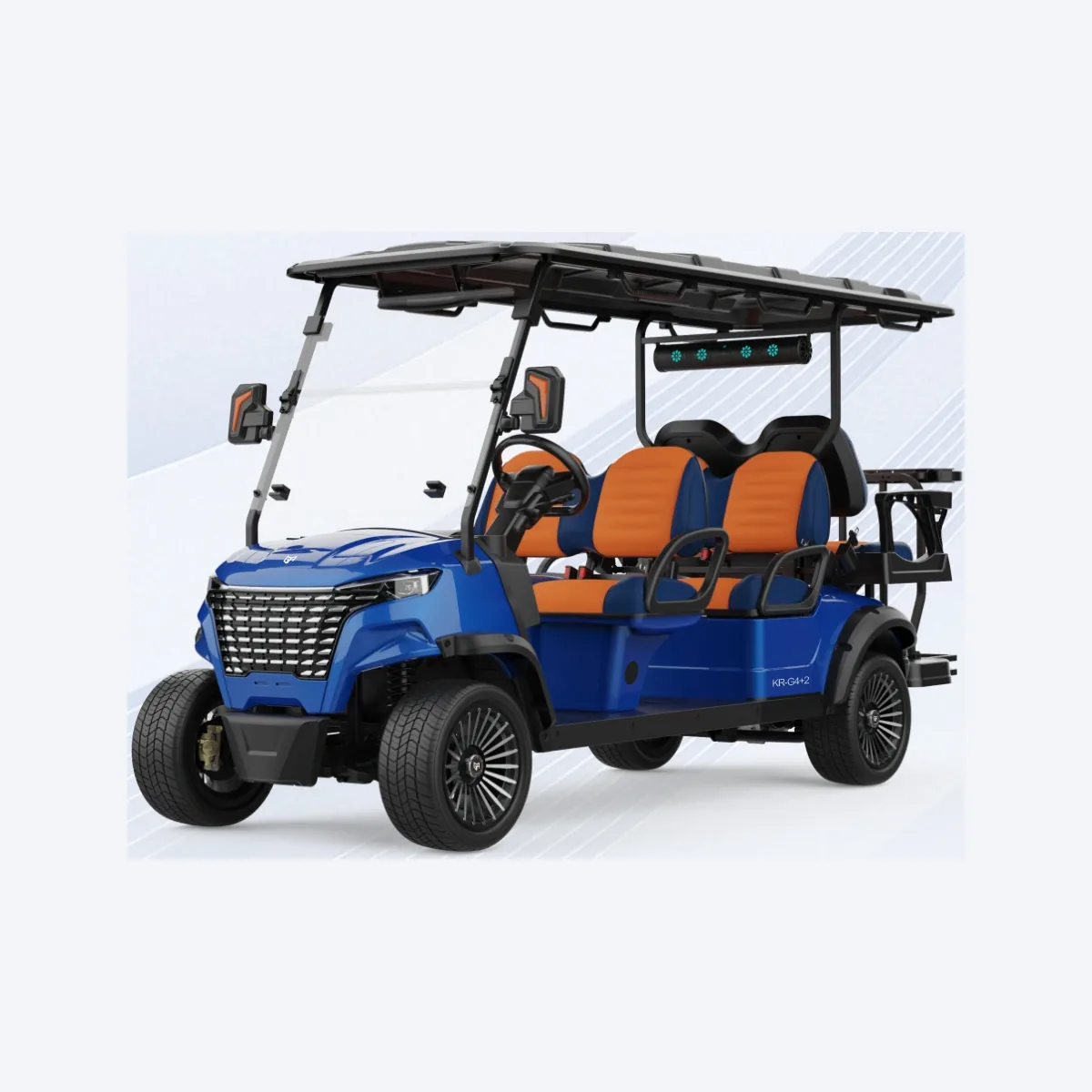
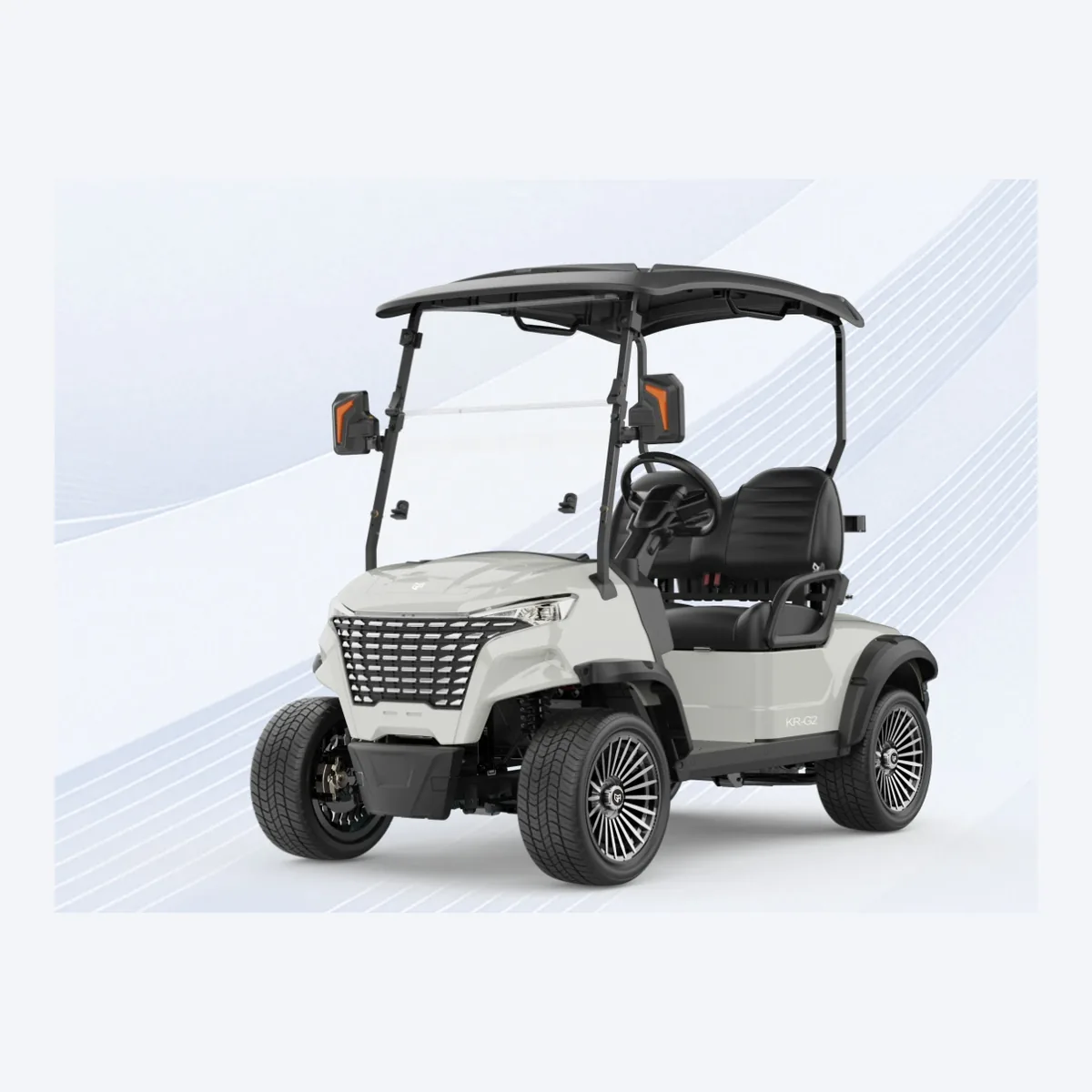
Not by default. Top speed is governed by the controller and the vehicle’s intended duty. In this catalogue, the two-seat KR-G2 and six-seat KR-G4+2 are limited to 20 mph (32 km/h), while the utility and Coast models are limited to 25 mph (40 km/h). The GC-A and GC-B are limited to 40 km/h. A higher voltage does not override those limits.
Range follows stored energy, weight, speed, terrain, temperature and driving style. The 48V lithium Ridge and Coast models are rated at 30–35 miles (48–56 km) on a flat road. The GC-A is rated at 80–100 km and the GC-B at 60 km, with different packs and vehicle weights. A 72V pack with a small capacity can deliver less range than a 48V pack with a large one.
| Question | 48V lithium (Ridge, Coast) | 60V lead-acid (GC-B) | 72V system |
|---|---|---|---|
| Pack in this catalogue | 51.2V 105Ah LiFePO4 | 60V 105Ah lead-acid | Not a catalogue voltage |
| Motor and controller | 48V 5kW, 350 / 375A | 60V 4kW | Must be rated for 72V |
| Charger | 48V / 25A onboard | 220V onboard | 72V matched charger |
| Charge time | ≤ 5 hours | 10 hours | Depends on pack and charger |
| Rated range | 30–35 miles (48–56 km) | 60 km | Depends on pack energy |
| Typical fit | Golf, resort, campus, multi-shift | Fixed short route, overnight charge | Heavy load or steep grade, project-specific |
The 72V column is deliberately thin. It is a system category, not a catalogue option, and a project that needs it should be specified with the motor, controller, charger and spare-parts support confirmed together.
Which voltage fits a golf course, resort or campus?
For most sites, 48V is enough. It covers the speeds, loads and charging windows of golf courses, resorts, hotels and campuses, and the components are widely supported. A 48V lithium cart charging in five hours or less can also run a second shift or a midday top-up, which is why the Ridge and Coast platforms use it.
A 60V lead-acid cart fits a different pattern: a fixed daily route, a return to the same bay and a long overnight charge. The GC-B, with a 60 km range and a ten-hour charge, is built for that routine rather than for opportunity charging.
Choose 72V only when the duty genuinely demands it: a heavy utility body, a long steep grade, or a load that cannot be moved safely at 48V. Then specify the whole system, not just the battery.
What charging setup does each voltage need?
The charger must match the pack. The 48V / 25A onboard charger on the Ridge and Coast models brings the 51.2V pack to full charge in five hours or less. The GC-A quotes 6–8 hours at AC 220V; the GC-B quotes 10 hours at AC 220V. Confirm the input current and circuit requirements from the charger datasheet before the site is wired.
Do not move a charger between vehicles of different voltage or chemistry. A 48V charger cannot charge a 72V pack, and a lead-acid charger should not be connected to a lithium pack. Label the chargers and the bays if a mixed fleet shares a charging area.
What should a voltage specification include?
A quotation is only comparable if it states:
- the nominal system voltage and the battery chemistry;
- the pack nominal voltage, capacity in Ah and energy in kWh;
- the motor rating in kW and the controller current;
- the charger output and input voltage, and the charging time;
- the rated range and the test condition behind it;
- the documents supplied with the pack, including UN38.3 and MSDS for lithium.
Send the route, the load and the charging window with the enquiry. Voltage is a design decision, and the right answer comes from the duty cycle, not from a preference for a bigger number.
The questions that decide the order.
Is 72V better than 48V for a golf cart?
Not automatically. A 72V system can deliver the same power at lower current, which suits heavy loads and steep grades, but it needs a motor, controller, charger and wiring rated for that voltage. For most golf, resort and campus routes, a matched 48V system is simpler and easier to service.
Why does a 48V lithium cart list a 51.2V battery?
51.2V is the nominal voltage of a 16-cell LiFePO4 pack; the vehicle system is still described as 48V. The motor, controller and 48V / 25A charger are matched to that pack. Treat the pack voltage and the system label as two parts of one specification, not as a contradiction.
Does higher voltage increase range?
No. Range depends on stored energy, vehicle weight, speed, terrain, temperature and driving style. The 48V lithium models in this catalogue are rated at 30–35 miles on a flat road; the GC-A is rated at 80–100 km and the GC-B at 60 km. Compare watt-hours and test conditions, not the voltage label.
Can I charge a 72V cart with a 48V charger?
No. The charger must match the pack voltage, chemistry and battery management system. A 48V charger cannot bring a 72V pack to full charge, and a lead-acid charger should not be used on a lithium pack. Specify the charger together with the vehicle.