Battery Capacity (Ah) and Real Golf Cart Range
What 105Ah means in practice, why different seat counts share one pack, and how to turn a rated range into a daily dispatch plan.
A 105Ah battery in a two-seat cart and a 105Ah battery in a six-seat cart are the same pack, but they are not the same range. Capacity tells you how much charge the pack can hold. It does not tell you how far a loaded vehicle will travel on a cold morning with a headwind and four passengers.
This guide explains what the Ah rating means, how it relates to energy and range, and how to convert a catalogue figure into a daily dispatch plan.
What does 105Ah mean on a golf cart battery?
Ah, or amp-hours, is a charge rating. A 105Ah pack can deliver 105A for one hour in theory, or 21A for five hours, subject to the discharge rate and the limits in the datasheet. It is not a unit of energy on its own.
Energy is voltage multiplied by capacity. The 51.2V 105Ah LiFePO4 pack used in the Ridge and Coast models stores about 5.4kWh at its nominal voltage. The 60V 105Ah lead-acid pack in the GC-B stores about 6.3kWh. Those are nameplate figures: the usable energy is lower, and the battery datasheet defines the operating window.
That is why comparing Ah alone across vehicles is misleading. Two packs with the same Ah rating can store different amounts of energy if their voltages differ, and two packs with the same energy can deliver it differently depending on chemistry, weight and drivetrain efficiency.
Does more Ah always mean more range?
Only when everything else is equal, which it rarely is. Range depends on the energy stored, the weight being moved, the speed, the terrain, the temperature and the way the cart is driven.
A large pack in a heavy vehicle can deliver less range than a smaller pack in a light one. A high-voltage pack with a modest Ah rating can store less energy than a lower-voltage pack with a large Ah rating. The useful comparison is watt-hours, followed by the rated range and the test conditions behind it.
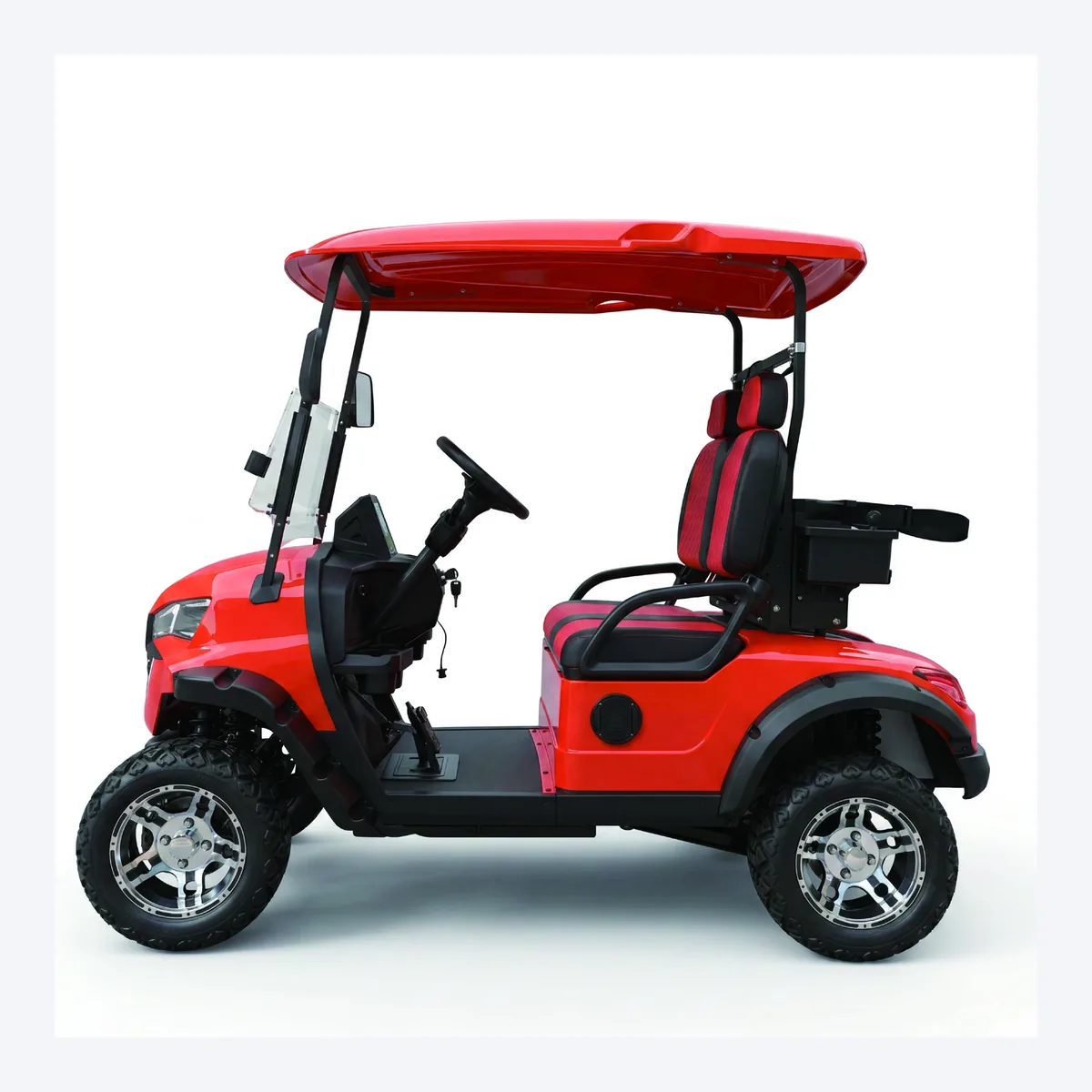
In this catalogue, the same 51.2V 105Ah pack is rated at 30–35 miles (48–56km) across the Ridge and Coast models. The GC-A, with a lead-acid or LiFePO4 pack and a 4–7.5kW motor, is rated at 80–100km. The GC-B, with a 60V 105Ah lead-acid pack, is rated at 60km. The pack, the vehicle and the drivetrain are specified together; the Ah number is only one line of the specification.
Why do different seat counts share one pack?
The Ridge and Coast platforms standardise on the 51.2V 105Ah pack so that a mixed fleet uses one charger specification, one controller family and one set of service procedures. That is a real operational benefit for a resort or campus that runs two-, four- and six-seat vehicles side by side.
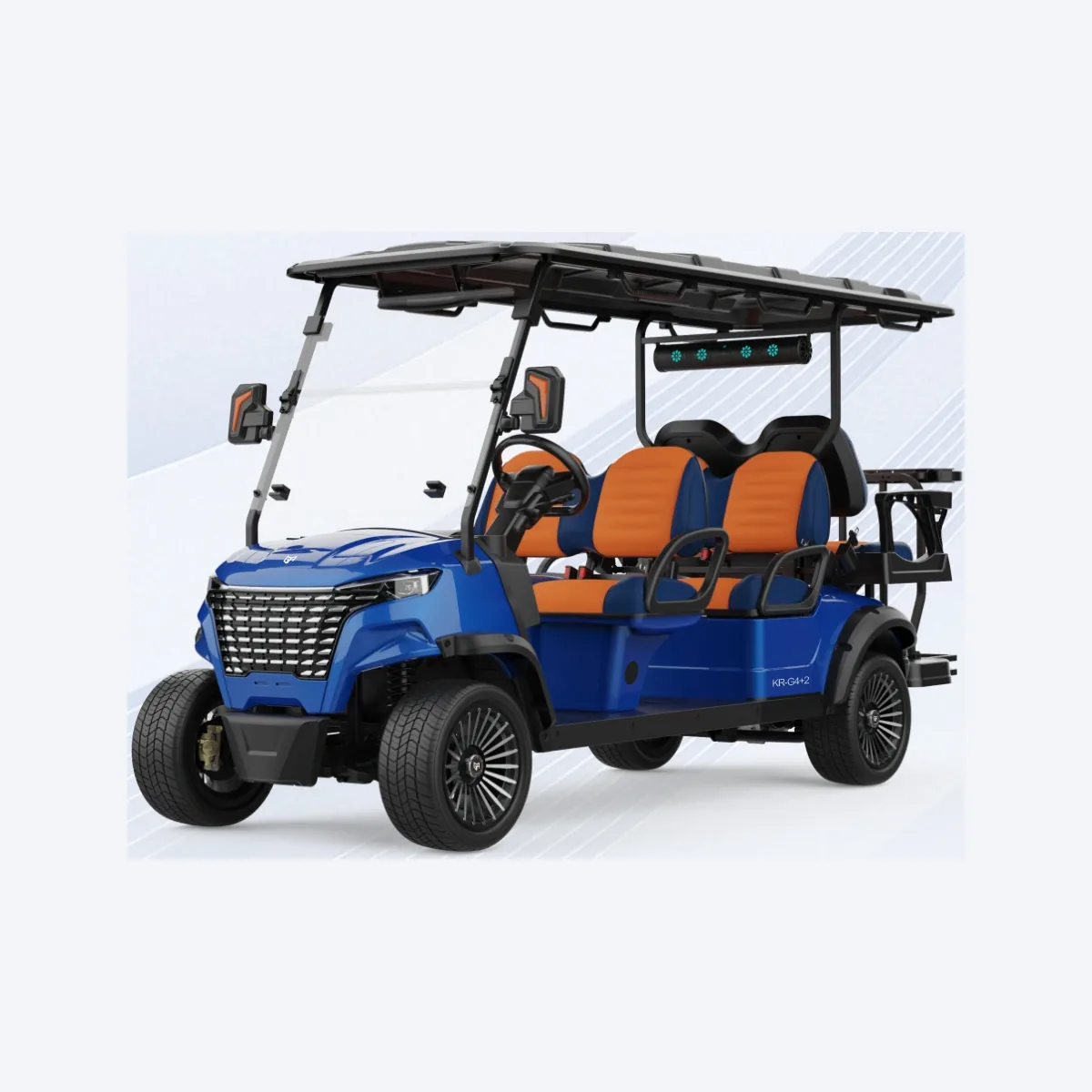
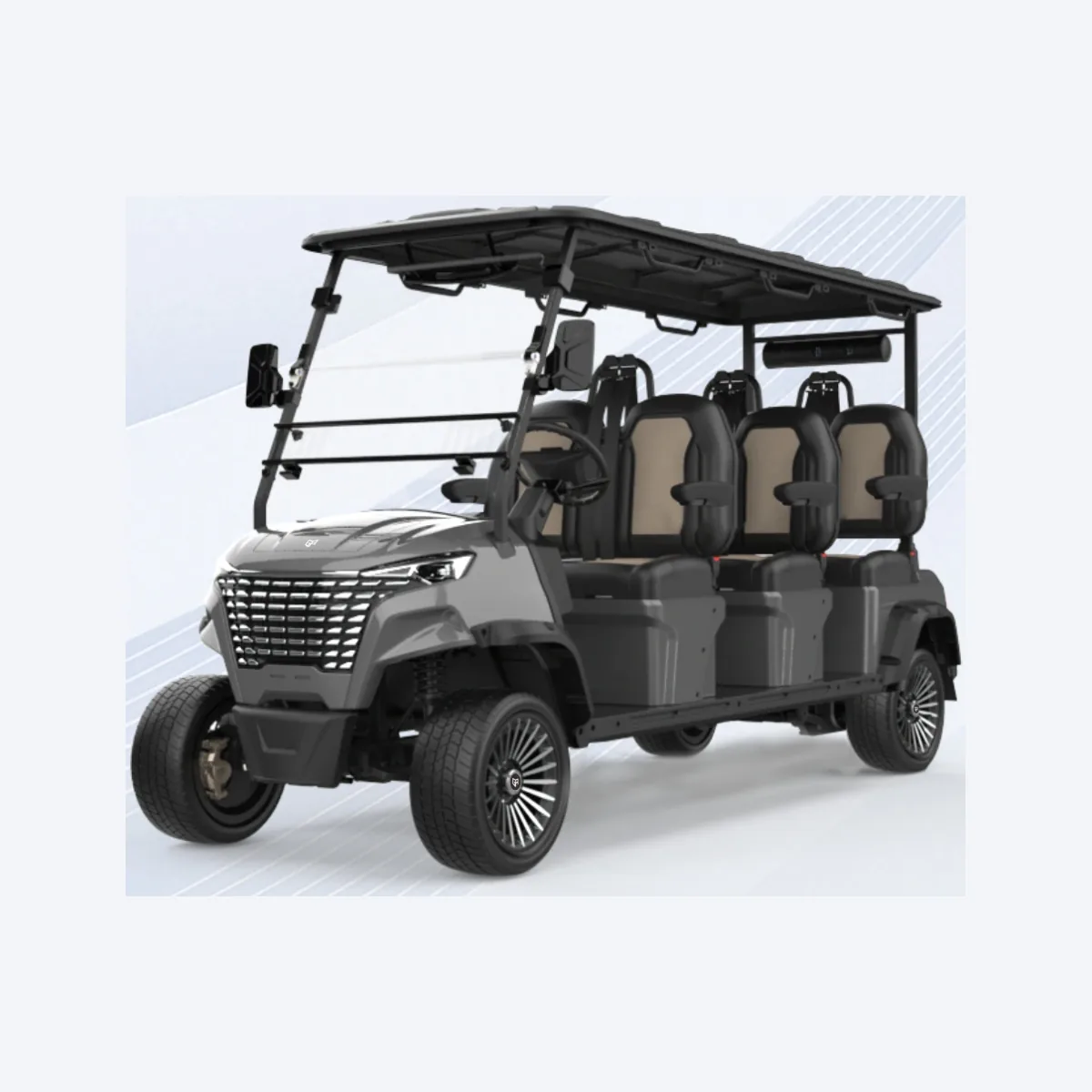
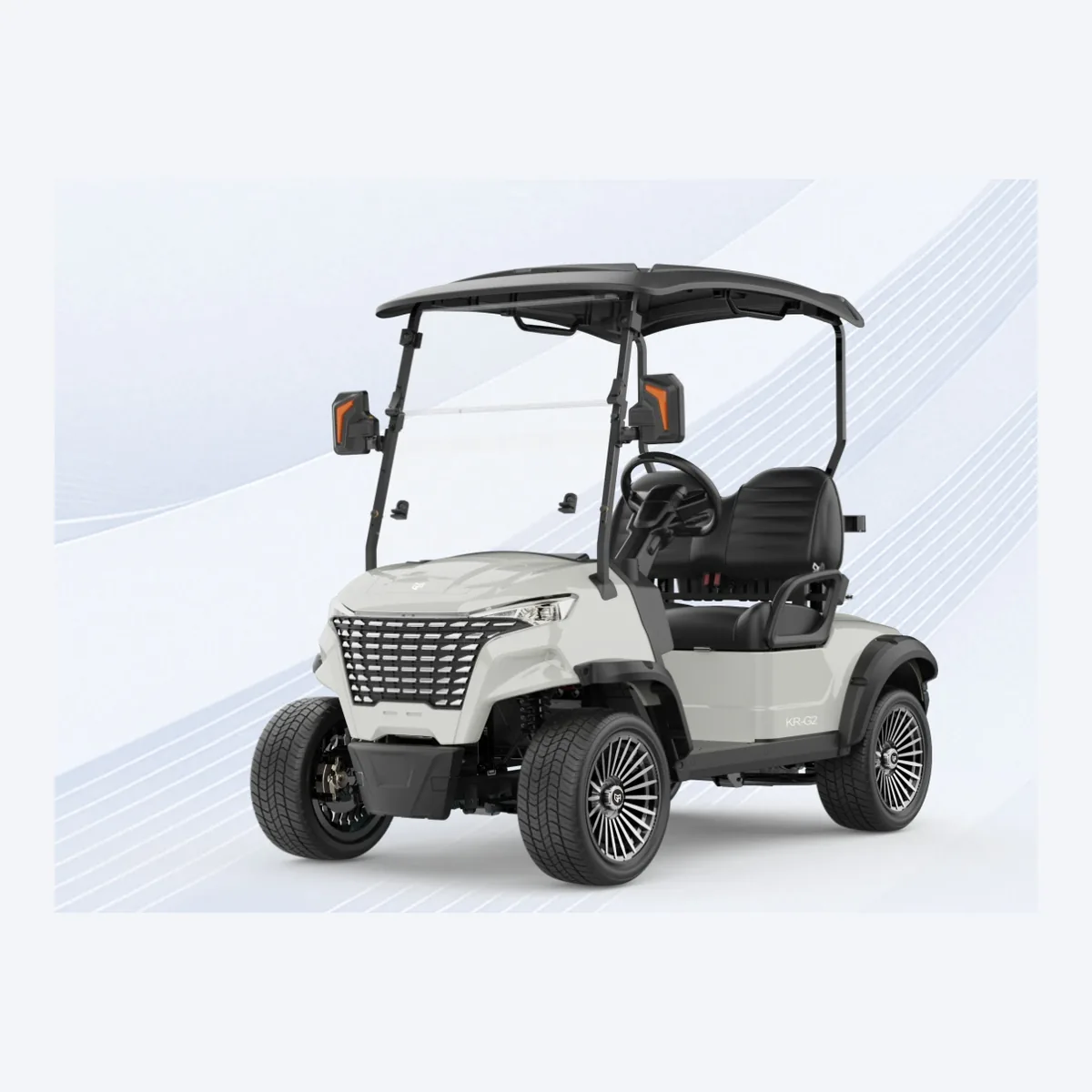
The trade-off is weight. Curb weight excluding the battery runs from about 390kg for the two-seat KR-G2 to about 550kg for the six-seat KC-P6H. With six adults aboard, the six-seater asks more of the same pack than the two-seater does. The rated range still applies to a flat road; a fully loaded six-seater on a hilly route should be planned with a larger margin.
| Model | Seats | Pack | Rated range | Curb weight excl. battery |
|---|---|---|---|---|
| KR-G2 | 2 | 51.2V 105Ah LiFePO4 | 30–35 miles | ≤ 390kg |
| KR-G4+2 | 6 | 51.2V 105Ah LiFePO4 | 30–35 miles | ≤ 490kg |
| KR-P6 | 6 | 51.2V 105Ah LiFePO4 | 30–35 miles | ≤ 530kg |
| KC-G2+2H | 4 | 51.2V 105Ah LiFePO4 | 30–35 miles | ≤ 485kg |
| KC-P6H | 6 | 51.2V 105Ah LiFePO4 | 30–35 miles | ≤ 550kg |
How far will a cart actually go on one charge?
Start with the rated range, then apply the site. A typical 18-hole loop is 8–15km, so the 30–35 mile (48–56km) lithium rating covers several loops on flat ground. The GC-A’s 80–100km rating suits a full-day course or estate loop, and the GC-B’s 60km rating suits a fixed short route with an overnight charge.
Treat the rating as a planning input, not a dispatch limit. A cart that starts the day at full charge and ends it at the charger is being used well; a cart that finishes every day near empty has no margin for a detour, a cold snap or a delayed return. Measure the real route with one cart before setting the rule for the fleet.
What reduces range on site?
The main factors are predictable:
- Load. Passengers, cargo and a trailer all add weight.
- Terrain. The Ridge and Coast models are rated at 20% gradeability; a long climb uses more energy than the flat-road test.
- Speed. Higher speeds increase aerodynamic and rolling losses. The models are governed at 20 or 25mph, and the difference matters over a long loop.
- Temperature. Cold reduces usable capacity, especially on lead-acid.
- Tyres and brakes. Low pressure or a dragging brake costs range.
- Accessories and driving style. Lights, audio and hard acceleration all draw energy.
- Wind and weather. A headwind, rain or a wet surface adds resistance and can increase accessory use.
None of these is a reason to distrust the rating. They are the reasons a rating is not a promise for every site.
How should a buyer specify daily distance?
Write down the longest day, not the average one: route length, number of loops, passenger load, steepest grade, surface, climate and the charging window. Send those to the supplier with the seat count. A useful quotation will state the rated range and the conditions behind it, so the two can be compared.
Then compare watt-hours, charge time and pack chemistry rather than Ah alone. Where possible, run one cart over the longest day, first at half load and then at full load, and compare the observed consumption with the rated range. That measurement is more useful than a second opinion on the brochure. The pack that fits is the one that covers the longest day with a margin and recharges inside the window the site actually has.
The questions that decide the order.
Is 105Ah enough for a full day of golf?
A typical 18-hole loop is 8–15km, while the 51.2V 105Ah lithium models are rated at 30–35 miles (48–56km) on a flat road. That covers several loops, but the dispatch plan should still leave a margin for hills, load and temperature.
Why do two- and six-seat carts use the same battery?
The pack is shared across the Ridge and Coast platforms to keep one charger, one controller family and one service procedure. The rated range is similar, but the heavier six-seat vehicle works the pack harder when fully loaded, so real range will be lower.
Does a higher Ah rating always mean more range?
No. Ah measures charge, not energy. Multiply by the nominal voltage to compare watt-hours: a 51.2V 105Ah pack stores about 5.4kWh, while a 60V 105Ah pack stores about 6.3kWh. Vehicle weight, speed and terrain then decide what that energy delivers.
How much range should I reserve each day?
Reserve enough to return with charge in hand and to reach the charger without a tow. The exact margin depends on the route and climate; measure one cart on the real route before setting the dispatch rule for the fleet.