First Golf Cart Fleet Buying Checklist
A step-by-step checklist for a first golf cart fleet purchase: duty statement, vehicle count, site measurements, quotation scope and handover.
Quick answer
Start with a duty statement: 2/4/6 seats, 30–60 km per shift for campus use, a 48–72 V system and a 5-hour charge. Then size the fleet, spares and charging bays from the peak hour.
A first fleet order usually fails for reasons that were visible before the quotation: a route that is too narrow, a charging bay with no supply, a seat count based on total guests rather than peak demand. The vehicle is rarely the weak point. The planning around it is.
This checklist puts the decisions in the order that prevents rework, from the duty statement to the handover pack.
What should you define before you contact a supplier?
Write a one-page duty statement. It should cover the site type, the routes and their distances, the surfaces and gradients, the passengers per trip and at peak, the operating hours, who drives, the climate, the charging location and supply, the storage, any branding requirement and the documents needed for import.
Attach a site plan marking gates, buildings, bridges, the proposed charging bay and the parking area. A supplier can quote a model from a seat count, but cannot configure a fleet from one. The duty statement is also the document that keeps the quotation comparable between suppliers.
Include the driver profile as well. Staff who drive every day need a different briefing from volunteers who drive once a month, and the answer can change the seat layout and the options list.
How do you convert passenger demand into a vehicle count?
Start with peak demand, not the total number of guests or members. The calculation is: peak passengers per hour multiplied by round-trip minutes, divided by 60, gives the number of passengers in transit at any moment. Divide that by usable seats per cart, then add spares for charging and maintenance.
Round-trip time includes loading and unloading, not just travel. If a cart needs up to five hours to charge and the site runs two shifts, the charging window reduces the number of carts available at peak. The spare ratio is a policy decision: a site that cannot afford a missed trip keeps a higher ratio than one with a backup vehicle.
Run the calculation for the busiest hour of the busiest day. A fleet sized on the average day will be short exactly when it matters.
Which specification choices are fixed at order?
The main choices are seat count and layout, motor rating, battery chemistry, charger voltage for the destination, clearance version, body colour and livery, storage and weather options, lighting and audio, and any tow package. Settle all of them before the order is placed.
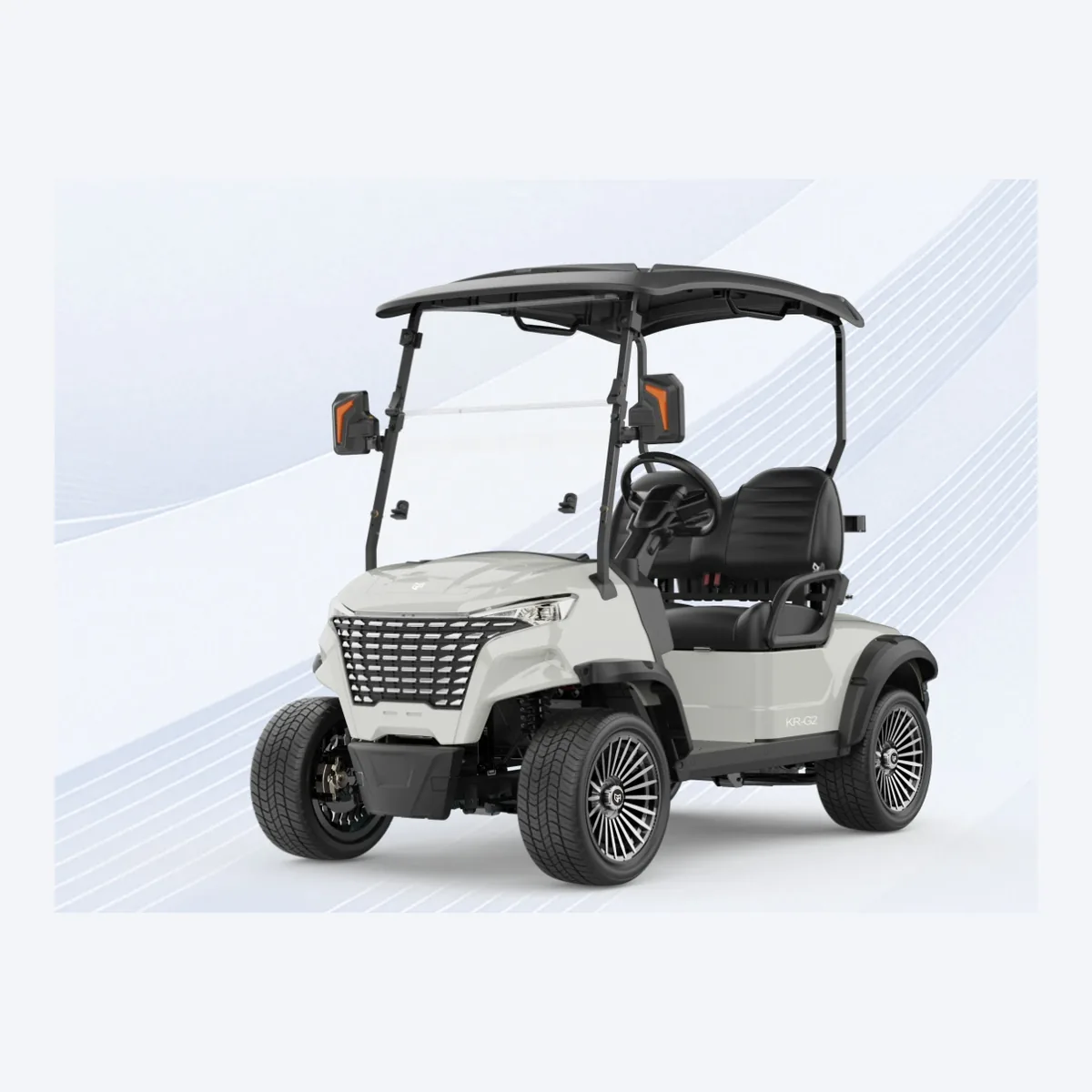
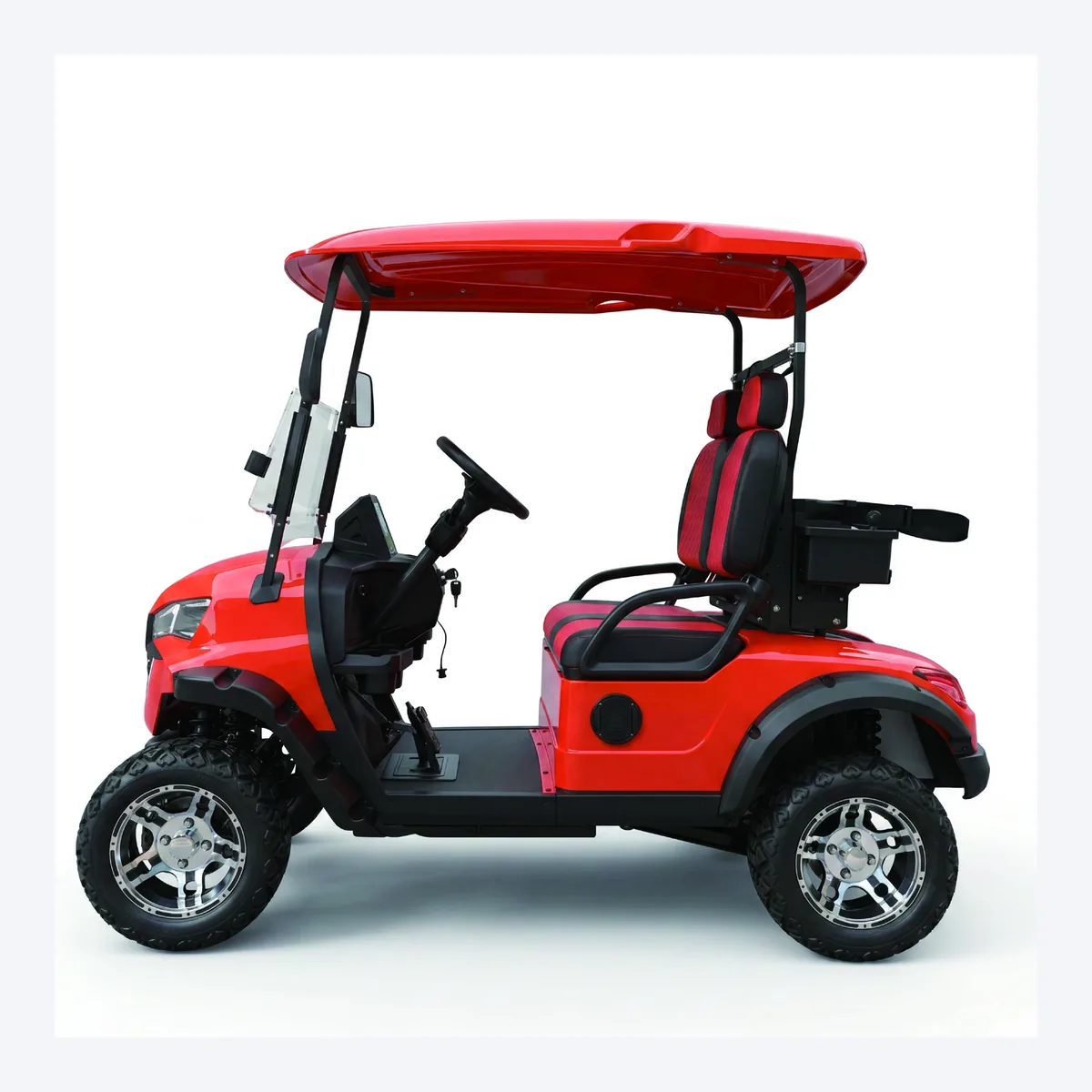
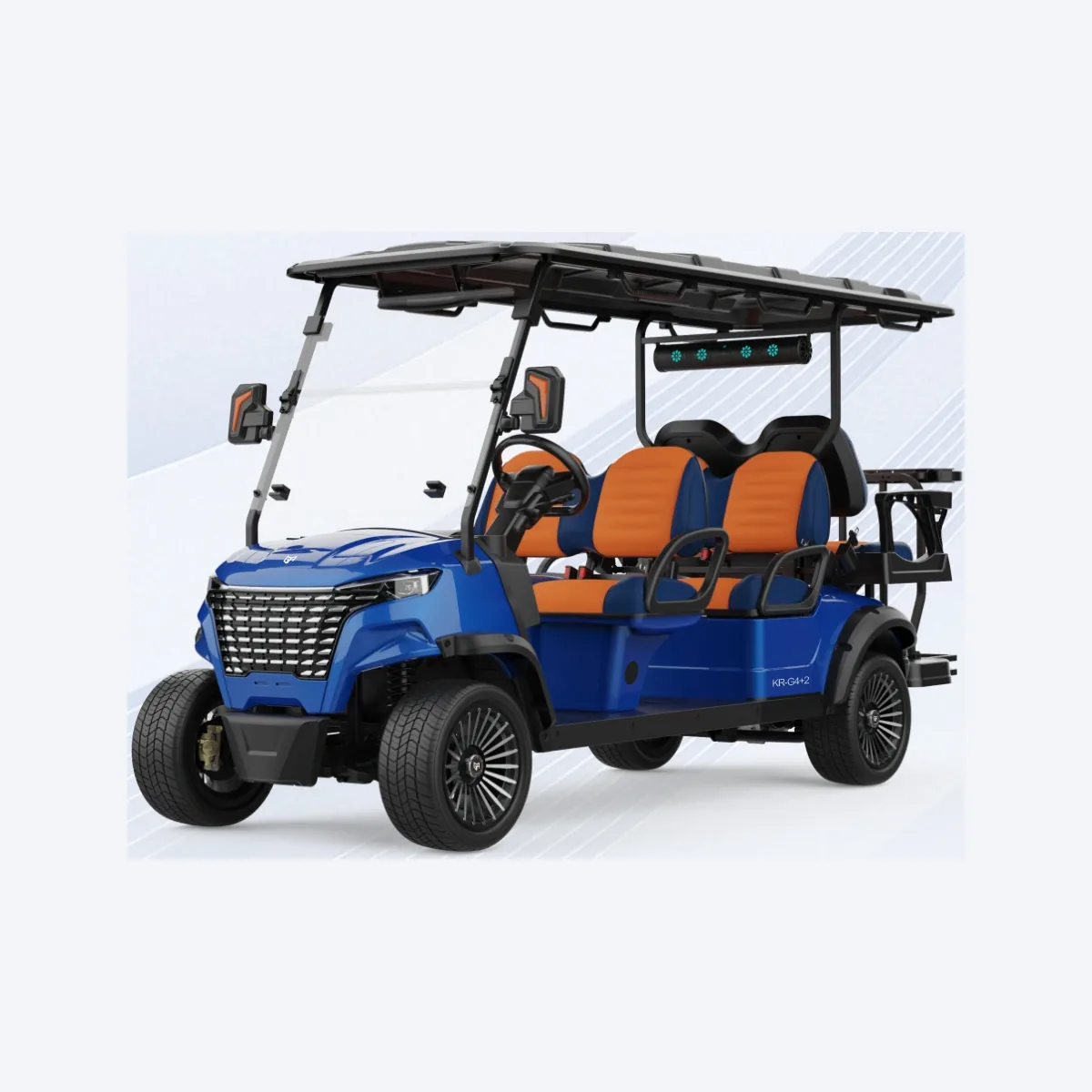
The range covers two-seat staff carts such as the KR-G2 and GC-A, four-seat models such as the KC-G2+2H and GC-B, six-seat shuttles such as the KR-G4+2, and flatbed utility versions in the KR-P6, KC-P4 and KC-P6H.
Motor and battery combinations are fixed at order, and changes after production starts are not possible. If the site may add a steep route later, choose the higher motor rating now rather than planning a retrofit.
Battery chemistry deserves its own decision. Lead-acid has the lower purchase price and is familiar to most golf cart technicians; LiFePO4 charges faster, weighs less and tolerates partial charging. The route length and the charging window decide, not the label on the brochure.
Confirm the charger voltage for the destination supply before the order, not on arrival. A charger matched to the wrong supply is a delay that no shipping schedule can recover.
What site measurements belong on the checklist?
| Location | What to measure | Why it matters |
|---|---|---|
| Gate or arch | clear width and height | body width 1270–1350 mm, height 1900–2080 mm |
| Path | narrowest width | passing, mirrors and pedestrians |
| Corner | outside clearance | turning radius 4–5 m |
| Ramp | gradient, length and lip | lithium platform gradeability 20% |
| Bridge or boardwalk | width and posted load | curb weight plus passengers |
| Parking bay | length and depth | body length 2370–3780 mm |
| Charging point | supply, distance and shelter | 25 A onboard charger and charge time |
| Storage | door height and sill | roof height and ground clearance |
Photograph each point and note the measurement on the photograph. Measure the tightest part of the route, not the average. If a gate has a removable post or a second entrance, record that too; the route may be easier than the main gate suggests.
What should the quotation state?
A usable quotation lists the model code and seat count, motor and battery, charger voltage, options, quantity, unit and total price, the Incoterm and named place, the packing method, the documents included, and the lead time as confirmed on the order confirmation. Warranty terms are those defined in the sales contract.
Prices are configuration-based, so a single unit price without the configuration is not comparable. If a line is missing, ask for it in writing. Two quotations are only comparable when the scope matches.
What should be in the handover pack?
The pack should include the operation manual, wiring diagram, spare-parts list, charger instructions, key set, the battery documents required for the route and the pre-delivery inspection record.
Add a driver briefing: daily checks on tyres, lights, brakes and charge level; the charging routine; the parking routine; and who to call for a fault. Read the spare-parts list before the first order of consumables, not after the first failure. A fleet that knows which pads, lamps and tyres it uses keeps vehicles available.
How should a first order be phased?
Start with the route that is easiest to measure: one shift, one loop and a known passenger count. Log the trips completed, the energy used and any faults in the first weeks, including the charge level at the start and end of each shift and the trips completed on one charge. That log is more useful than a brochure figure when the fleet is scaled. Then scale the model that worked and drop the options that were not used.
Keep the fleet on one platform where possible, so chargers, controllers and service procedures stay common. A pilot batch also tests the local charging supply and the drivers’ routines before the full fleet arrives, which is cheaper than discovering the problem with every cart on site.
Review the pilot against the duty statement before scaling, not against the supplier’s brochure.
The questions that decide the order.
How long does a first fleet order take?
Lead time is confirmed on the order confirmation and depends on the configuration and quantity. A production schedule is issued with the order; it lists the pre-delivery inspection date and the estimated dispatch week.
Can I order a single cart as a sample?
Sample and trial arrangements are confirmed in the quotation. Specify the configuration you intend to scale, including the motor, battery and options, so the trial represents the fleet rather than a different vehicle.
What documents come with the carts?
Each order includes an operation manual, a wiring diagram and a spare-parts list. Battery documents required for the route are supplied with the shipment, together with the packing list and commercial invoice.
Should every cart in the fleet be the same model?
Standardise where the routes are similar. Where duties differ, a mixed fleet is reasonable, but keep the models on one platform so chargers, controllers and service procedures stay common. Every extra platform adds training and spare-parts work.