2+2 vs 4+2 Golf Cart Layout Explained
How 2+2 and 4+2 seating layouts differ in length, turning circle, luggage space and boarding, and which sites each layout suits.
Quick answer
2+2 carries 4 people in a 2.4–2.95 m body; 4+2 carries 6 in a 3.67–3.78 m body, with a turning radius around 4.5 m. Measure gates and parking bays before choosing.
Two four-seat carts can share the same seat count and have nothing else in common. The notation used in golf cart specifications, 2+2 and 4+2, describes the seating arrangement rather than the total. The first figure counts forward-facing seats; the second counts a rear-facing bench. A 2+2 therefore carries four passengers, while a 4+2 carries six.
The difference is not cosmetic. It changes body length, wheelbase, turning circle, luggage space and how passengers board. This guide explains both layouts using the published dimensions of the current range.
What do the numbers in 2+2 and 4+2 actually mean?
A 2+2 cart has one forward-facing bench for the driver and one passenger, plus a rear-facing bench for two more. The rear bench usually sits over the rear axle, which keeps the body short but puts those passengers behind the driver with their backs to the direction of travel.
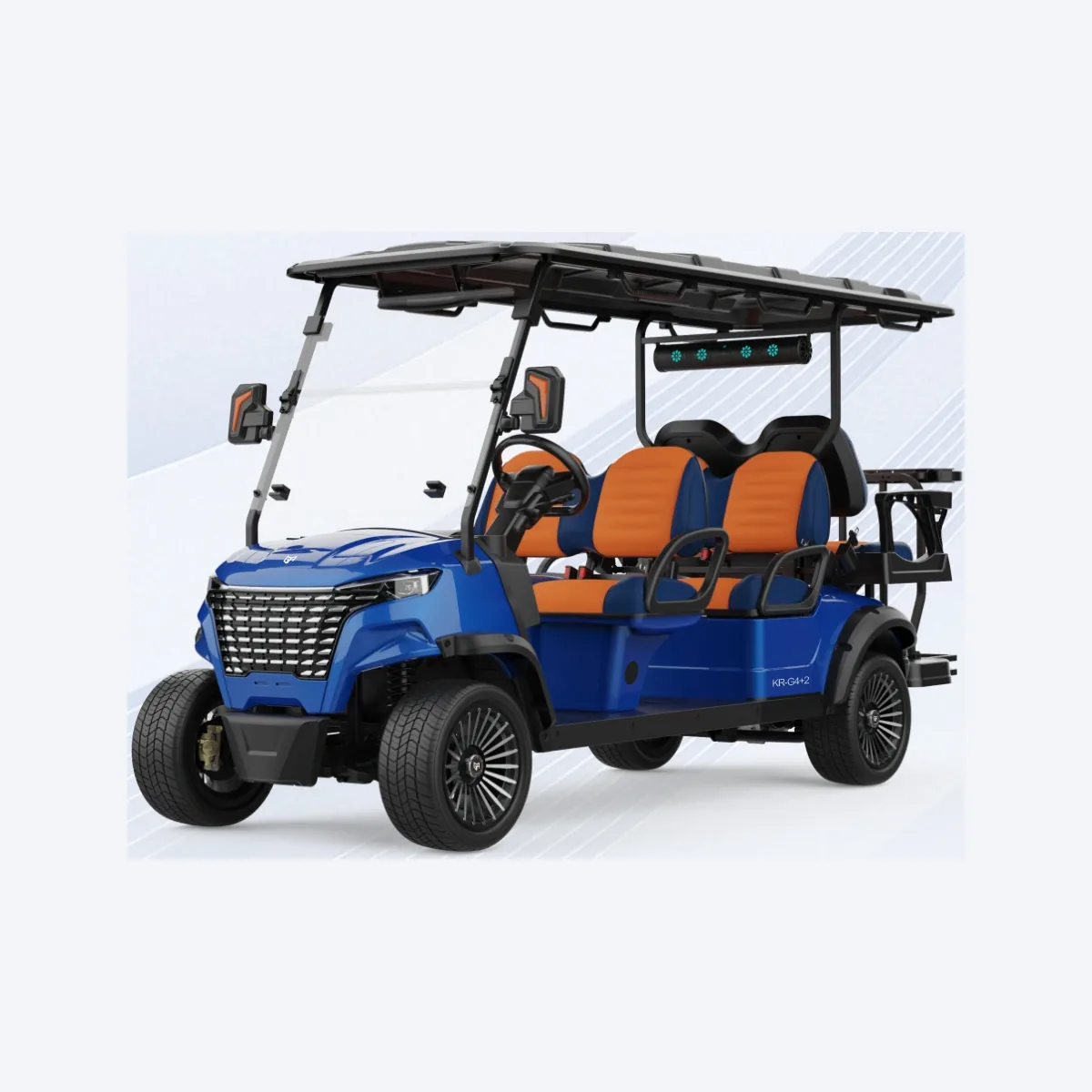
A 4+2 cart has two forward-facing benches, four seats in total, plus the same rear-facing bench for two. It is the layout most resorts mean when they advertise a six-seat shuttle.
Suppliers are not consistent with the notation. Some write 2+2 as a four-seater and 4+2 as a six-seater; others count only forward seats and describe the rear bench separately. Ask for a seating diagram with the quotation. The diagram shows which seats face forward, where the step is and whether the rear bench folds.
How much longer is a 4+2 than a 2+2?
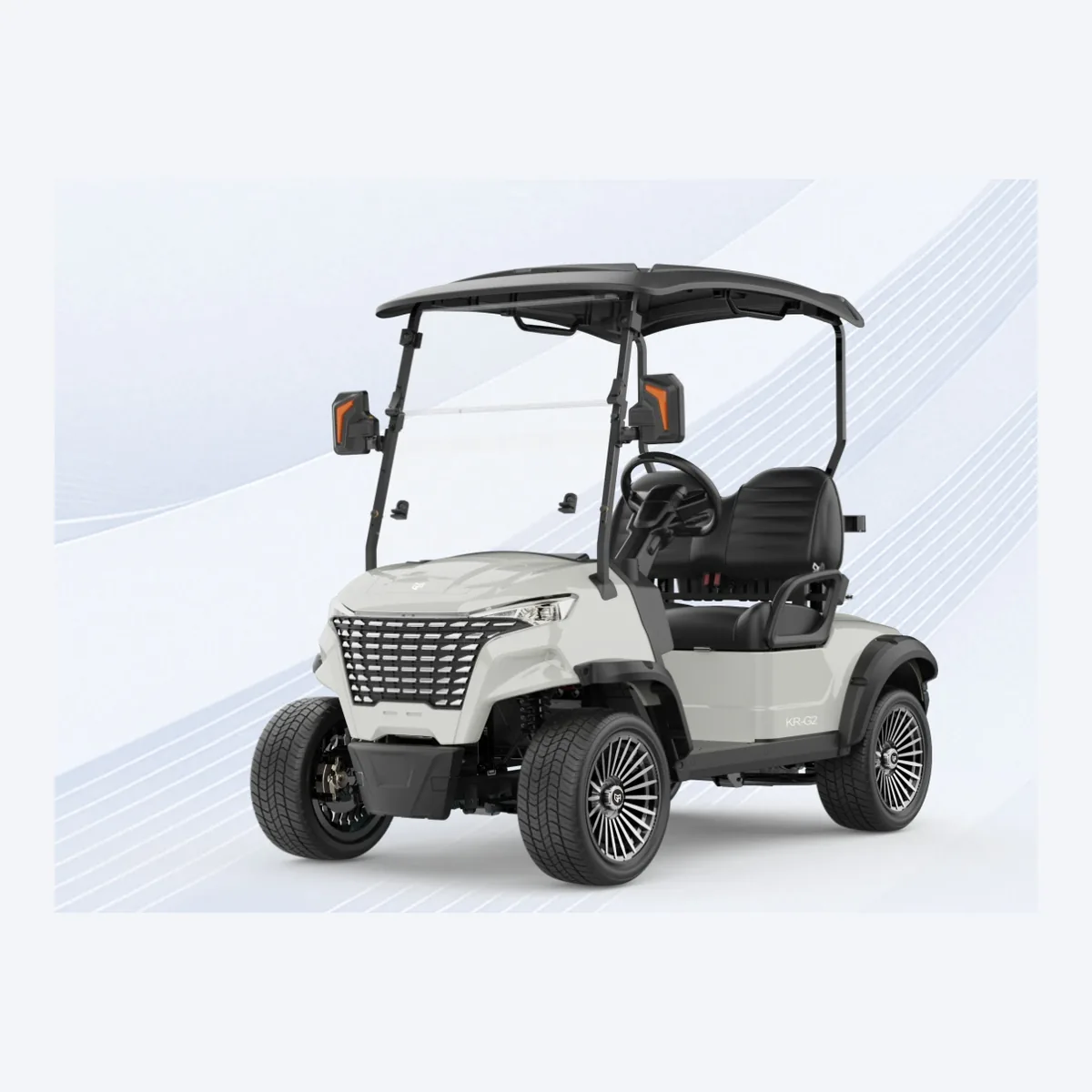
On the current range, the compact 2+2 is the KC-G2+2H at 2430 × 1330 × 2040 mm. The 4+2 KR-G4+2 measures 3670 × 1340 × 2000 mm. The six-seat layout adds 1,240 mm of length and 745 mm of wheelbase for its two extra passengers.
| Layout | Model | Seats | Body dimensions (L × W × H) | Wheelbase | Turning radius | Curb weight |
|---|---|---|---|---|---|---|
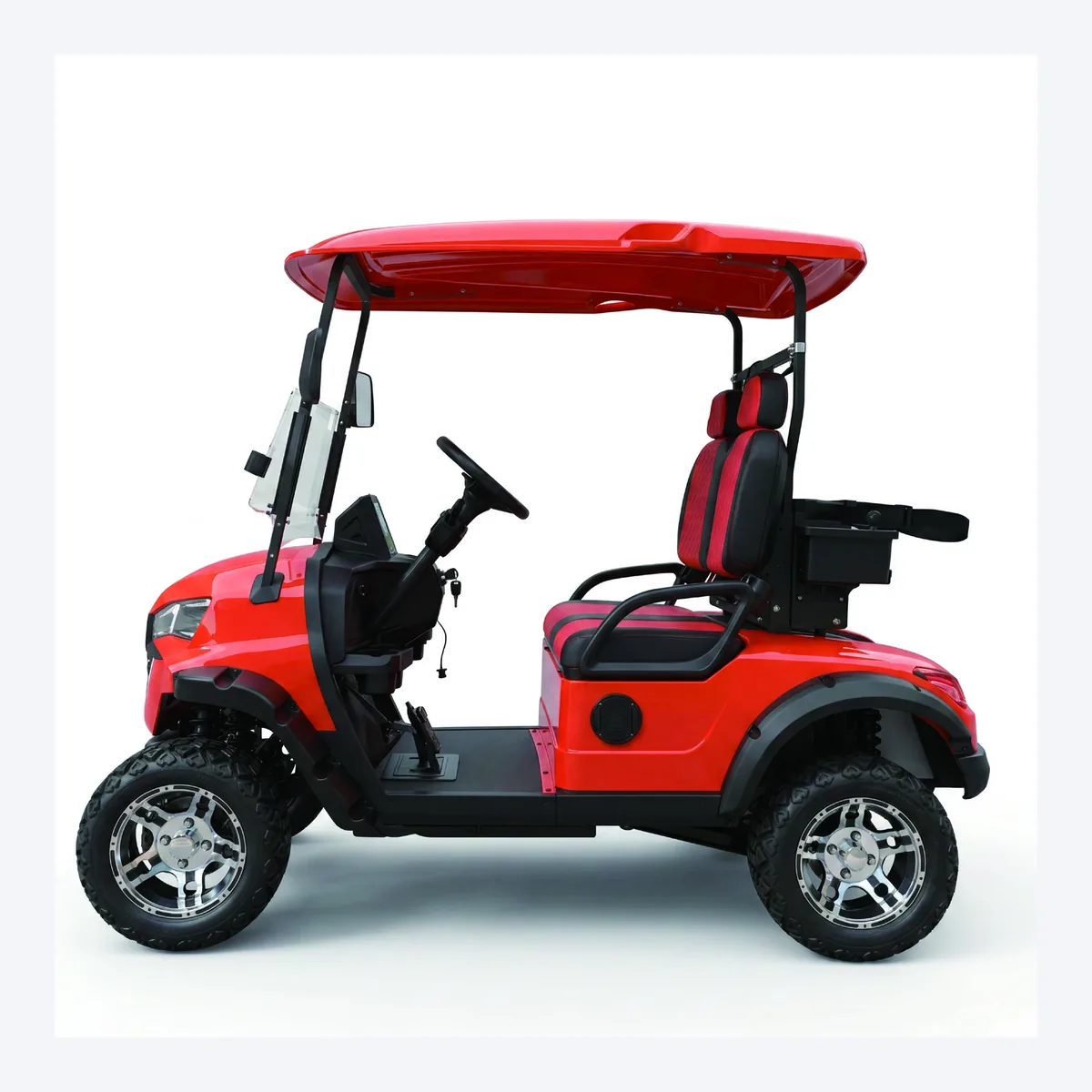
| 2-seat bench | KR-G2 | 2 | 2370 × 1340 × 2000 mm | 1675 mm | 4 m | ≤ 390 kg |
| 2+2 | KC-G2+2H | 4 | 2430 × 1330 × 2040 mm | 1675 mm | 4 m | ≤ 485 kg |
| 4+2 | KR-G4+2 | 6 | 3670 × 1340 × 2000 mm | 2420 mm | 4.5 m | ≤ 490 kg |
| 4+2 utility | KC-P6H | 6 | 3780 × 1270 × 2080 mm | 2860 mm | 4.5 m | ≤ 550 kg |
Curb weights are published without the battery. The pattern is worth noting: width varies by only 70 mm across the four models, so the constraint on a narrow path is usually length and turning, not width. The six-seat KR-G4+2 is listed at 5 kg more than the four-seat KC-G2+2H, but its published braking distance is under 4 m rather than under 3 m, and its turning radius grows from 4 m to 4.5 m.
Which layout is better for guest transfers?
Choose the 4+2 when the normal travel unit is five or six people: a family, a tour group, a wedding party or a staff shift change. The rear-facing bench lets those passengers talk to the group, which is why tour operators prefer it. The trade-offs are that two passengers face backwards, take the full effect of weather and dust, and sit furthest from the driver.
Choose the 2+2 when four seats are enough and the site is tight: hotel forecourts, estate drives, clubhouse loops, older cart paths. The KC-G2+2H fits four adults into 2430 mm, shorter than many forward-facing four-seat carts, and it turns in 4 m.
A common mistake is to buy a 4+2 for occasional group transfers and then use it as a two-person vehicle for most of the day. It works, but the driver pays for the extra length at every turn and parking bay.
What happens to luggage and golf bag space?
The rear-facing bench occupies the space that a two-seat cart uses for a bag well. On a 2+2, four passengers and four golf bags compete for the same footprint, so bags normally go on a rear rack or in a basket. On a 4+2, the bench uses the tail and bags need a rack behind it.
Neither arrangement is a luggage compartment. If the duty includes airport transfers, housekeeping supplies or event equipment, ask for the rack, basket or storage-box dimensions with the quotation and check them against the actual load. The KR-G4+2 rear bench can be specified as a folding or removable unit for mixed passenger and cargo duty, but load limits and mounting points are confirmed at order. For heavy or frequent cargo, a flatbed model such as the KR-P6 or the KC-P6H is the better choice.
How does seating direction affect daily operation?
Boarding is different. Forward-facing rows step in behind the front seat; rear-facing passengers step in from the side and sit with their backs to the tail. On a kerbside transfer that puts them closer to traffic, so the driver should stop with the rear bench away from the road and brief passengers before the first trip.
Visibility is different too. The driver cannot see rear-facing passengers in a mirror without turning, and children on the rear bench need a clear instruction to stay seated until the cart stops. Rear passengers also take the brunt of rain, cold and dust, which matters on a route with long open sections.
Braking and turning figures are published per model rather than per layout. The longer 4+2 body carries a larger turning radius and a longer braking distance than a compact 2+2 on the same platform, so the route survey should be done with the intended model, not the smallest one in the range.
Which layout should a first fleet standardise on?
Start with the passenger unit, not the seat count. If the site mostly moves couples and single guests, a 2+2 covers the duty with a shorter body and a smaller parking bay. If it regularly moves families or groups of five and six, the 4+2 avoids a second trip.
A mixed fleet is practical when both duties exist. A two-seat staff cart, such as the KR-G2 or the GC-A, covers marshal and maintenance duty alongside the passenger fleet. The Ridge and Coast models share the 48 V 5 kW IP67 drivetrain, the 51.2 V 105 Ah LiFePO4 battery, the 25 A onboard charger and a charge time of five hours or less, so one charging bay specification and one service procedure cover both layouts. Keeping the fleet on one platform also keeps the spare-parts list short.
Before ordering, walk the route with the largest model under consideration. Measure the narrowest gate, the tightest corner and the parking bay. If the 4+2 fits, it gives the site more options; if it does not, the 2+2 is not a compromise but the correct answer.
The questions that decide the order.
Does 2+2 mean four seats?
2+2 counts two forward-facing seats and a rear-facing bench for two, so the vehicle carries four passengers. The first number is not the total. Ask for a seating diagram with the quotation, because suppliers do not all use the same notation.
Can the rear-facing bench be removed for cargo?
On the KR-G4+2 the rear bench can be specified as a folding or removable unit for mixed passenger and cargo duty. Load limits and mounting points are confirmed at order. For heavy or frequent cargo, a purpose-built flatbed model is the better choice.
Is a 4+2 cart harder to park?
It needs more length and a wider turning circle. The KR-G4+2 is 3670 mm long with a 4.5 m turning radius, against 2430 mm and 4 m for the KC-G2+2H. Measure the parking bay and the tightest turn on the route before choosing.
Do both layouts use the same battery and charger?
On the Ridge and Coast models, yes. Both layouts use the 51.2 V 105 Ah LiFePO4 pack, the 48 V 5 kW IP67 motor and the 25 A onboard charger, with a charge time of five hours or less.