Golf Cart Motor Power: 4 kW, 5 kW or 7.5 kW
What the 4 kW, 5 kW and 7.5 kW golf cart motor ratings mean in practice, which models use each, and how gradient, load and duty cycle decide the choice.
Motor power is the figure buyers compare first and interpret least. A 7.5 kW motor is not simply a faster version of a 4 kW unit. The rating changes current draw, heat, the matched controller and the way the cart behaves on a grade, while top speed is usually governed separately.
The practical question is not which number is largest, but which rating carries the route’s worst case without working at its limit every day. That answer comes from gradient, load and duty cycle.
What does the kW rating on a golf cart motor actually mean?
kW is the rate at which the motor can do work. On a cart specification it is the headline capability, not the whole story. Low-speed pulling force depends on torque, and torque is limited by the controller current and the motor’s thermal design.
Two motors with the same kW rating can therefore feel different. One may pull away strongly and fade on a long climb; another may be slower off the line but hold its speed. The specification table does not show that difference. If the route has a long grade, ask for the gradeability figure and the controller rating together.
Which motor and battery combination does each model use?
| Model | Motor | Battery | Top speed | Published range |
|---|---|---|---|---|
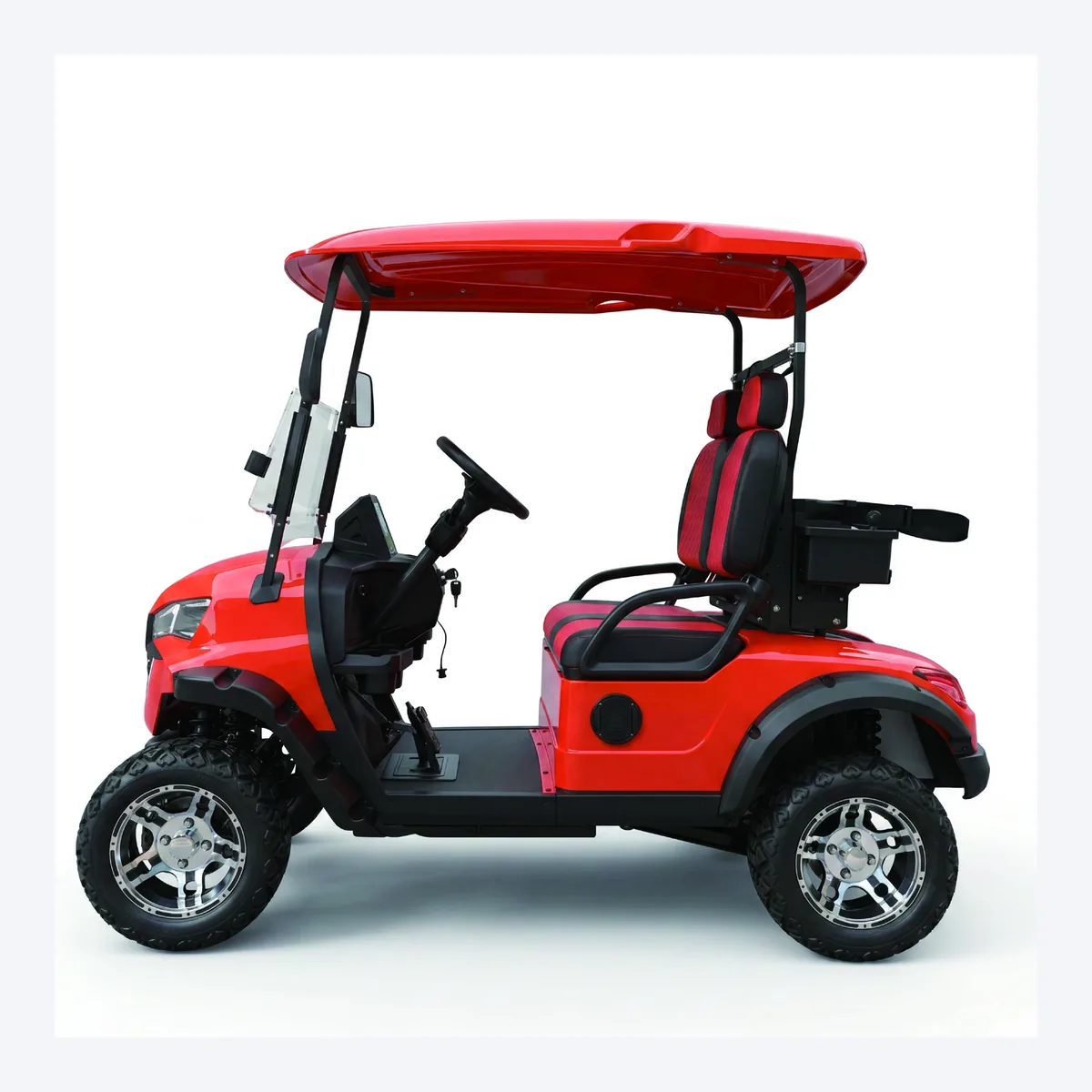
| GC-A | 4 / 5 / 7.5 kW AC | Lead-acid or LiFePO4 | 40 km/h (25 mph) | 80–100 km |
| GC-B | 60 V 4 kW AC asynchronous | 60 V 105 Ah lead-acid | ≤ 40 km/h | 60 km |
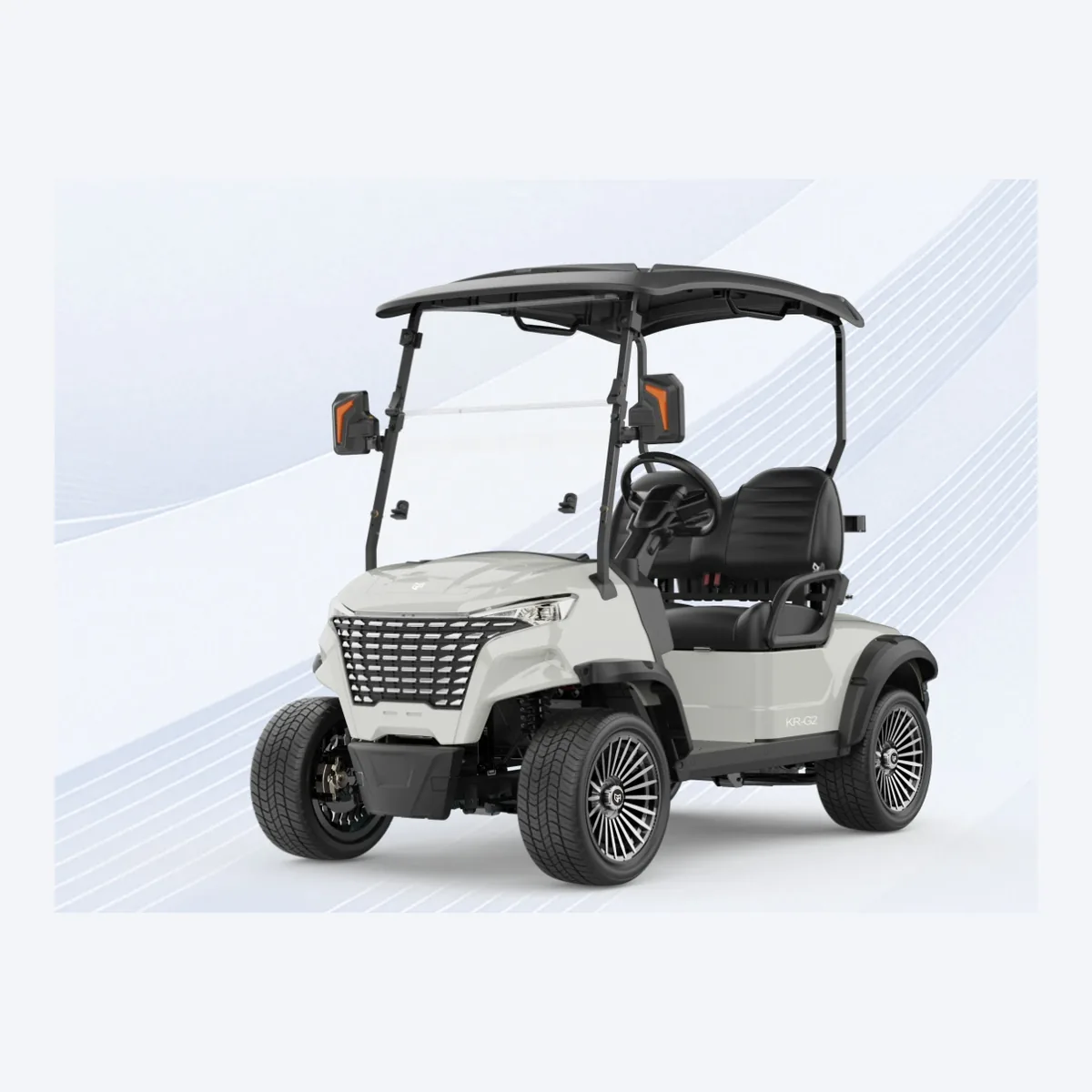
| KR-G2 | 48 V 5 kW IP67 AC | 51.2 V 105 Ah LiFePO4 | ≤ 20 mph (32 km/h) | 30–35 mi (48–56 km) |
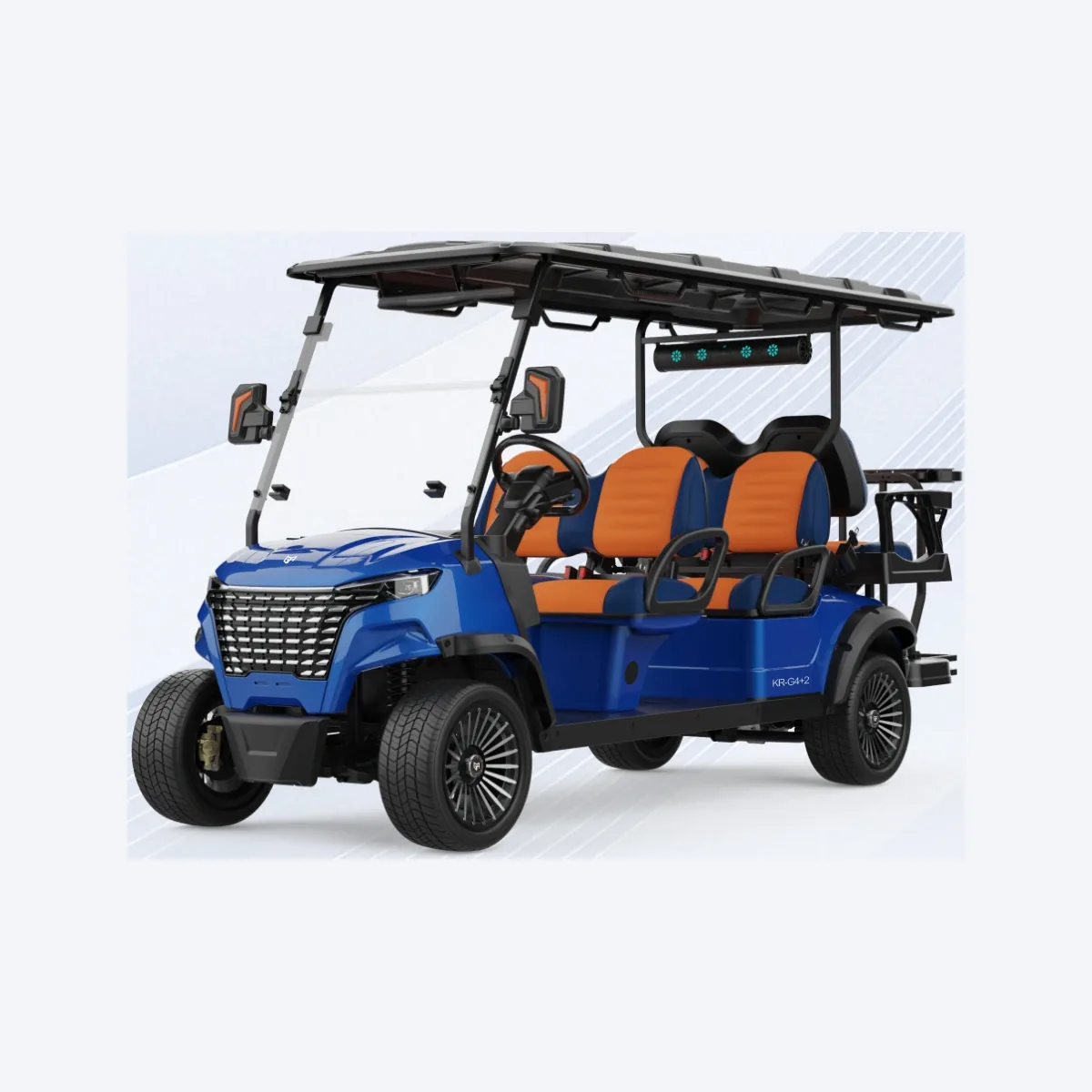
| KR-G4+2 | 48 V 5 kW IP67 AC | 51.2 V 105 Ah LiFePO4 | ≤ 20 mph (32 km/h) | 30–35 mi |
| KR-P6 | 48 V 5 kW IP67 AC | 51.2 V 105 Ah LiFePO4 | ≤ 25 mph (40 km/h) | 30–35 mi |
| KC-G2+2H | 48 V 5 kW IP67 AC | 51.2 V 105 Ah LiFePO4 | ≤ 25 mph (40 km/h) | 30–35 mi |
| KC-P4 | 48 V 5 kW IP67 AC | 51.2 V 105 Ah LiFePO4 | ≤ 25 mph (40 km/h) | 30–35 mi |
| KC-P6H | 48 V 5 kW IP67 AC | 51.2 V 105 Ah LiFePO4 | ≤ 25 mph (40 km/h) | 30–35 mi |
Only the GC-A offers a choice of rating: 4 kW, 5 kW or 7.5 kW. The GC-B uses a 60 V 4 kW AC asynchronous motor with a 60 V 105 Ah lead-acid pack and a 60 km range.
Every Ridge and Coast model uses the same 48 V 5 kW IP67 AC motor, the same 51.2 V 105 Ah LiFePO4 pack and a controller listed at 350 A / 375 A. Top speed is set by the model, not by the motor alone: the KR-G2 and KR-G4+2 are published at 32 km/h, while the KR-P6 and the Coast models with the same motor reach 40 km/h.
How much power do you need for a gradient?
The lithium platform publishes 20% gradeability. A 20% grade rises 20 m over 100 m of travel, which is steep for a resort path and rare on a golf course. Whether a cart holds speed on that grade depends on the length of the climb, the surface, the load and whether the cart has to stop on the slope.
For a route with a long or repeated climb, the GC-A can be specified with the 7.5 kW motor, which is intended for steep estate roads. Mixed terrain is the case for the 5 kW rating used across the lithium range. The 4 kW ratings suit flat resort paths and short loops.
Treat published gradeability as a model figure, not a promise for every load. Give the supplier the worst grade and the load at which it must be climbed, then confirm the result for that combination.
Does a bigger motor shorten the range?
This is the most common assumption and the least reliable. Energy consumption follows the work done: moving mass, rolling resistance, gradient and the number of stops and starts. A larger motor can run at a more efficient point when the load is heavy, and a smaller motor can be worked harder than its rating on a long climb.
Published range is per model and battery: 30–35 miles for the lithium range, 80–100 km for the GC-A and 60 km for the GC-B. It is not a per-motor figure. If a motor option is expected to change the range materially, the quotation should state the tested configuration. For planning, use the published range with a margin for load and terrain rather than adjusting it by motor size.
What else changes when you move up a motor rating?
The motor is part of a system. Current draw rises with the rating, so the controller, cables, connectors and heat rejection have to match. A higher rating should be quoted with its matched controller and battery, not as a motor alone.
On the 5 kW lithium platform, the motor and controller are both IP67 rated, which suits wash-down and wet grass. Braking and tyres also have to suit the duty: the same platform publishes braking distances under 3 m, under 3.5 m and under 4 m depending on the model, so confirm the figure for the exact model and load.
Cost moves in configuration bands, so compare quotations on the complete drivetrain, including charger and battery.
How should you specify motor power in an enquiry?
Write a short route profile and attach it to the enquiry:
- route length per shift and the number of trips per day
- the steepest grade and the length of the climb
- typical and maximum load, including passengers and cargo
- surface: paved, turf, gravel or unpaved
- stops per hour and whether the cart stops on a slope
- climate and whether the cart is stored outdoors
- charging window and available supply
With those details, the supplier can match a published rating and confirm the battery and controller. A trial on the actual route is the only reliable test. A demonstration in a flat car park does not reproduce a long grade with a full load.
Should a mixed fleet standardise on one motor rating?
Standardising on 5 kW across the Ridge and Coast models keeps one controller family, one set of diagnostic procedures and one spare motor. That matters more than the motor price when a fleet is maintained on site.
If one route is genuinely steep, do not force it onto the standard rating. A 7.5 kW GC-A may be the better vehicle for that route while the rest of the fleet stays on 5 kW. The cost of variety is in training and spares, so keep the exception to one route and one model where possible.
The questions that decide the order.
Is 5 kW enough for a resort with slopes?
The lithium platform publishes 20% gradeability, but whether that is enough depends on the length of the climb, the load, the surface and whether the cart stops on the slope. Send the worst grade and the load to be carried; if the route includes a long, steep estate road, the 7.5 kW GC-A option is the alternative.
Does more power mean a higher top speed?
Not necessarily. Top speed is governed per model. The KR-G2, KR-G4+2 and KR-P6 share the same 48 V 5 kW motor, yet the first two are published at 32 km/h and the P6 at 40 km/h. The Coast models with the same motor are also published at 40 km/h.
Can the motor be upgraded after delivery?
Motor, controller and battery are matched as a system, and motor and battery combinations are fixed at order. Changes after production starts are not possible. If a route may become steeper later, plan the higher rating at the quotation stage.
What does IP67 mean on the motor?
IP67 is an ingress protection rating: dust-tight and protected against short immersion. On the lithium range it applies to the motor and controller, which suits wash-down and wet grass. It is not a rating for driving through deep water.