2 vs 4 vs 6 Seater Golf Cart: Which Fits?
A practical comparison of two-, four- and six-seat golf carts: passenger capacity, body length, turning radius and the duty cycle each layout suits.
Quick answer
2 seats suits staff, 2+2 carries 4 and 4+2 carries 6. Lengths run about 2.4 m to 3.7 m, and a 6-seat cart turns in about 4.5 m; measure paths before choosing.
Seat count is the first question most buyers ask and the last one they should finalise. A cart that is too small creates a second trip; a cart that is too large turns every narrow path into a three-point manoeuvre and adds weight to every battery cycle. The useful question is not “how many seats can I get?” but “what is the largest group that must move in one trip, on the narrowest path the cart will use?”
This guide compares the three common layouts, the numbers behind them and the sites each one fits.
How many passengers does each layout carry?
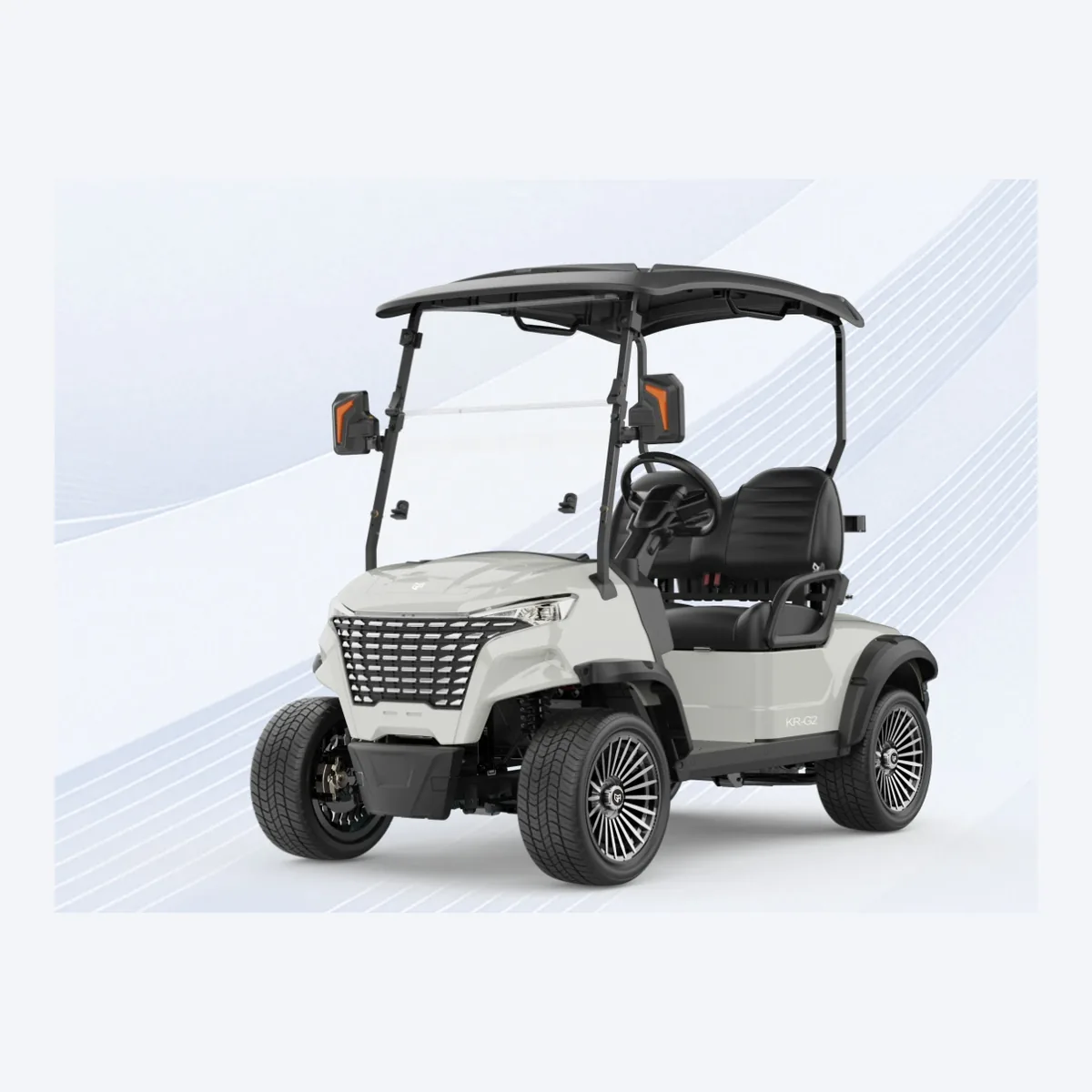
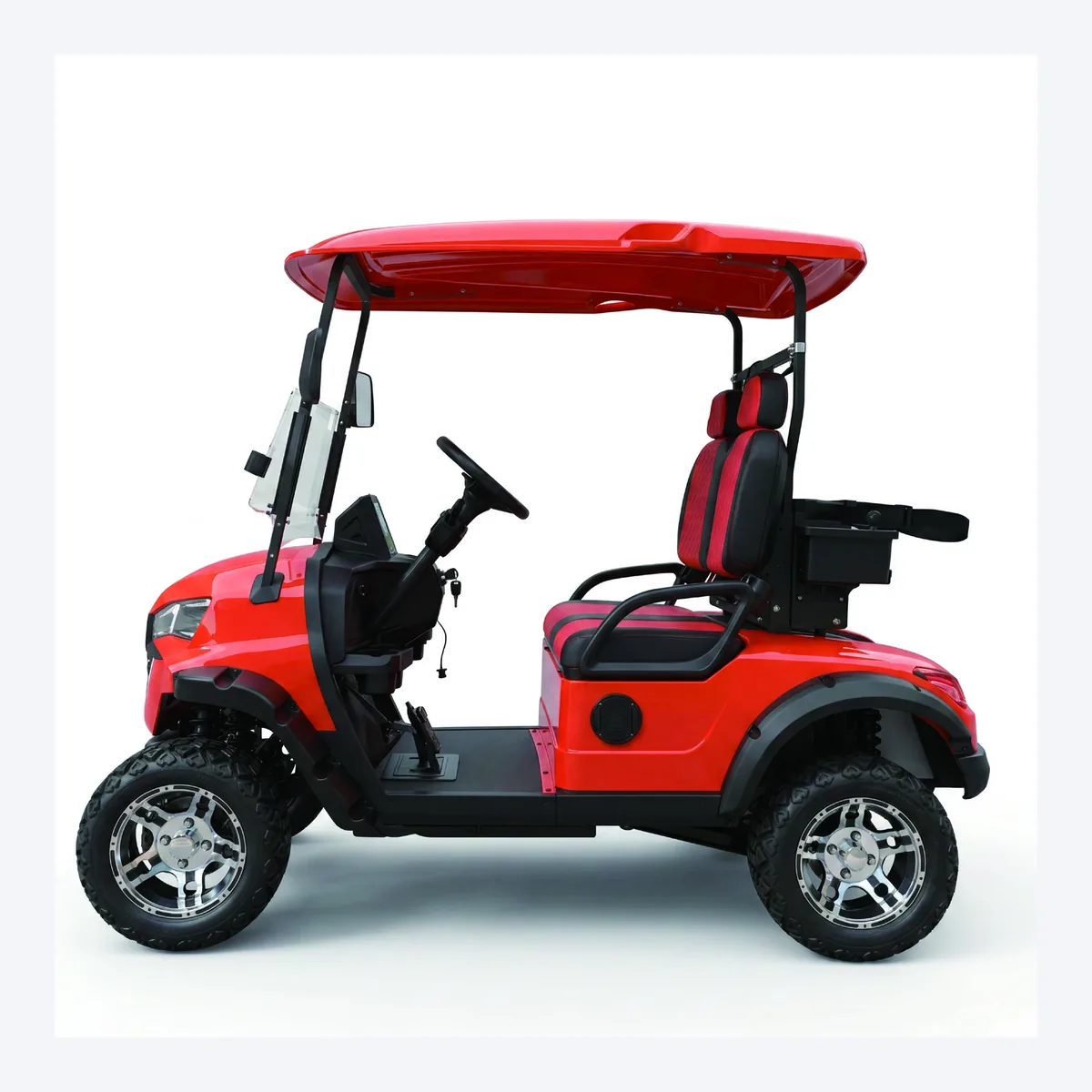
A two-seat cart has one forward-facing bench. The space behind it is usually a bag well or a small cargo area. It carries two adults and is the standard staff vehicle on a golf course.
A four-seat cart can use two layouts. A 2+2 has two forward seats and a rear-facing bench for two, carrying four passengers in a shorter body. A forward-facing four-seat layout uses two rows of benches, giving more bag space but a longer body.
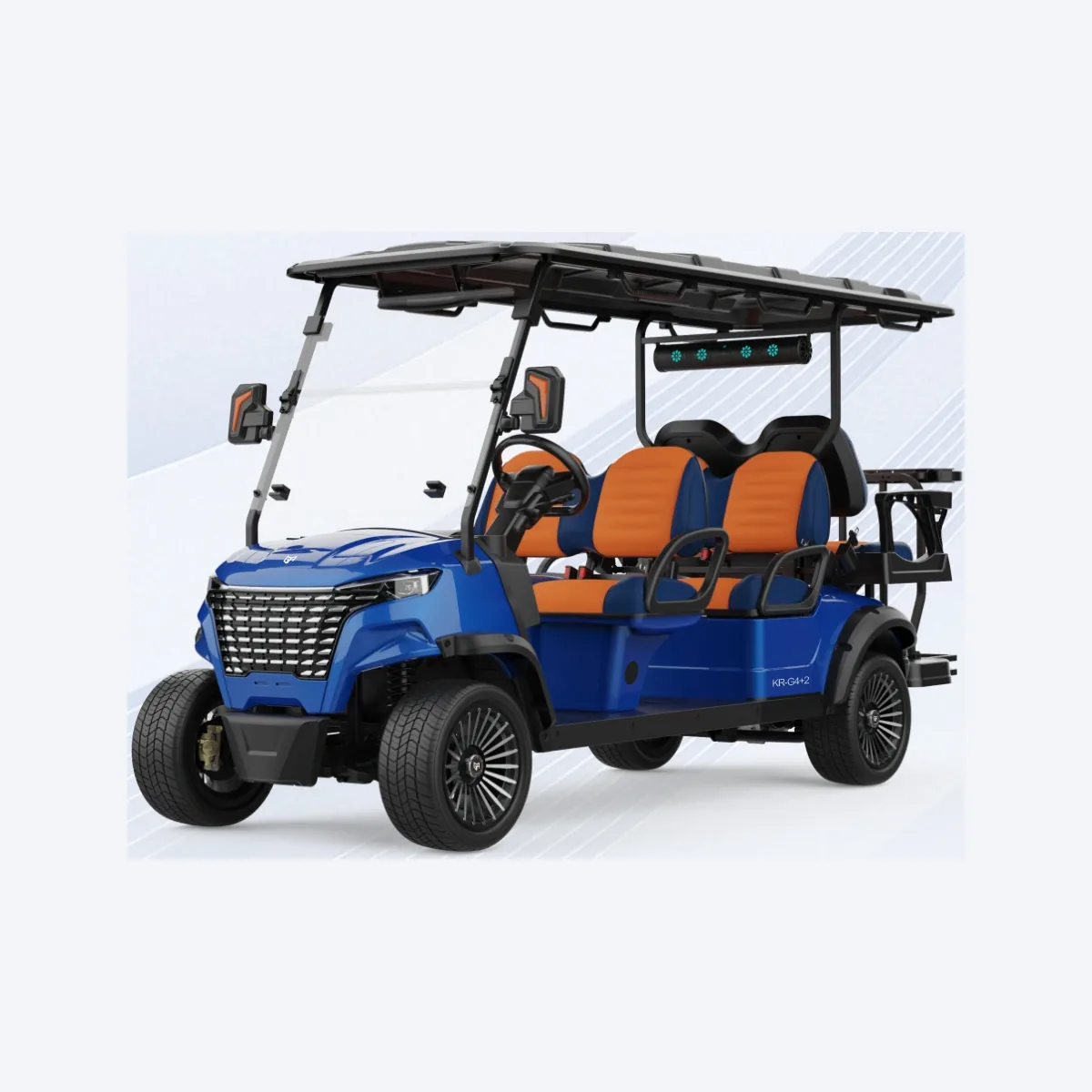
A six-seat cart usually uses a 4+2 layout: four forward-facing seats in two rows plus a rear-facing bench for two. It carries six adults and is the default resort shuttle. Eight-seat variants exist, but they are closer to a small bus and need wider paths.
| Layout | Seats | Typical length | Typical use |
|---|---|---|---|
| 2 seats | 2 | 2.37–2.45 m | Marshal, starter, maintenance |
| 2+2 | 4 | 2.43–2.95 m | Guest pairs, estate transfers |
| 4+2 | 6 | 3.67–3.78 m | Resort shuttles, tours |
| 6+2 | 8 | 4.25 m | Staff and equipment movement |
Which layout fits a golf course?
A golf course usually runs two kinds of cart: staff carts and guest carts. Staff carts are two-seaters because marshals, starters and maintenance staff travel alone or in pairs, often with a radio, tools or a small load. A short body parks easily and puts less weight on turf.
Guest carts are usually four-seaters. Two players plus two bags fit on the benches and bag well. A 2+2 gives four seats but reduces rear cargo space; a forward-facing four-seat layout gives more room for bags but a longer body.
If the course also runs tours or transfers, a six-seat cart can cover both guest groups and staff movements, but it will not fit every path designed for two-seaters. Measure the narrowest bridge, gate and parking bay before choosing.
Which layout fits a resort or hotel?
Six seats is the default for resort shuttles because it matches the common travel unit: a family, a small group or a couple with luggage. A 4+2 cart carries six adults, has a rear-facing bench for conversation, and remains short enough for most resort paths.
The trade-offs are real. A six-seat cart is roughly 3.67–3.78 m long, with a turning radius around 4.5–5 m. It weighs more, so acceleration and braking feel different from a two-seater. It also needs a larger parking bay and a charging position that does not block the path.
For hotels, a compact four-seat cart often works better for housekeeping and VIP transfers, while a six-seater handles group arrivals. A mixed fleet can use both.
How do length and turning radius change?
Every additional seat adds structure, weight and length. The turning radius grows with the wheelbase, which is why a six-seater needs more room at the tightest turn. The difference between a 4 m and a 5 m radius is noticeable on a narrow path with a wall or a planter on the outside.
Length also affects parking and charging. A 3.78 m cart needs a longer bay than a 2.43 m cart. If the charging positions are in a tight service yard, measure the available depth before ordering.
When should you choose each layout?
Choose two seats when the cart is primarily a staff vehicle, the route is short and parking is tight. Choose four seats when guests or a small team must travel together, or when the cart doubles as a resort transfer. Choose six seats when the site regularly moves groups of five or six, or when the cart is the main guest shuttle.
A mixed fleet often uses all three: two-seaters for staff, four-seaters for housekeeping and VIP transfers, six-seaters for the guest loop. Keeping them on the same platform reduces charger and spare-parts variety.
Before finalising, walk the route with a tape measure. The narrowest gate, the tightest turn and the loading bay will decide more than the brochure. If a six-seat cart does not fit, no amount of specification will fix it.
The questions that decide the order.
Is a two-seat golf cart enough for a golf course?
Two seats are enough for marshals, starters and maintenance staff. If the course rents carts to players, the guest fleet is usually four-seat because two players plus bags need more than one bench. Many courses run both.
What is the difference between 2+2 and 4+2?
2+2 means two forward-facing seats and a rear-facing bench for two, carrying four passengers. 4+2 means four forward-facing seats plus a rear-facing bench for two, carrying six. The layout changes body length, turning radius and luggage space.
Can a six-seat cart fit an older cart path?
It depends on the path width and the tightest turn. A 3.67 m six-seater typically has a 4.5 m turning radius, while a two-seater turns in about 4 m. Measure the narrowest gate, bridge and parking bay before choosing.
Do more seats mean a larger battery?
Not necessarily a larger pack, but a heavier vehicle. The six-seat Ridge and Coast models use the same 51.2 V 105 Ah LiFePO4 pack as the two-seaters, with a similar rated range. The extra weight affects acceleration, braking and real-world range.