Charging Bay and Power Planning
How to plan golf cart charging bays and electrical load: charging windows, charge times, power demand and lead-acid versus lithium.
Quick answer
A 48 V / 25 A charger brings a 51.2 V 105 Ah LiFePO4 pack to full in 5 hours; lead-acid needs 6–10 hours. Count charging bays from the shortest overnight window, not the average.

Charging is where a fleet plan meets the electricity supply. A site can own the right number of carts and still fail at 07:00 because half the fleet is still on charge, or because every charger starts at once and trips the main breaker. The charging plan has to be designed with the fleet, not after it.
This guide takes the fleet count from the calculator method, then works through the charging window, bay count, power demand and location. The electrical figures are worked examples with stated assumptions; a qualified electrician must confirm the final installation.
How long is the charging window?
The charging window is the period when vehicles are off duty and can be plugged in. For a golf course or a day-use resort, it is usually the overnight gap between the last return and the first departure. For a hotel or a 24-hour campus, the window may be split into a long overnight block and short top-ups between shifts.
Write down the real window, not the nominal one. If the last cart returns at 22:30 and the first leaves at 06:30, the window is eight hours, not ten. Cleaning, parking and plugging in consume part of it. A charging plan that assumes every minute is available will be short on the first busy morning.
How many charging bays does a fleet need?
Start with the fleet count from the calculator. Worked example, with assumptions: 200 passenger trips in the peak hour, a 12-minute round trip, four seats and a 20% spare.
- Trips per cart per hour: 60 ÷ 12 = 5.
- Vehicle trips: 200 ÷ 4 = 50.
- Base carts: 50 ÷ 5 = 10.
- With spare: 10 × 1.2 = 12 carts.
Now compare charge time with the charging window. A Ridge or Coast cart with a 51.2 V 105 Ah LiFePO4 pack and a 48 V / 25 A onboard charger charges in five hours or less. In a nine-hour overnight window, one bay could theoretically serve 9 ÷ 5 = 1.8 carts. Twelve carts would need about seven bays if the rotation were perfect.
Perfect rotation is rare. Carts return in a cluster, the same crew plugs them in, and a cart that arrives late may wait for a free bay. A simpler and more reliable plan is one bay per cart when the whole fleet returns together. Shared bays suit operations with staggered returns, a written plug-in rota and someone responsible for moving carts as they finish.
| Fleet size | Charge time | Overnight window | Theoretical bays | Default planning |
|---|---|---|---|---|
| 6 carts | 5 hours | 9 hours | 4 | 6 |
| 12 carts | 5 hours | 9 hours | 7 | 12 |
| 24 carts | 5 hours | 9 hours | 14 | 24 |
The table is arithmetic, not a recommendation to crowd a bay. Space between vehicles, cable reach and access for cleaning all reduce the number of carts a yard can realistically hold.
How much power does a cart charger draw?
Charger output is stated in volts and amps. A 48 V / 25 A onboard charger delivers about 1.2 kW to the battery. Assuming roughly 90% charger efficiency, the draw at the socket is about 1.3 kW per cart. Check the charger nameplate for the actual figure; it overrides any estimate.
For the 12-cart fleet above, the connected load is about 12 × 1.3 = 15.6 kW if every charger is on a separate circuit and all can draw at once. The peak demand depends on the charging profile: a depleted pack draws near full power for the bulk of the charge, then tapers. If all twelve carts start together after a busy day, plan for close to the connected load. If charging is staggered across the evening, the site peak is lower.
Do not assume the existing supply has spare capacity. Add the charging load to the site’s existing demand and ask an electrician to check the main switchboard, cable sizes and protection. A fleet that grows from six to twelve carts can turn a comfortable supply into an overloaded one.
| Model family | Pack | Onboard charger | Nominal charge time |
|---|---|---|---|
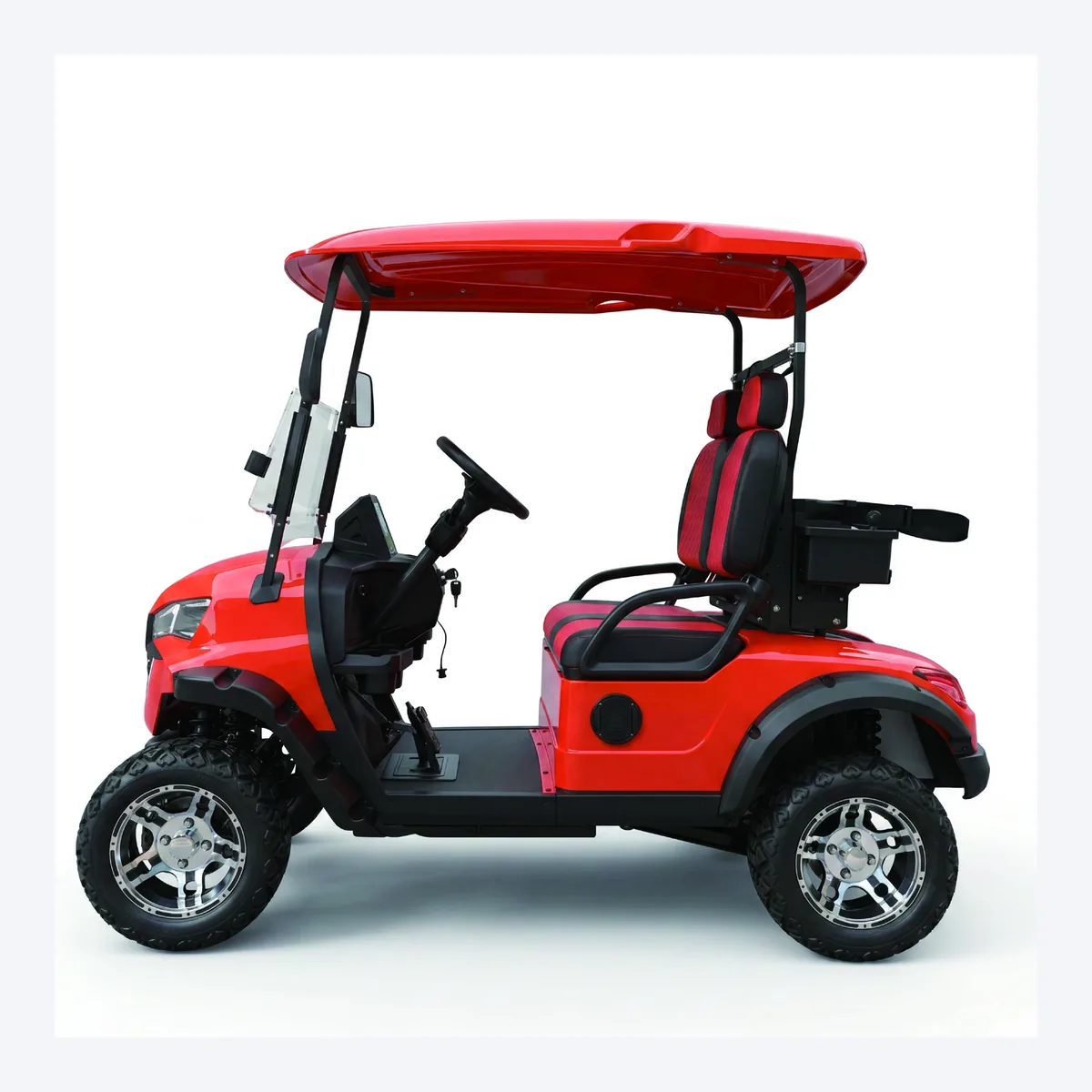
| GC-A | Lead-acid or LiFePO4 | 220 V AC onboard | 6–8 hours |
| GC-B | 60 V 105 Ah lead-acid | 220 V AC onboard | 10 hours |
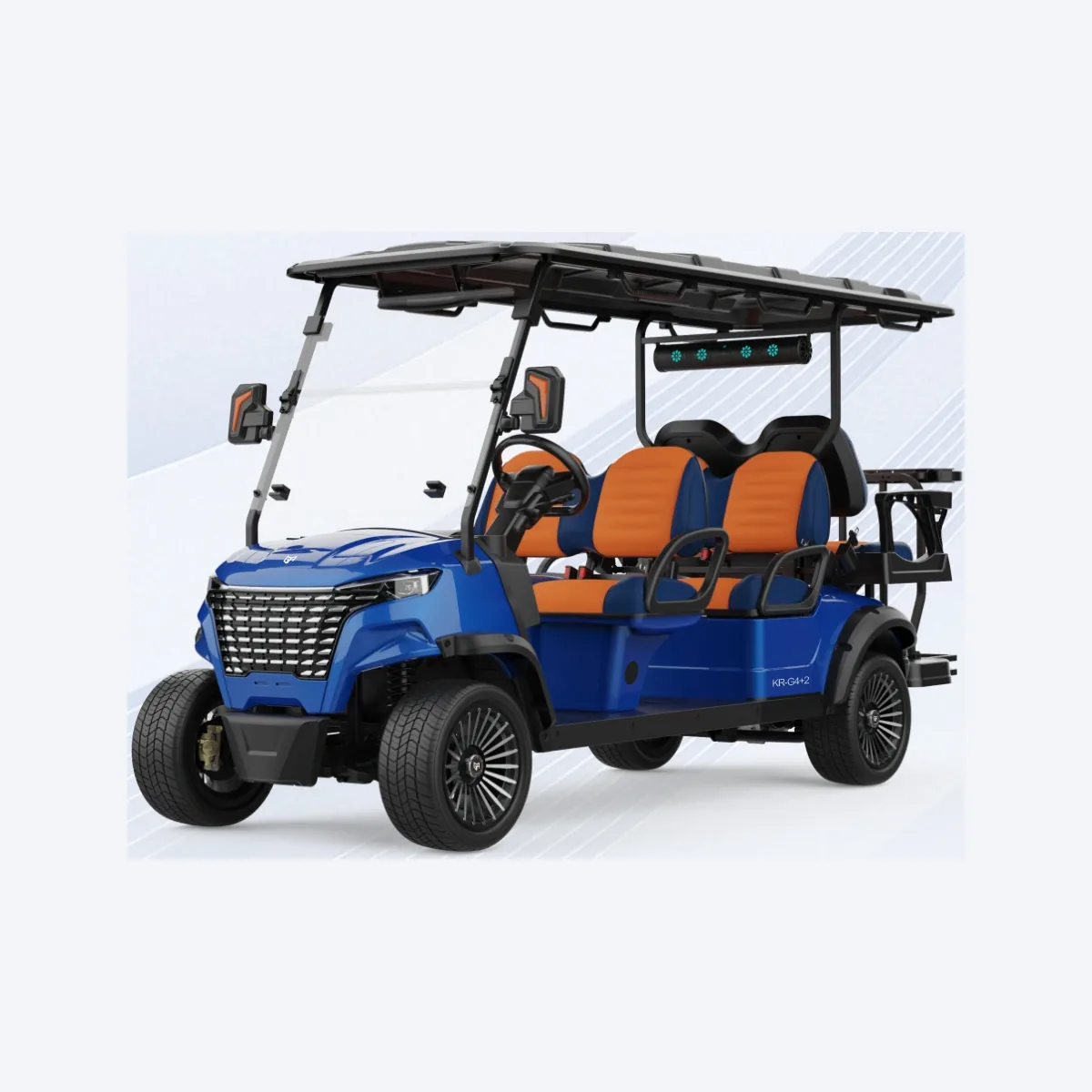
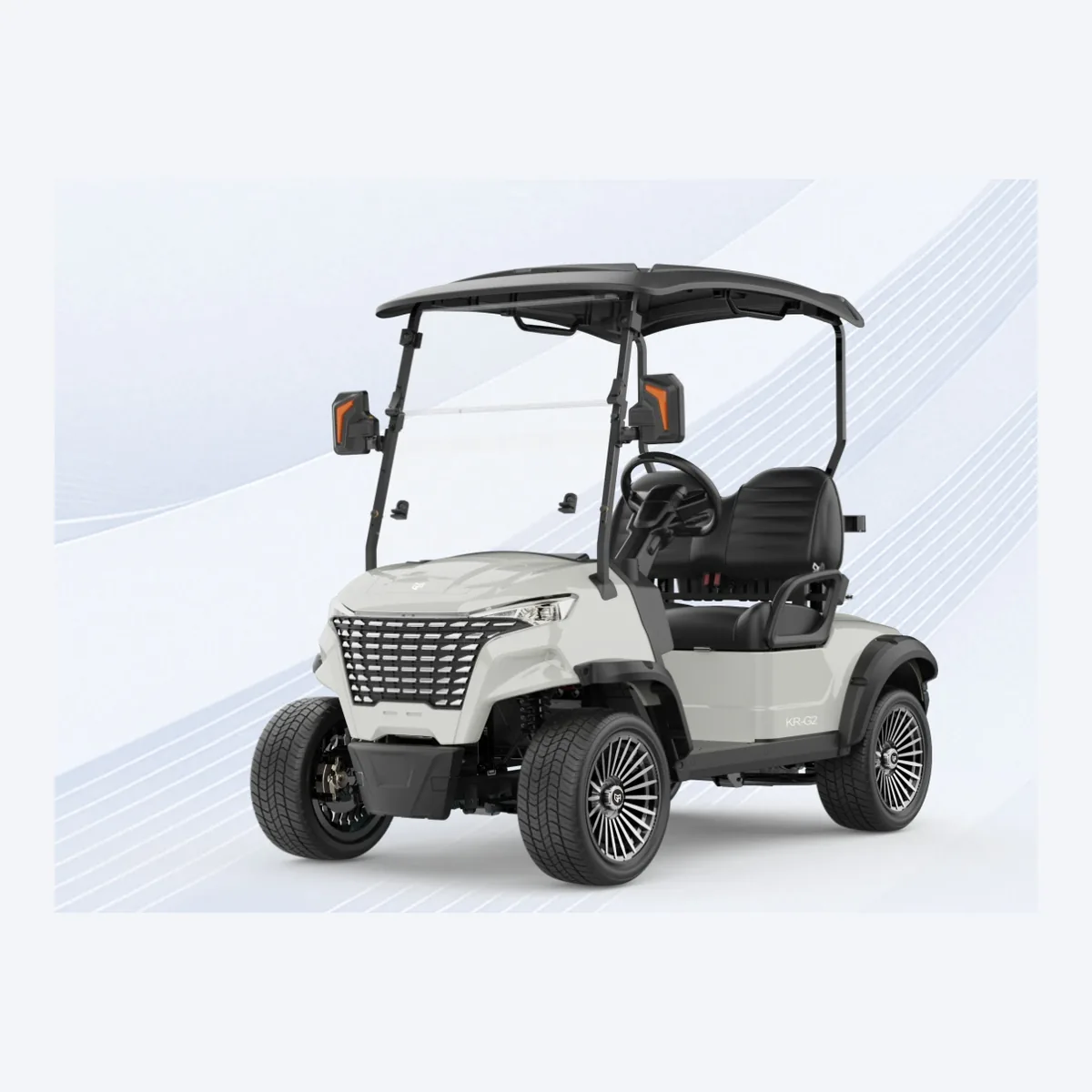
| Ridge / Coast | 51.2 V 105 Ah LiFePO4 | 48 V / 25 A onboard | 5 hours or less |
Should every cart have a dedicated charging bay?
A dedicated bay is the lowest-risk choice. The cart has a known position, the cable does not cross a walkway, and the morning check is a visual scan rather than a search. It also makes fault-finding easier: a charger that keeps tripping can be isolated without moving other vehicles.
Shared bays make sense when the fleet is larger than the yard or when charging is spread across the day. They require discipline. Mark each bay, label each cable, publish a rota and record who plugged in which cart. If the site cannot enforce those rules, the theoretical saving in bays becomes a queue of flat carts.
What changes with lead-acid versus lithium?
Lead-acid packs take longer to charge: the GC-A needs 6–8 hours at 220 V and the GC-B needs about 10 hours. They also prefer a full charge and, in flooded versions, need watering and a ventilated charging area because gassing occurs near the end of charge. A lead-acid fleet needs a generous overnight window and a routine that checks electrolyte and terminals.
LiFePO4 packs in the Ridge and Coast models charge in five hours or less with the onboard 25 A charger, tolerate partial charging better and need no watering. That makes opportunity charging practical between shifts. Lithium still has temperature limits; many packs must not be charged below freezing, and the battery documentation supplied with the order states the operating range. Neither chemistry removes the need for the correct charger and a protected circuit.
Where should the charging area sit?
Put the charging area where carts return, not where the electrical supply is easiest. A bay at the far end of the site adds a daily drive and encourages staff to skip charging. Keep the area off guest paths, under cover where possible, with lighting for evening plug-in and enough space to walk around each vehicle.
Ventilation, fire separation and electrical protection are local requirements. Flooded lead-acid charging produces hydrogen, so a closed, unventilated room is unsuitable. Lithium installations need the separation and protection required by the local authority. Cable management matters in both cases: overhead reels or retractable leads keep cables off the floor, and no installation should rely on daisy-chained extension leads.
Send the fleet list, daily distance, return times and charging window with the enquiry. We will match the charger specification to the packs and flag the site questions an electrician needs to answer before the first bay is installed.
The questions that decide the order.
Does the fleet calculator include charging bays?
No. The calculator estimates how many vehicles the peak passenger flow requires. Charging bays and electrical capacity are a separate calculation based on pack size, charger output, the available charging window and how many carts return at once.
How many charging bays should a fleet have?
One bay per cart is the simplest reliable default when the whole fleet returns together. Shared bays can work when charging is staggered and an attendant rotates plugs, but the schedule must be written down and followed.
Can a golf cart charge from a domestic socket?
The charger must match the local supply and sit on a circuit rated for continuous load. A domestic socket is often not suitable for a fleet charging area. Ask a qualified electrician to confirm the circuit, protection and cable route before installation.
Do lithium carts need different charging facilities from lead-acid?
The bay layout is similar, but lithium packs charge faster, tolerate partial charging better and need no watering. Lead-acid packs need longer, fuller charges and, for flooded types, a ventilated area. Follow the battery and charger documentation for both.