How Many Golf Carts Does a Golf Course Need?
A step-by-step method for sizing a golf course fleet from the peak tee sheet: player trips, round-trip time, seats per cart and spare ratio.
Quick answer
Size from the peak hour: a 10-minute weekend tee interval can require 12–16 carts plus 2–4 spares. Measure the 4 m turning radius and the narrowest path before fixing the fleet.
Fleet size is a peak-hour question. A course with 600 members and a quiet Tuesday does not need the same fleet as the same course on a tournament Saturday. The number that decides the order is the largest number of players who need a cart in the busiest hour, combined with how long each loop takes.
This guide uses the same method as our fleet calculator: convert passenger trips into vehicle trips, divide by the trips one cart can complete in an hour, add a spare ratio and round up. Every figure below is a planning assumption, not a measured result from a specific course.
Why does the peak tee sheet matter more than total membership?
Membership describes annual demand; the tee sheet describes hourly demand. Carts are bought for the hour when the car park is full, the starter is busy and every bay is occupied. A fleet sized on average play will be short exactly when revenue is highest, while a fleet sized on the busiest tournament day may sit idle for much of the year.
Start with the tee sheet for the busiest week of the season and count only the players who will take a cart. Walking players, members with their own vehicles and caddies do not consume fleet capacity. If the club hosts corporate days or tournaments, use those as the design case, then decide whether rental vehicles or staff carts can cover the overflow.
How many players should share one cart?
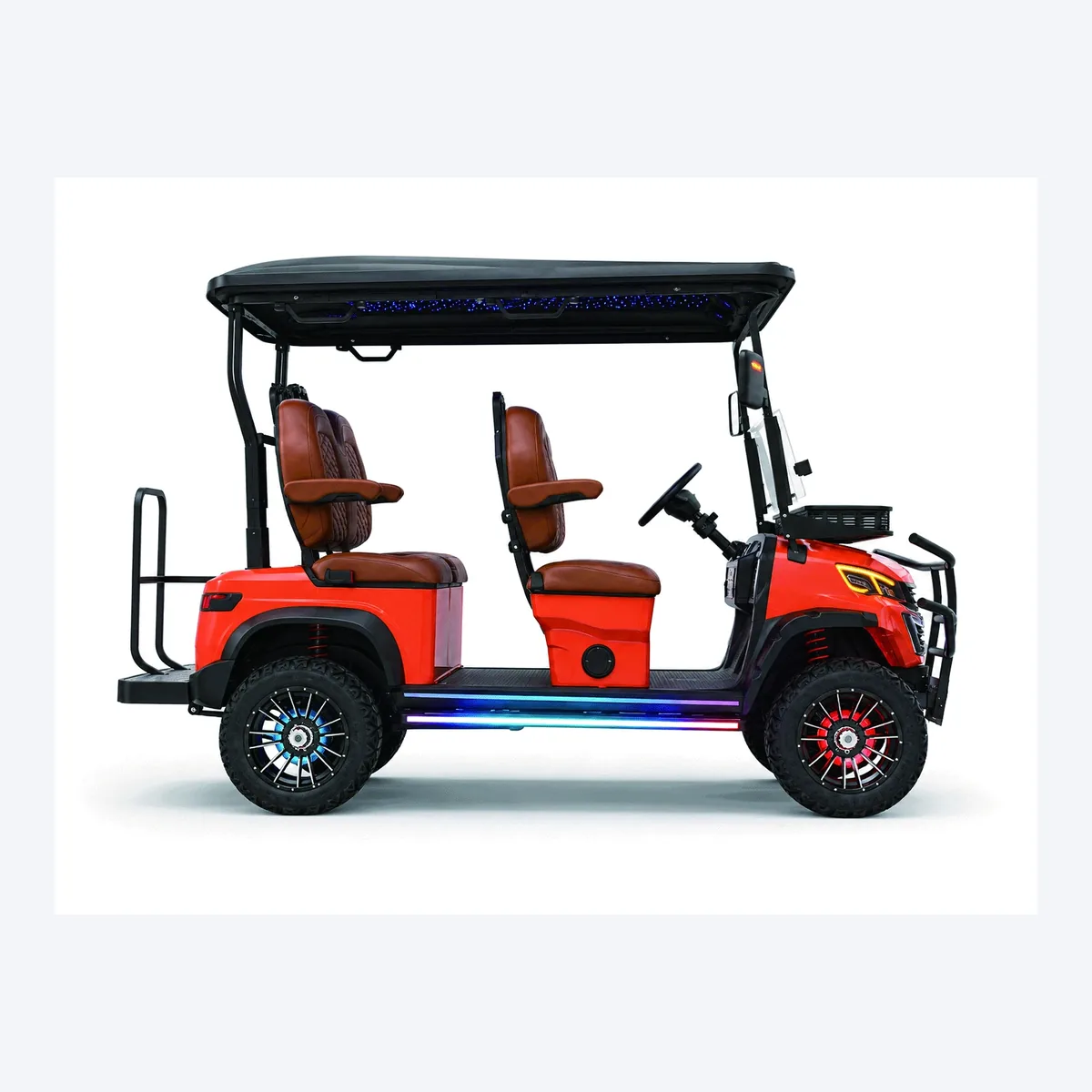
Two players per four-seat cart is the common planning basis. A four-seat cart carries two players and two golf bags comfortably; four players plus four bags is a tighter fit and leaves little room for rain gear or a cooler. Many courses therefore plan guest carts at one per pair, with a small number of six-seat carts for groups, tours or caddie transport.
This is a policy decision, not a fixed rule. If the course allows four players to share a cart, the vehicle-trip count falls and the fleet shrinks, but bag space and the guest experience change with it. Settle the policy before doing the arithmetic, because it changes the seats-per-cart input.
How do you turn player trips into a cart count?
The calculation has four steps:
- Vehicle trips = passenger trips ÷ seats per cart.
- Trips per cart per hour = 60 ÷ round-trip minutes.
- Base carts = vehicle trips ÷ trips per cart per hour, rounded up.
- Add the spare ratio and round up again.
Worked example, with all inputs labelled as assumptions: an 18-hole course expects 24 player trips in the peak hour, a loop takes 12 minutes, carts seat four and the club plans a 15% spare.
- Trips per cart per hour: 60 ÷ 12 = 5.
- Vehicle trips: 24 ÷ 4 = 6.
- Base carts: 6 ÷ 5 = 1.2, rounded up to 2.
- With spare: 2 × 1.15 = 2.3, rounded up to 3 carts.
The same method at three demand levels:
| Design case | Peak player trips/hour | Round trip (min) | Seats | Spare | Carts |
|---|---|---|---|---|---|
| Short nine-hole loop | 12 | 10 | 4 | 15% | 2 |
| 18-hole peak hour | 24 | 12 | 4 | 15% | 3 |
| 36-hole or tournament day | 48 | 14 | 4 | 20% | 4 |
Round-trip time is the whole cycle: loading at the starter, the loop, unloading and returning to the staging area. Add marshal check-in or a halfway-house stop if it is part of the routine. The calculator does not model station dwell separately, so a conservative round-trip estimate is safer than an optimistic one.
What spare ratio should a golf course plan?
A spare ratio of 15–20% is a common planning range for a small fleet. The spare covers a cart in service, a flat battery, a damaged panel and the overflow when a group arrives late. Courses with long loops, steep terrain, a single charging window or no on-site technician should plan at the upper end.
The spare is not a substitute for maintenance. A fleet that keeps 20% spares but never services brakes and batteries will still lose availability in the peak week. The spare ratio buys time; the maintenance routine protects it.
How many staff carts sit outside the guest fleet?
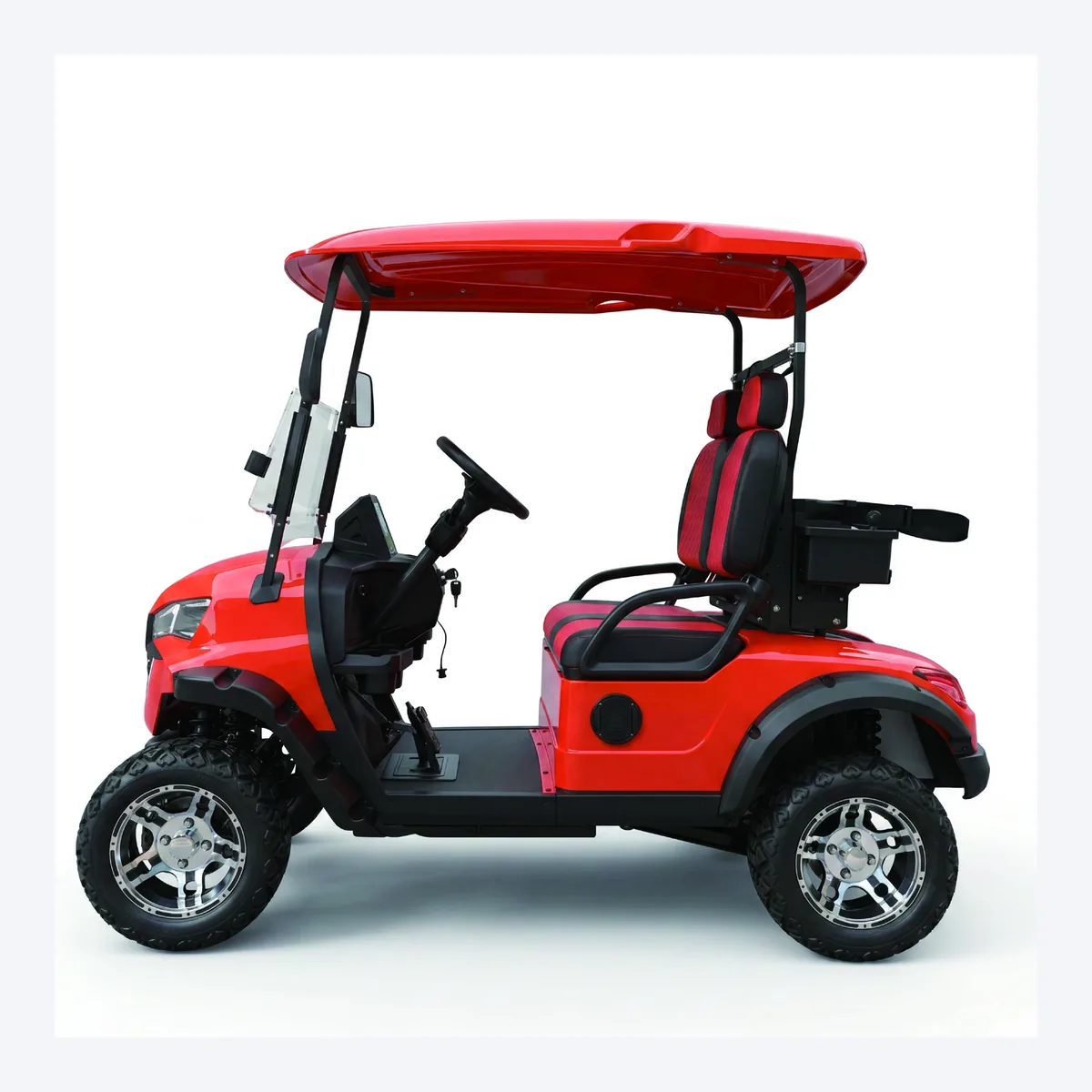
Staff carts are usually two-seaters. Marshals, starters, professional staff and the maintenance team travel alone or in pairs, often with a radio, tools or a small load. A short two-seat body parks easily, turns tightly and puts less weight on turf.
Do not hide staff carts inside the guest spare ratio. A course that needs three marshal carts and two maintenance carts needs five vehicles in addition to the guest fleet, even when that fleet already carries spares. Keeping staff and guest carts on a shared platform reduces charger and spare-parts variety, and lets the club move a spare into guest service on a tournament day.
How does weather or season change the fleet count?
Rain, heat and daylight change both demand and availability. A course that runs covered carts through a wet season may need more vehicles, because each round leaves the seats and floor wet and the cart needs cleaning before the next group. Heat stresses batteries and lengthens charging, so a fleet that is adequate in spring can lose range in midsummer. In the shoulder season the same fleet can be parked and the spare ratio reduced.
Build the design case for the worst combination the course will actually operate in, not the average month. If the club closes in winter, plan storage and a return-to-service check rather than buying for demand that will not exist.
What else should be checked before the order?
Three constraints decide whether the arithmetic survives contact with the site. First, storage: a 3.67 m six-seater needs a longer bay than a 2.37 m two-seater, and an older cart barn may not have the depth. Second, charging: the number of carts that can be charged overnight depends on bays and supply, not on the fleet count. Third, paths: the tightest turn, bridge and gate decide whether a six-seat cart can use the course at all.
Send the site plan, peak tee sheet, loop time and charging window with the enquiry. We will check the estimate against the model mix and the physical constraints, and return a configuration rather than a single cart count.
The questions that decide the order.
Should a golf course size its fleet from membership or peak tee times?
Size from the peak tee sheet. Membership describes annual demand, but carts are bought for the busiest hour of the busiest week. Count the players who will take a cart in that hour, then apply the round-trip time and spare ratio.
How many players should share one cart?
Two players per four-seat cart is the common planning basis. Four players plus four bags fit, but leave little room for rain gear. Decide the club policy before calculating, because it changes the seats-per-cart input.
What spare ratio should a golf course plan?
A range of 15–20% is a common planning starting point. Long loops, steep terrain, a short charging window or no on-site technician argue for the upper end. The spare covers service, breakdowns and peak overflow.
Do staff carts count inside the guest fleet number?
No. Marshals, starters, professional staff and maintenance teams usually need separate two-seat carts. Count them on top of the guest fleet, even when the guest fleet already carries a spare ratio.