Campus Utility Fleet Planning
How to plan a campus or industrial-park cart fleet: staff transport, task vehicles, pooling, shift patterns and site constraints.
Quick answer
Size from the peak shift: a 40-hectare campus may need 6–8 carts covering 20–55 km per day, sharing a 48 V lithium platform and 25 A chargers.
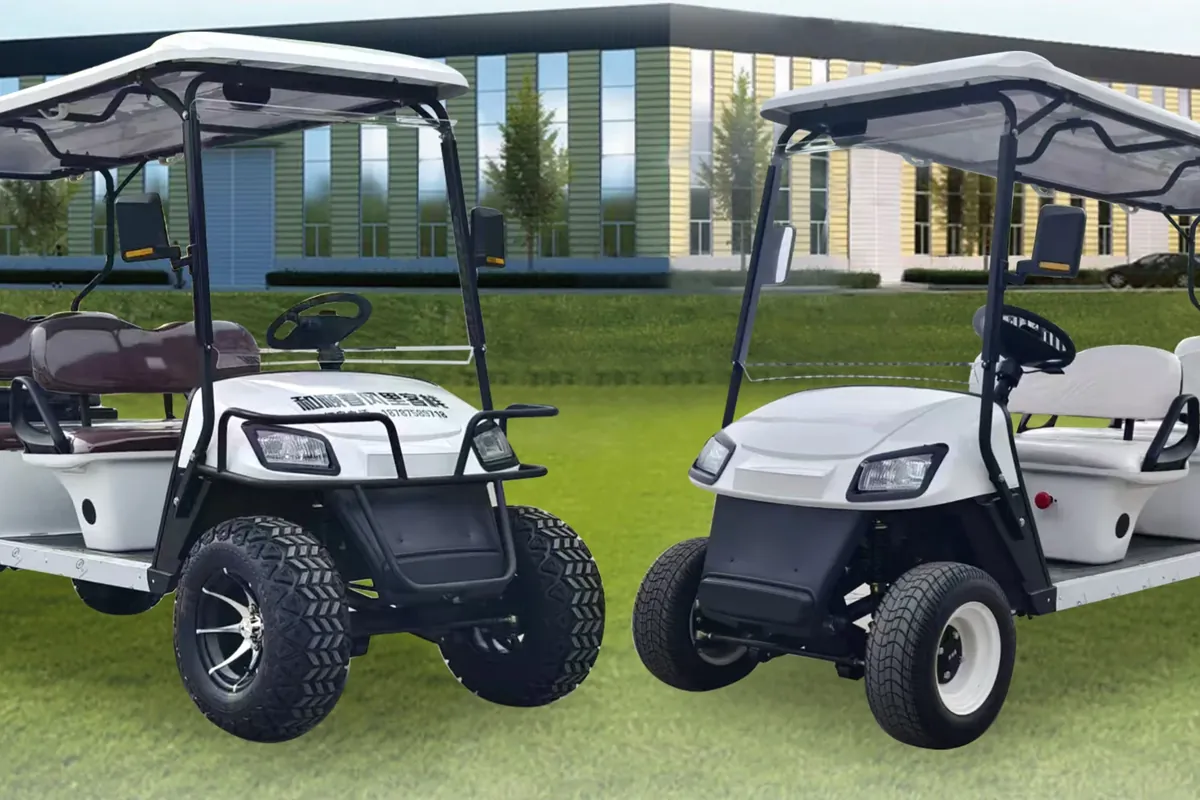
A campus fleet rarely has one job. The same site may need to move staff at shift change, carry tools to a plant room, deliver parcels to a mailroom, patrol a perimeter and take a maintenance crew to a roof plant. Sizing the fleet from passenger seats alone will leave the grounds team without a bed and the security team without a vehicle.
This guide separates people movement from task work, applies the calculator method to the passenger flow, and adds the task vehicles by shift. The examples use stated assumptions rather than measured results from a particular campus.
What jobs will the campus fleet actually do?
Start with a duty list, not a vehicle list. Typical campus duties fall into four groups: staff transport at shift change, scheduled task work such as maintenance and grounds care, on-demand response such as security and facilities calls, and logistics such as mail, parcels and supplies.
Each duty has a different demand pattern. Staff transport peaks twice a day and is predictable. Task work is spread across the shift but tied to routes and equipment. Response work is unpredictable and needs a vehicle available at short notice. Logistics may be hourly or tied to deliveries. A single pool can cover several duties only if their peaks do not collide.
How do you size staff transport on a campus?
Use the same four steps as the calculator:
- Vehicle trips = passenger trips ÷ seats per cart.
- Trips per cart per hour = 60 ÷ round-trip minutes.
- Base carts = vehicle trips ÷ trips per cart per hour, rounded up.
- Add the spare ratio and round up again.
Worked example, with assumptions declared: a business park expects 16 staff trips in the shift-change hour, a 20-minute round trip from the staff car park to the furthest building, four-seat carts and a 20% spare.
- Trips per cart per hour: 60 ÷ 20 = 3.
- Vehicle trips: 16 ÷ 4 = 4.
- Base carts: 4 ÷ 3 = 1.33, rounded up to 2.
- With spare: 2 × 1.2 = 2.4, rounded up to 3 carts.
The same calculation at three campus scales:
| Design case | Peak staff trips/hour | Round trip (min) | Seats | Spare | Carts |
|---|---|---|---|---|---|
| Office park, two buildings | 16 | 20 | 4 | 20% | 3 |
| University campus | 30 | 18 | 4 | 20% | 4 |
| Industrial park | 24 | 25 | 6 | 20% | 3 |
The round trip should include the walk from the car park to the pick-up point if the cart waits, and any gate check. On a large site, a single loop can take 25 minutes or more, which reduces the trips one cart can complete and raises the fleet count quickly.
How many task vehicles does each department need?
Task vehicles are sized by hours, not seats. List the cart-dependent work in a shift, estimate the hours each task occupies a vehicle, and divide by the productive hours one cart can provide. If a grounds team has 12 vehicle-hours of work in an 8-hour shift, it needs at least two carts (12 ÷ 8 = 1.5, rounded up), and more if charging or breaks reduce the productive hours per cart.
Do the same for each department that needs a dedicated vehicle: maintenance, grounds, housekeeping or cleaning, security, mail and events. Then compare the total with the passenger fleet. Some task vehicles can carry a crew as well as a load, which may reduce the separate passenger requirement at the margins.
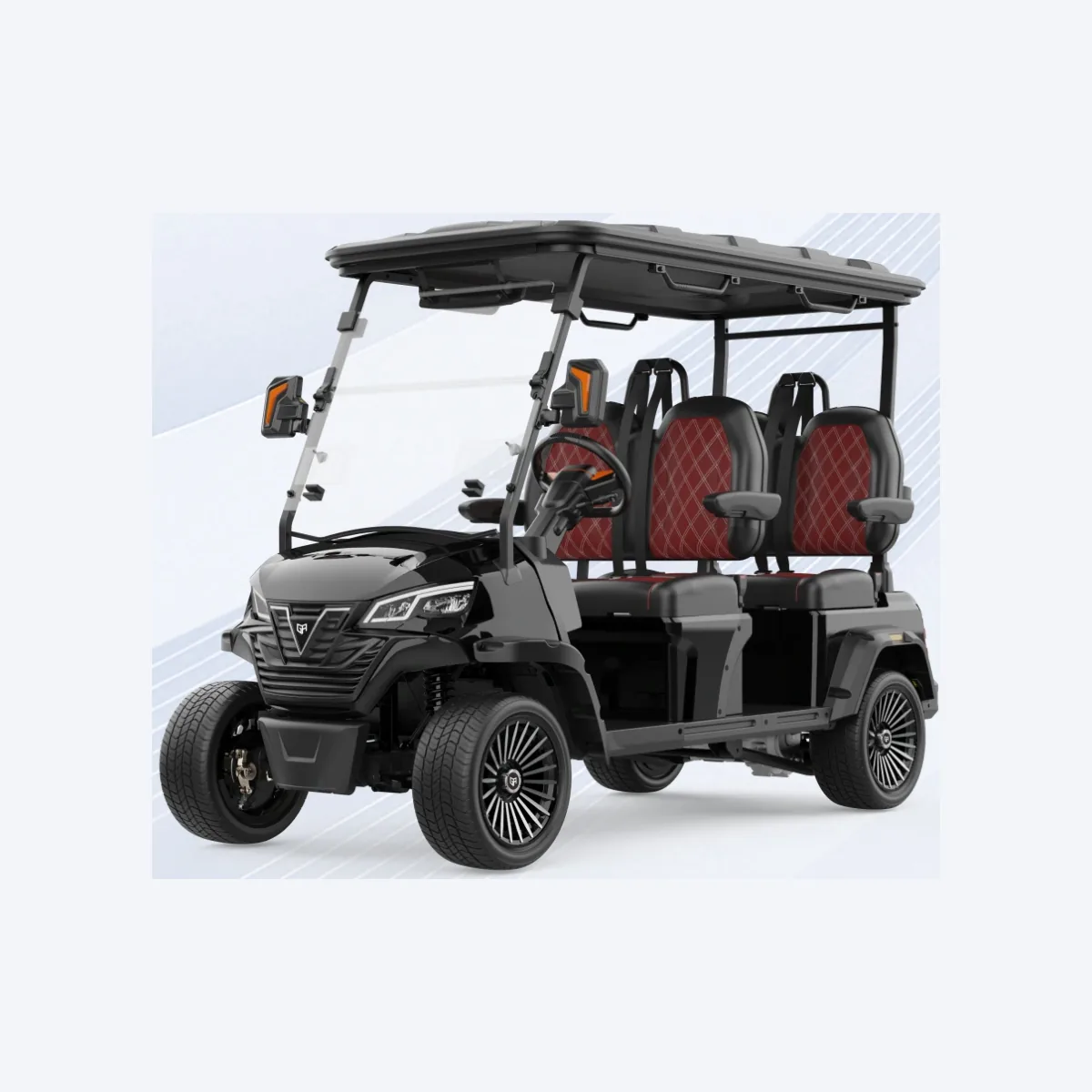
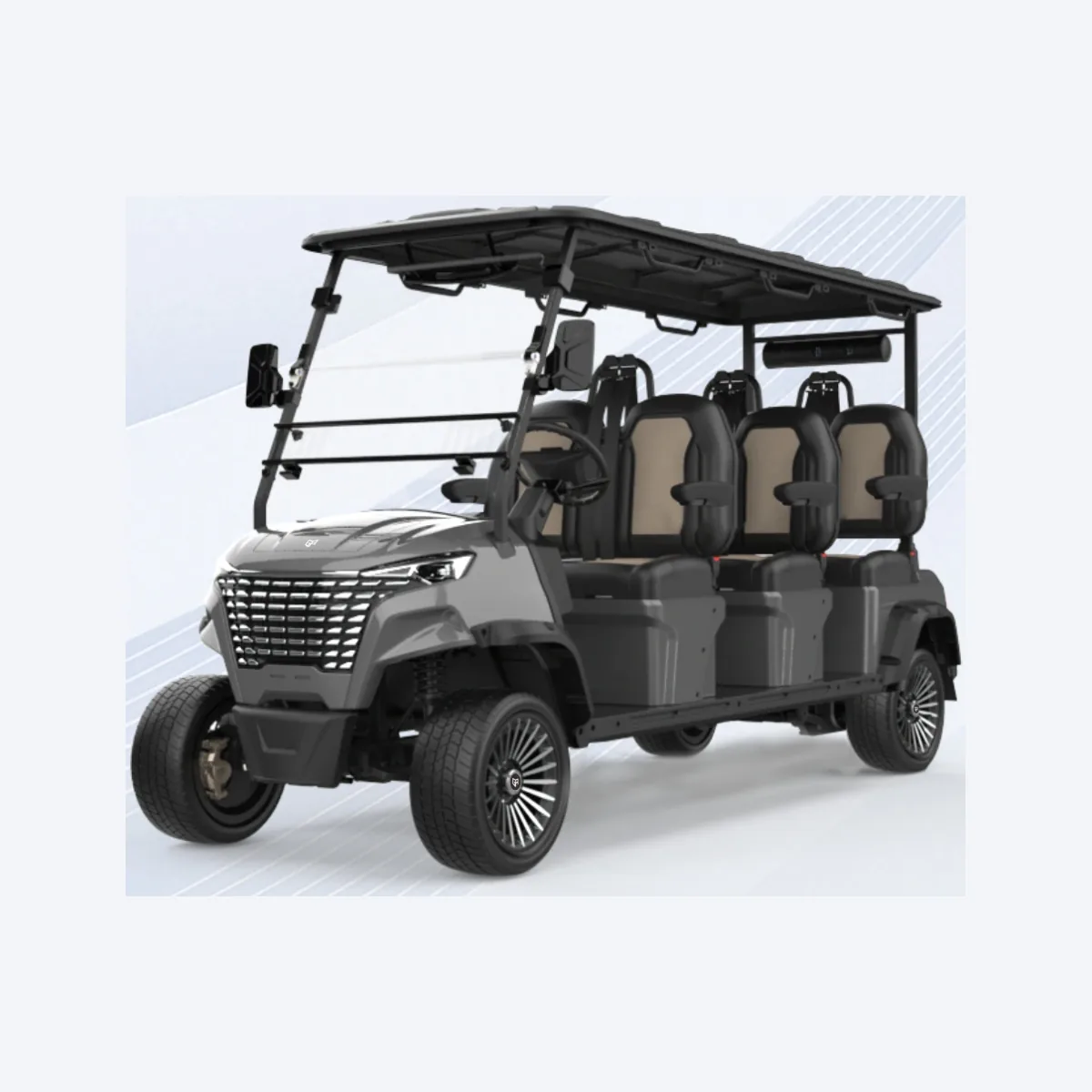
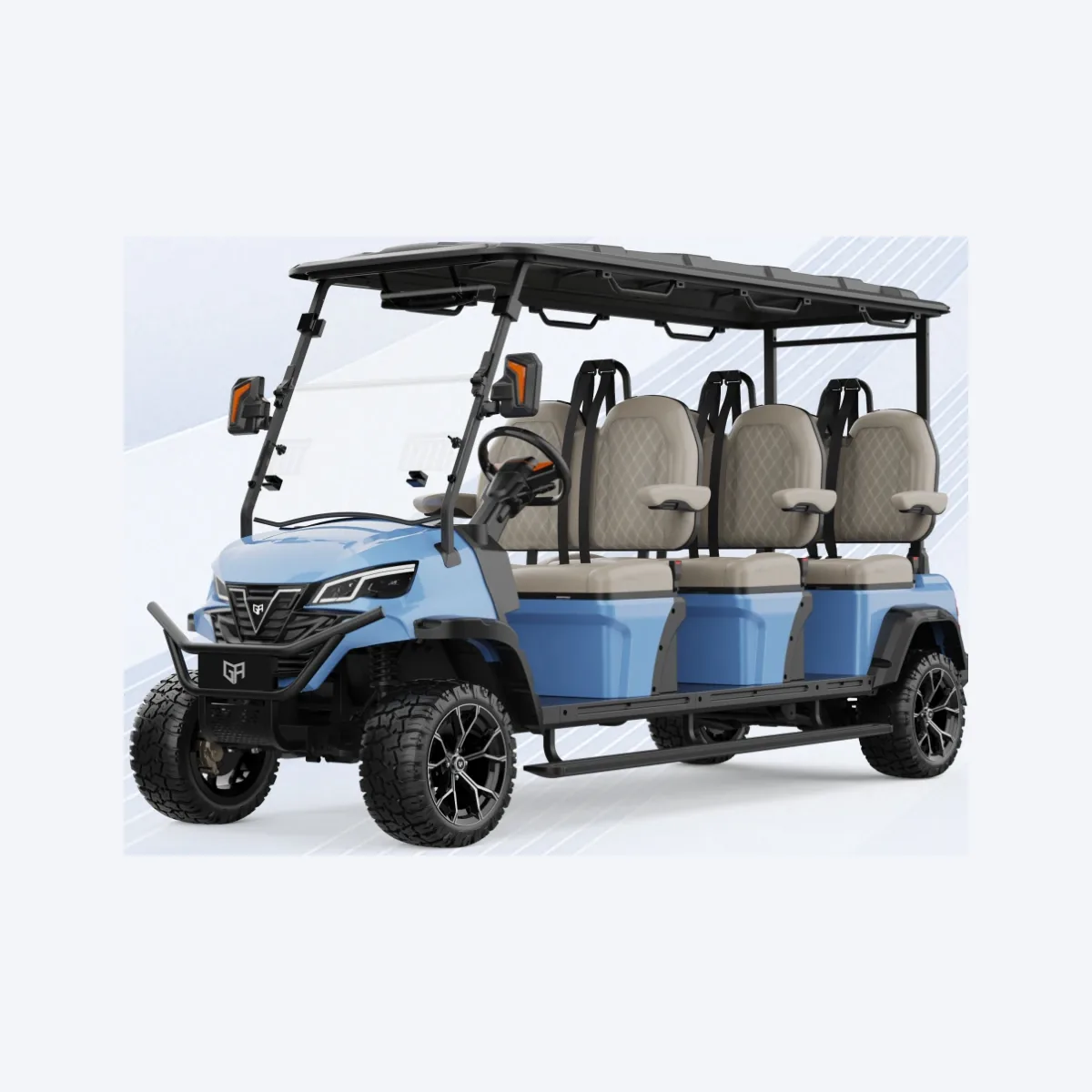
A utility cart with a flatbed is the usual task body. The KC-P4 is 2.94 m long with a 2,075 mm wheelbase, four seats and a flatbed, and turns in 4 m — useful in tight service yards. The KR-P6 is 3.72 m with a 2,860 mm wheelbase, six seats and a flatbed, for longer loops and larger crews. The KC-P6H adds 190 mm of clearance and a 4.5 m turning radius on a 3.78 m body for gravel roads and unsealed service areas. Confirm the payload of the exact bed before planning loads.
Should departments own carts or share a pool?
Department ownership is simple to administer and hard to justify financially. A cart assigned to one team may sit idle for most of the day, while another team waits for a vehicle. Pooling raises utilisation and reduces the total count, but it needs booking rules, key control, cleaning between users and a charging schedule that returns every vehicle to service.
A practical compromise is a hybrid. Keep dedicated vehicles for teams that need permanent access to tools or attachments, and pool the general-purpose passenger and utility carts. The pool should have a named controller, a daily booking sheet and a rule that vehicles return with a stated charge level. Without those rules, a pool degrades into a queue.
How do shift patterns change the fleet count?
Two overlapping shifts can double the transport demand for a short period even when total headcount is unchanged. Map the shift timetable, not just the number of employees, and use the overlap as the design case. If the overlap lasts 30 minutes, the fleet must cover it without borrowing vehicles that are already on task work.
Twenty-four-hour operations add a second problem: charging. A vehicle that must be available around the clock cannot spend a full shift on charge. Lithium packs that recharge in five hours or less can top up between shifts, while lead-acid packs need a longer window and are less tolerant of partial charging. Plan the charging schedule before fixing the fleet count.
What site constraints decide the model mix?
The narrowest gate, the tightest turn and the steepest ramp decide more than the brochure. A 5 m turning radius is fine on a perimeter road and awkward in a service yard. A 140 mm clearance is adequate on paved roads and marginal on gravel or kerbed landscaping. A long-wheelbase utility cart carries more but parks in fewer places.
Check parking at each building, the location of chargers, the route between the workshop and the furthest plant room, and whether any part of the route is a public road. Public-road use may bring registration or equipment requirements that differ from private-campus operation. Send the site plan, duty list, shift timetable and route lengths with the enquiry, and we will test the model mix against those constraints.
The questions that decide the order.
How is campus fleet planning different from golf course planning?
A campus fleet usually combines staff transport with task work such as maintenance, grounds care and deliveries. Size the passenger flow first, then add the task vehicles that each department needs for its shift.
Can the calculator size a task vehicle fleet?
Only indirectly. The calculator sizes people movement. For task vehicles, estimate the hours of cart work per shift and divide by the productive hours one cart can provide, then round up and add cover.
Should a campus buy utility carts or passenger carts?
Most campuses need both. Utility carts with flatbeds carry tools, parcels and equipment; passenger carts move staff at shift changes. A mixed fleet on one drivetrain reduces charging and parts variety.
What causes a campus fleet to grow after the first calculation?
Overlapping shifts, separate department ownership, long routes, charging downtime and vehicles kept at distant buildings all add to the effective requirement. A shared pool with booking and scheduled charging usually uses fewer vehicles.