Hotel Housekeeping Cart Planning
How to plan an electric housekeeping fleet for a hotel: staff transport, linen and amenity runs, body choice and service-yard constraints.
Quick answer
A 4-seat housekeeping cart with a 30–35 mile range and a 5-hour charge covers a typical hotel shift. Confirm a 4 m turning radius and service-lift dimensions before ordering.
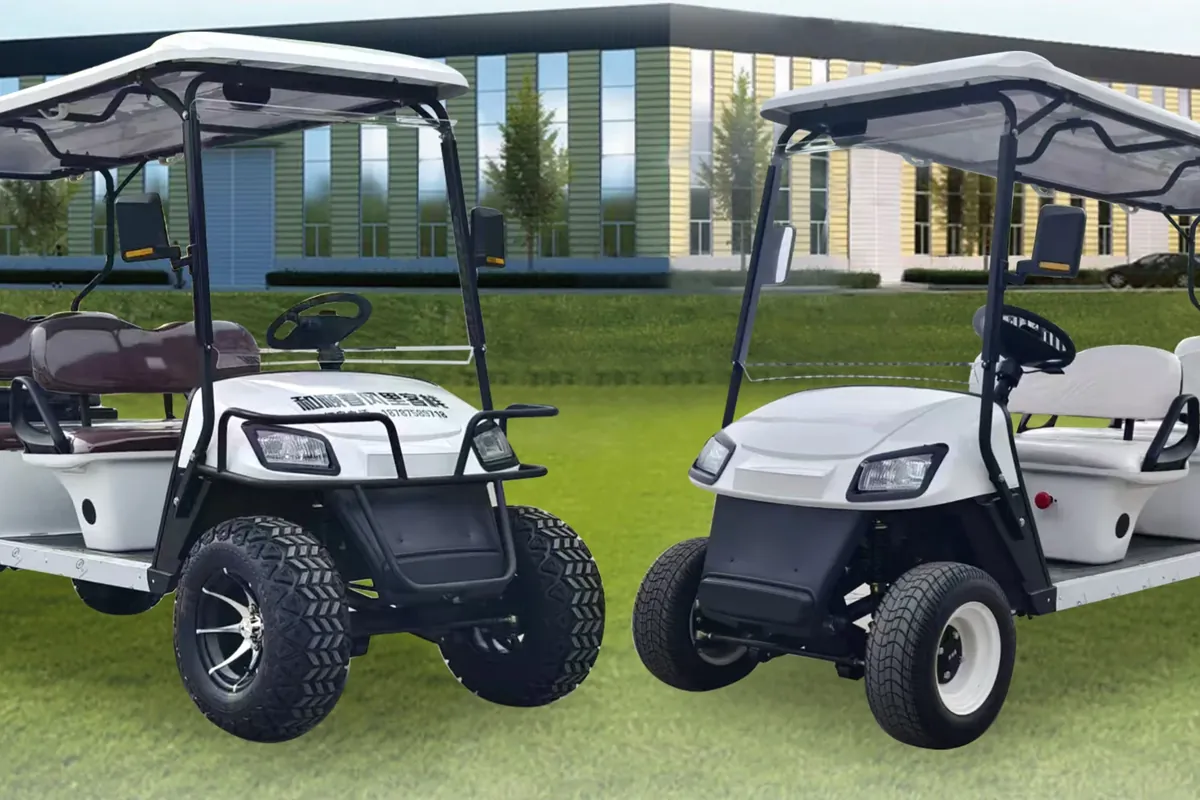
Housekeeping is the department that uses a hotel cart hardest and thinks about it least. The vehicle has to move attendants between towers, carry linen and amenities to the floors, collect soiled linen and respond to guest requests, often within the same shift. A fleet sized only for passenger seats will be wrong by mid-morning.
This guide separates the two demand streams that housekeeping creates, applies the same four-step method used by our fleet calculator to each, and then checks the body style and the service yard. The numbers below are planning assumptions, not benchmarks from a named property.
Why is housekeeping a different fleet problem?
A shuttle moves guests from A to B and returns empty. A housekeeping cart moves people, supplies and waste, and its capacity is measured in room-kits rather than seats. The cart may also be parked for long periods while an attendant services rooms, which means a vehicle can be fully occupied without being on the move.
That changes the planning question. Instead of asking how many guests per hour, ask how many attendants must reach their floors, how many linen sets must move, and how often the cart must return to the linen room. The two flows can be sized separately and then compared with the shift pattern.
How many rooms can one cart serve in a shift?
The cart does not clean rooms; it supports the attendant. The practical limit is how many room-kits it can carry and how long it can stay away from the linen room. A compact flatbed loaded with folded linen, water, amenities and cleaning supplies may cover part of a floor before it needs restocking.
Start with the property’s own standard: rooms per attendant per shift, kits per room, and the distance from the linen room to the furthest block. Then convert that into trips per hour. If the cart must return every hour, the route time matters as much as the bed size. If it can carry a half-shift of supplies, the same cart supports more rooms.
How do you size transport for the housekeeping team?
Use the calculator method unchanged:
- Vehicle trips = passenger trips ÷ seats per cart.
- Trips per cart per hour = 60 ÷ round-trip minutes.
- Base carts = vehicle trips ÷ trips per cart per hour, rounded up.
- Add the spare ratio and round up again.
Worked example, all inputs assumed: 60 housekeeping staff trips at the shift change, a 10-minute round trip from the staff entrance to the furthest tower, four-seat carts and a 20% spare.
- Trips per cart per hour: 60 ÷ 10 = 6.
- Vehicle trips: 60 ÷ 4 = 15.
- Base carts: 15 ÷ 6 = 2.5, rounded up to 3.
- With spare: 3 × 1.2 = 3.6, rounded up to 4 carts.
The same transport calculation at three hotel scales:
| Design case | Peak staff trips/hour | Round trip (min) | Seats | Spare | Carts |
|---|---|---|---|---|---|
| 80 keys, single tower | 20 | 8 | 4 | 15% | 2 |
| 200 keys, two wings | 60 | 10 | 4 | 20% | 4 |
| 350 keys, resort layout | 90 | 14 | 6 | 20% | 5 |
These figures cover staff transport only. Linen and amenity delivery is a second calculation, even when the same vehicle eventually does both.
Which body style fits housekeeping work?
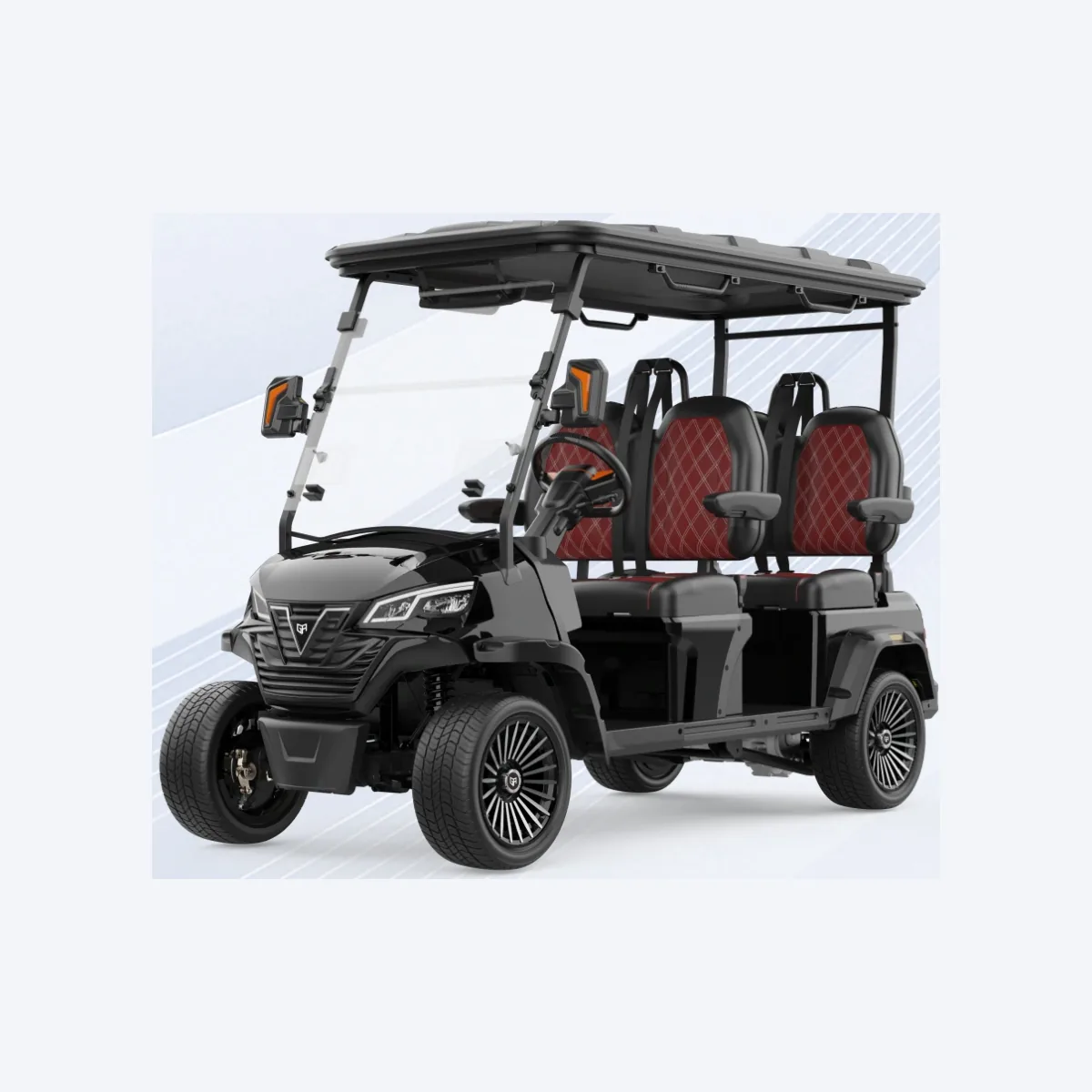
A flatbed utility cart is the default because linen bags, amenity boxes and cleaning equipment do not need seats. The KC-P4 is the compact option: 2.94 m long, a 2,075 mm wheelbase, four seats and a flatbed, with a 4 m turning radius and 140 mm of clearance. It fits service corridors and tight yards where a longer vehicle would need a three-point turn.
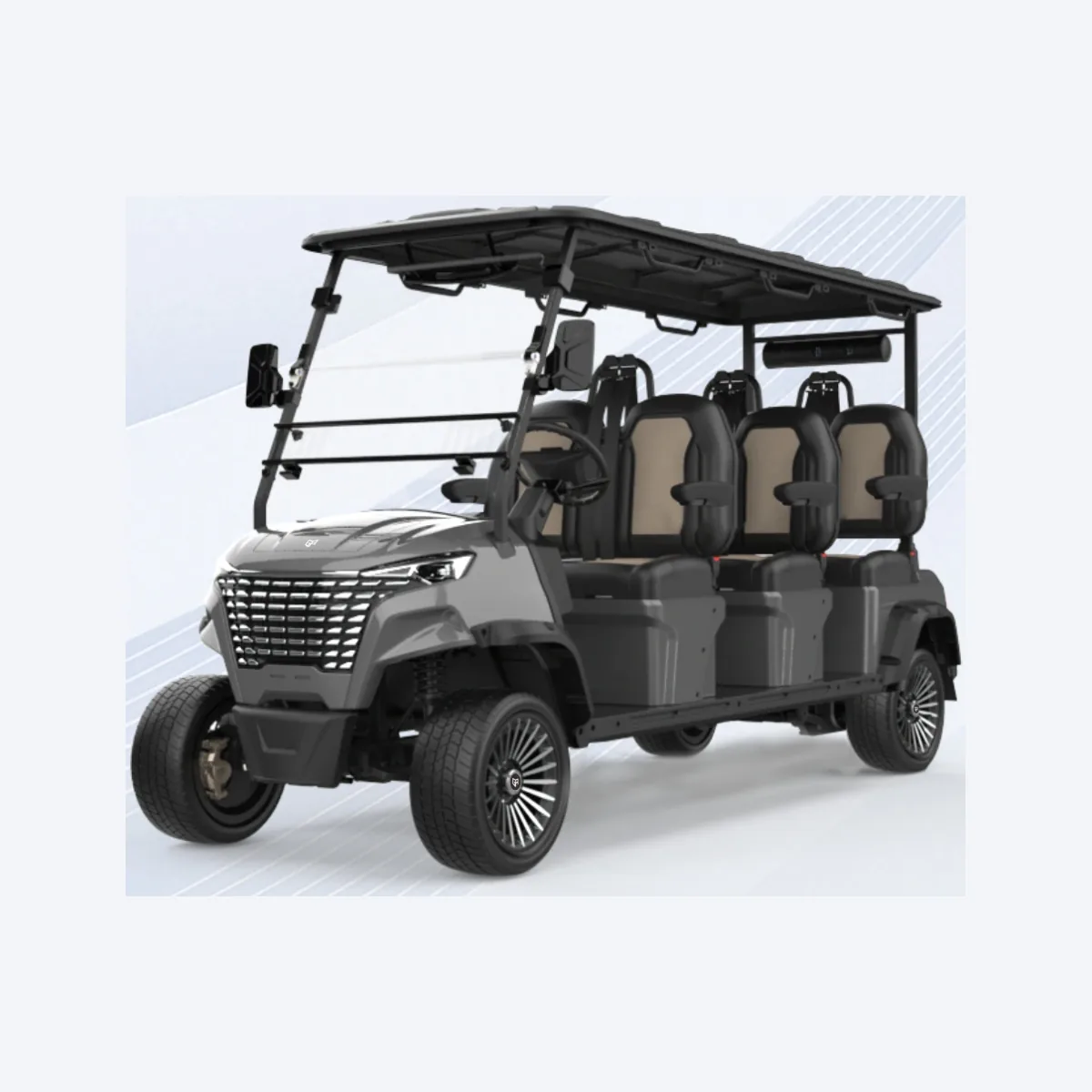
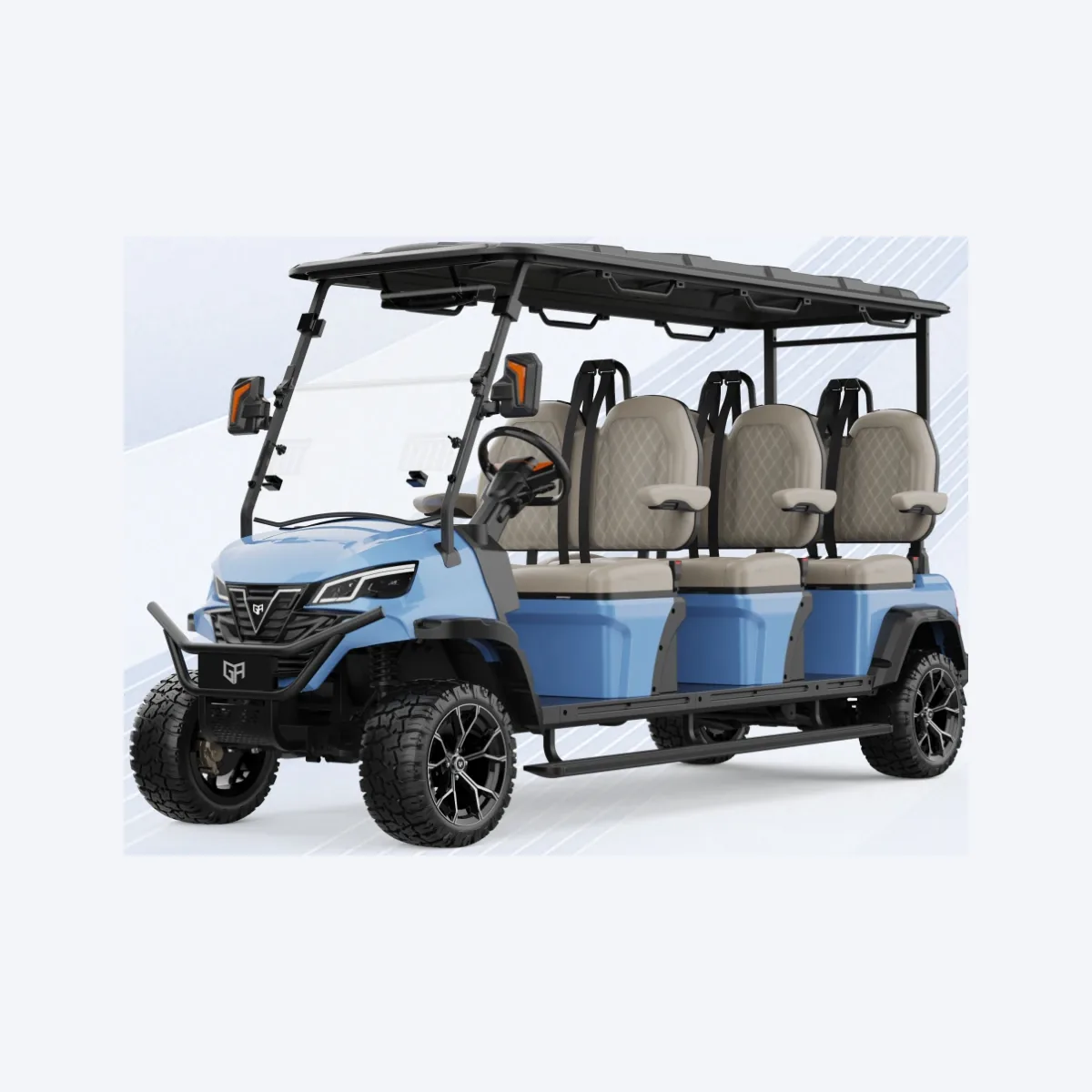
The KR-P6 adds length and capacity: 3.72 m, a 2,860 mm wheelbase, six seats and a flatbed, with a 5 m turning radius. It suits a larger property that moves a full crew and a meaningful load in one trip. The KC-P6H is similar in size at 3.78 m but offers 190 mm of clearance and a 4.5 m turning radius, which helps on gravel service roads and resort grounds.
All three share the 48 V 5 kW IP67 drivetrain and 51.2 V 105 Ah LiFePO4 pack, so a mixed fleet uses one charger type and one service routine. Confirm the rated payload for the exact bed configuration before loading; passenger weight and cargo share the same rating.
How do linen and amenity runs change the count?
Replace “seats” with “room-kits per trip” and the same formula applies. Assume a 96-room turnover spread over four hours, which is 24 room-kits per hour, a 12-minute linen-room loop, four kits per cart and a 20% spare.
- Trips per cart per hour: 60 ÷ 12 = 5.
- Vehicle trips: 24 ÷ 4 = 6.
- Base carts: 6 ÷ 5 = 1.2, rounded up to 2.
- With spare: 2 × 1.2 = 2.4, rounded up to 3 carts.
If the linen room is in a basement and the cart must use a service ramp, add that time to the round trip. If the property uses floor closets instead, the loop may be shorter but the cart needs shelving or bins to keep kits organised. The load per trip is a property-specific number; measure it by loading a cart once and counting.
What should be checked in the service yard?
Parking is the first constraint. A 3.78 m cart needs a longer bay and a wider turning envelope than a 2.94 m cart, and many service yards were laid out for vans or manual trolleys. Check the door width, the tightest corner and the ramp gradient on the actual route, not on the drawing.
Charging is the second. Overnight charging works if every cart has access to a socket and the yard is secure. If housekeeping runs two shifts, a five-hour lithium charge allows a partial top-up between shifts, while a lead-acid pack may need the full window. Keep cables off the pedestrian route and provide weather cover at the charging position.
Finally, separate housekeeping movements from guest flows. A linen cart crossing the lobby at check-in time creates a poor first impression and a safety risk. Schedule deliveries before the arrival wave, use service lifts and back-of-house routes where they exist, and keep the guest-facing forecourt for shuttles.
The questions that decide the order.
Is a housekeeping cart the same as a passenger shuttle?
No. A housekeeping vehicle carries attendants, linen, amenities and equipment between service points. A flatbed utility body is usually more useful than passenger seats, although a four-seat crew cab lets one cart move the whole team.
How do I count linen runs in the fleet calculation?
Use the same four-step method but replace seats with the number of room-kits or linen sets one cart can carry per trip. Count the sets needed in the busiest hour, divide by the load per trip, then apply the round-trip time and spare ratio.
Can one cart cover both staff transport and linen delivery?
Sometimes, if the shift change and the linen schedule do not overlap. If both peak together, size them separately and compare the sum with a shared pool. A cart that leaves the linen room full cannot also collect a crew from the staff entrance.
What clearance does a hotel service cart need?
Check the narrowest service door, corridor turn and ramp on the route. A standard utility cart has 140 mm of clearance; high-clearance models offer 190 mm for gravel and kerbs. Measure before choosing, because a tight service yard cannot be widened later.