Golf Cart Maintenance: A Fleet Schedule
What to check before every shift, weekly and seasonally — plus the battery care rules that prevent most roadside failures.
Quick answer
Plan a daily walk-around, a weekly brake and tyre check and a seasonal service. A 48 V lithium pack needs no watering, but the 5-hour charge window and IP67 connectors still need inspection.

Most golf cart failures are not dramatic. They are a brake pedal that feels soft, a tyre that has lost pressure, a battery that was left connected over a long weekend, or a charger that was plugged in but never switched on. A short, repeatable inspection routine catches these before they become a stranded guest or a missed tee time.
This schedule is written for a site with a mixed fleet of electric carts — lead-acid and lithium, passenger and utility. Adapt the intervals to the duty cycle and the operation manual; the principles stay the same.
What should be checked before every shift?
The pre-shift check should take two to three minutes and should be done by the driver, not only by the workshop.
- Tyres: visible damage, embedded objects and pressure. A soft tyre changes steering and braking.
- Brakes: press the pedal at low speed. It should feel firm, not spongy, and the cart should stop in a straight line.
- Lights and horn: headlights, brake lights, turn signals and the reversing buzzer.
- Mirrors and canopy: secure mounts, no cracked glass or loose roof panels.
- Seats and belts: no tears, and belts latch correctly where fitted.
- Battery gauge: enough charge for the planned route, with a reserve.
- Charger lead: unplugged before moving, and the connector is not damaged.
- Fluids and leaks: none on a pure electric cart, but check for water ingress after rain or washing.
If anything fails, tag the cart out of service. A cart with a soft brake or a flickering light should not carry guests.
What belongs in the weekly inspection?
The weekly check goes deeper and is best done by a trained staff member with the cart on a level surface.
| Area | What to check |
|---|---|
| Battery | Terminal tightness (lead-acid), pack mounting, BMS fault indicators, charger operation |
| Brakes | Pedal travel, parking brake hold, brake noise, brake fluid where applicable |
| Tyres | Tread depth, sidewall cracks, wheel nut torque |
| Steering | Play in the wheel, rack ends, unusual noise |
| Suspension | Leaks from shock absorbers, loose mounts, ride height |
| Electrical | Lights, horn, instrument panel, charging inlet, wiring harness |
| Body | Loose panels, cracked canopy, mirror mounts, seat fixings |
| Safety | Fire extinguisher (where fitted), first-aid kit, warning triangle |
Record the results. A weekly log turns a vague “it felt fine” into a trend you can act on: a brake pedal that slowly loses travel, a tyre that needs air every week, or a charger that takes longer than it used to.
How should batteries be cared for?
Battery care is the highest-value maintenance task, and the rules differ by chemistry.
- Keep the pack fully charged; avoid leaving it partially charged for long periods.
- Check the electrolyte level where the pack is serviceable, and top up with distilled water only.
- Clean and tighten terminals; apply a protective coating if the site is humid or coastal.
- Charge in a ventilated area; lead-acid charging can release hydrogen.
- Do not charge a frozen pack.
- Use the charger supplied or approved for the pack; do not use a lead-acid charger.
- Avoid charging below the temperature limit specified by the BMS.
- Store at the recommended state of charge, not necessarily full.
- Check the BMS or app for fault codes and cell balance.
- Keep the pack dry and the connectors clean.
For both chemistries, a battery isolation switch is worth specifying. It prevents parasitic drain during storage and gives the workshop a safe way to disconnect the pack before electrical work.
What wears out first on a golf cart?
The consumables are predictable:
- Tyres — especially on paved paths and in hot climates.
- Brake pads and discs — frequent stop-start duty wears them faster than steady cruising.
- Wheel bearings and suspension bushings — potholes and gravel roads accelerate wear.
- Lamps and mirrors — impact damage and UV exposure.
- Seat covers and armrests — sun and cleaning chemicals.
- Charger connectors and cables — repeated plugging and dragging.
- Lead-acid batteries — typically the shortest-lived major component on a lead-acid cart.
Keep a small spare-parts kit on site: brake pads, a set of lamps, mirrors, a charger connector, fuses and a tyre repair kit. The exact list depends on the fleet, but the principle is to avoid a two-week wait for a part that costs little.
How do you store a fleet in the off-season?
Seasonal storage is where many battery problems begin.
- Clean the cart, including the underside and the battery compartment.
- Charge the pack to the level recommended for its chemistry.
- Disconnect the battery with the isolation switch.
- Store in a dry, ventilated place, away from direct sunlight.
- Inflate the tyres to the recommended storage pressure.
- Cover the cart with a breathable cover, not a sealed plastic sheet.
- Check the pack every few weeks and recharge if the level falls.
- Before the season, inspect the brakes, tyres and lights, and test a short route.
For lithium packs, follow the manufacturer’s storage state-of-charge recommendation. For lead-acid, a fully charged pack is generally preferred, but check the specific instructions. Do not leave a charger connected for months without a maintenance mode.
What records should the fleet keep?
A simple fleet file makes maintenance and warranty claims much easier:
- Vehicle identification: model, serial number, delivery date.
- Battery type, capacity and installation date.
- Charger model and charging time.
- Daily and weekly inspection sheets.
- Repair and parts replacement log.
- Warranty start and end dates.
- Operation manual and wiring diagram.
If a battery fails early, the charging log and the inspection record are the first things a supplier will ask for. If a brake problem recurs, the repair log shows whether the same wheel has been adjusted repeatedly.
When should you call a technician?
Stop using the cart and call a technician if:
- The brakes feel spongy, pull to one side or make grinding noises.
- The steering has excessive play or the cart wanders.
- The battery or controller smells hot, or the pack is visibly swollen.
- The charger sparks, overheats or fails to cut off.
- The instrument panel shows a fault code you cannot clear.
- The cart has been in a collision or has structural damage.
Do not “drive it gently” to the workshop with a brake fault. A low-speed cart can still injure a passenger or a pedestrian. Tag it out, move it with a tow vehicle if the manual allows, and repair it before it returns to service.
A maintenance programme does not need to be complicated. A daily walk-around, a weekly checklist, disciplined battery care and a spare-parts kit will prevent most of the failures that take a cart off the route.
Models and next steps
Compare the full product range or open a model page for dimensions, battery, range and options:
- GC-A Classic 2-seat — 80–100 km, lead-acid or LiFePO4.
- GC-B Classic 4-seat — 60 km, 60 V lead-acid.
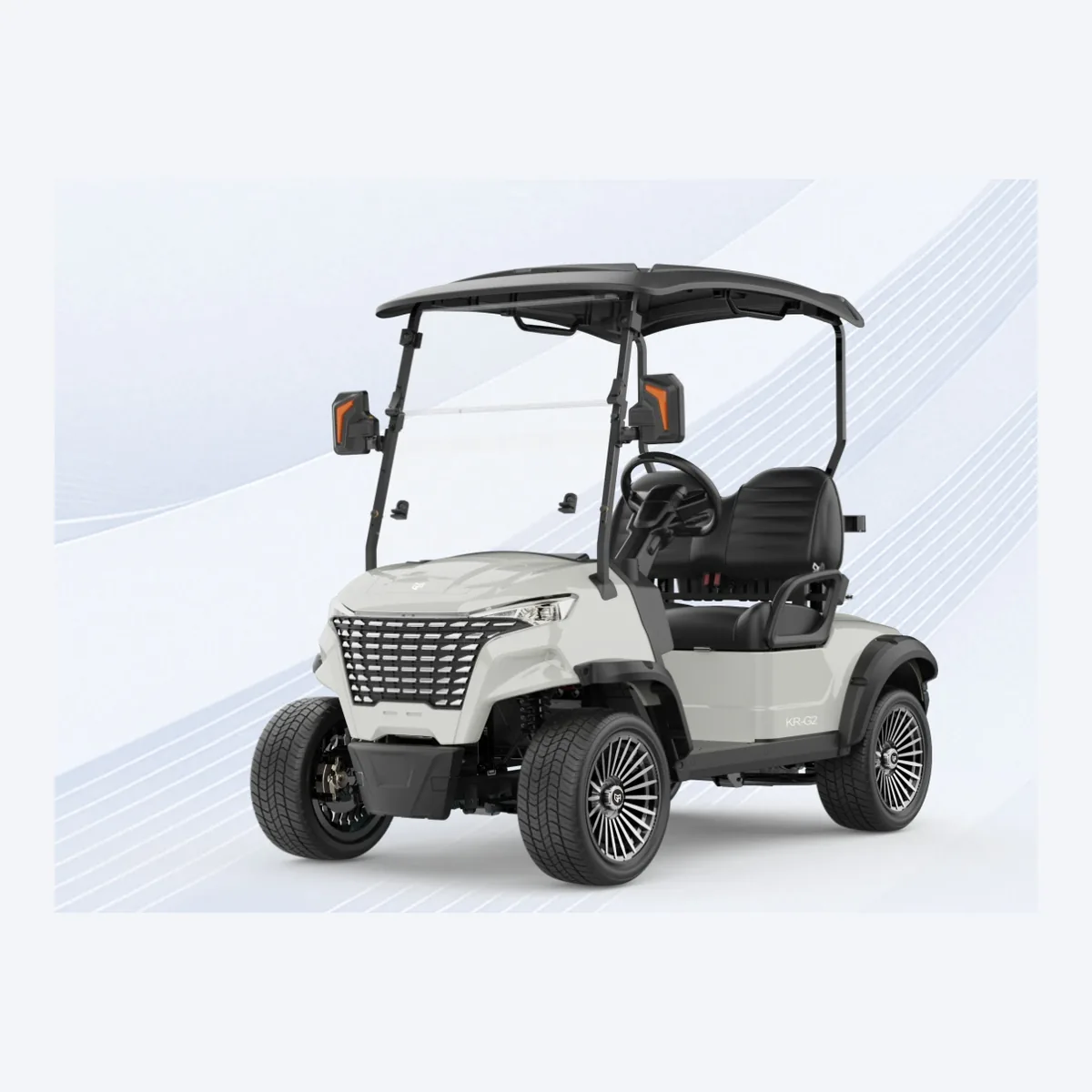
- KR-G2 Ridge 2-seat — 30–35 miles, 51.2 V LiFePO4.
- KR-G4+2 Ridge 6-seat — 30–35 miles, 4.5 m turning radius.
- KR-P6 Ridge utility 6-seat — flatbed and 2,860 mm wheelbase.
- KC-G2+2H Coast 4-seat — 2.43 m body, 190 mm clearance.
- KC-P4 Coast utility 4-seat — compact flatbed for campus work.
- KC-P6H Coast utility 6-seat — long flatbed and high clearance.
Related guides:
- How to choose the right golf cart
- Lithium vs lead-acid golf cart batteries
- Golf cart seating configurations
- Golf cart shipping and import checklist
- Sightseeing carts vs golf carts
Browse golf carts, utility vehicles and sightseeing carts. For a configuration-based quotation, send the seat count, route and destination or message the export desk on WhatsApp. You can also read about our export desk and see reference deployments.
The questions that decide the order.
How often should a golf cart be serviced?
A daily walk-around, a weekly inspection and a seasonal service are the minimum. High-use fleets often add a monthly torque and brake check. The exact interval should follow the operation manual and the site's duty cycle.
Do lithium carts need less maintenance?
They need less battery maintenance — no watering and no terminal cleaning — but the brakes, tyres, suspension, lights and fasteners still wear. A lithium cart is not maintenance-free.
Can I wash a golf cart with a hose?
The [Ridge](/products/kr-g2/) and [Coast](/products/kc-g2-2h/) drivetrain is rated IP67, but that does not make the whole vehicle waterproof. Avoid direct spray on the instrument panel, charger inlet and connectors, and do not wash a cart while it is charging.
What is the most common cause of a flat battery?
Leaving lights, accessories or a charger connected after the pack is full can drain a battery. So can repeated shallow charging and long storage at low charge. A charging log and a battery isolation switch prevent most of these cases.
How should I store carts in the off-season?
Clean the vehicle, charge the pack to the level recommended for its chemistry, disconnect the battery, and store in a dry, ventilated place. Check the pack every few weeks and follow the manufacturer's storage procedure.