Lithium vs Lead-Acid Golf Cart Batteries
Charge time, weight, partial-charge behaviour and the documents to request — how to choose between lead-acid and LiFePO4 for a golf cart fleet.
Quick answer
LiFePO4 charges faster, weighs less and tolerates partial charging; a 51.2 V 105 Ah pack is common in this range. Lead-acid suits short overnight routes. Compare 5-hour versus 6–10-hour charging and request UN38.3 plus MSDS.
Battery chemistry is the decision that changes how a golf cart fleet operates, not just what it costs. A lead-acid cart and a lithium cart can look identical on the showroom floor and behave completely differently on a Tuesday afternoon: one is back on charge for ten hours, the other is ready for a second shift.
This guide compares the two chemistries on the numbers that matter to a fleet manager — charge time, usable range, weight, maintenance and documentation — and explains which sites should choose which.
What is the real difference between lead-acid and LiFePO4?
Both store energy and both use a battery management system in the broad sense, but the chemistry and the operating rules are different.
A lead-acid pack is made of lead plates and an acid electrolyte. It is heavy, relatively inexpensive and well understood by golf-cart technicians. It prefers being fully charged and dislikes being left partially charged for long periods. Capacity falls in cold weather, and the pack needs periodic water and terminal checks.
A LiFePO4 pack uses lithium iron phosphate cells, a battery management system and a sealed enclosure. It is lighter for the same usable energy, charges faster and tolerates partial charging. The BMS protects the cells against over-charge, over-discharge, short circuit and, in good designs, low-temperature charging. It also reports state of charge and can support Bluetooth monitoring.
The practical difference is not “old versus new”. It is how the site uses the vehicle. A cart that returns to the same bay every night and runs 10 km a day does not need the fast-charging capability of lithium. A cart that runs two shifts, carries guests between villas or covers 50 km a day does.
How does charging time change fleet operations?
Charging time is a fleet-capacity number. If a cart needs ten hours to recharge, it cannot cover a second shift without a second pack or a second vehicle. If it recharges in five hours, it can.
The lithium models in this catalogue use a 51.2 V 105 Ah LiFePO4 pack and an onboard 48 V / 25 A charger, with a charging time of five hours or less. The lead-acid models typically quote 6–8 hours or around 10 hours depending on the pack and charger. Those differences decide whether a resort can top up between the morning and afternoon guest waves, or whether a campus can run a night shift.
| Charging pattern | Lead-acid fit | LiFePO4 fit |
|---|---|---|
| Overnight, fixed route | Good | Good |
| Overnight plus midday top-up | Possible, but slow | Good |
| Opportunity charging between shifts | Poor | Good |
| Two shifts per day | Usually needs a second pack | Feasible with a charging window |
The charger itself matters. A 48 V / 25 A onboard charger is not the same as a portable 10 A unit. Confirm the charger type, input voltage and charging time in the quotation, and check that the site’s outlets can support the current draw. If several carts charge at once, the total load may require a dedicated circuit.
Which chemistry lasts longer in daily duty?
LiFePO4 generally offers a longer cycle life than lead-acid, and it tolerates partial charging better. That does not mean every lithium pack will outlast every lead-acid pack: depth of discharge, temperature, charging habits and the quality of the BMS all affect service life.
The honest answer is to ask for the battery datasheet. It should state the cell chemistry, nominal voltage, capacity, charging cut-off, discharge cut-off, operating temperature range and the test conditions for the rated cycle life. A supplier who cannot provide that datasheet is asking you to buy an unknown.
For lead-acid, the equivalent questions are the plate design, the rated capacity at the quoted discharge rate, the recommended charging profile and the water-maintenance interval. A cheap lead-acid pack with a short service life is not cheaper over five years.
What does weight do to range and turf?
Weight affects range, braking distance, ground pressure and the load on the suspension. A LiFePO4 pack is lighter than a lead-acid pack of similar usable energy, so a lithium cart can be lighter overall — but the difference depends on the pack and the vehicle.
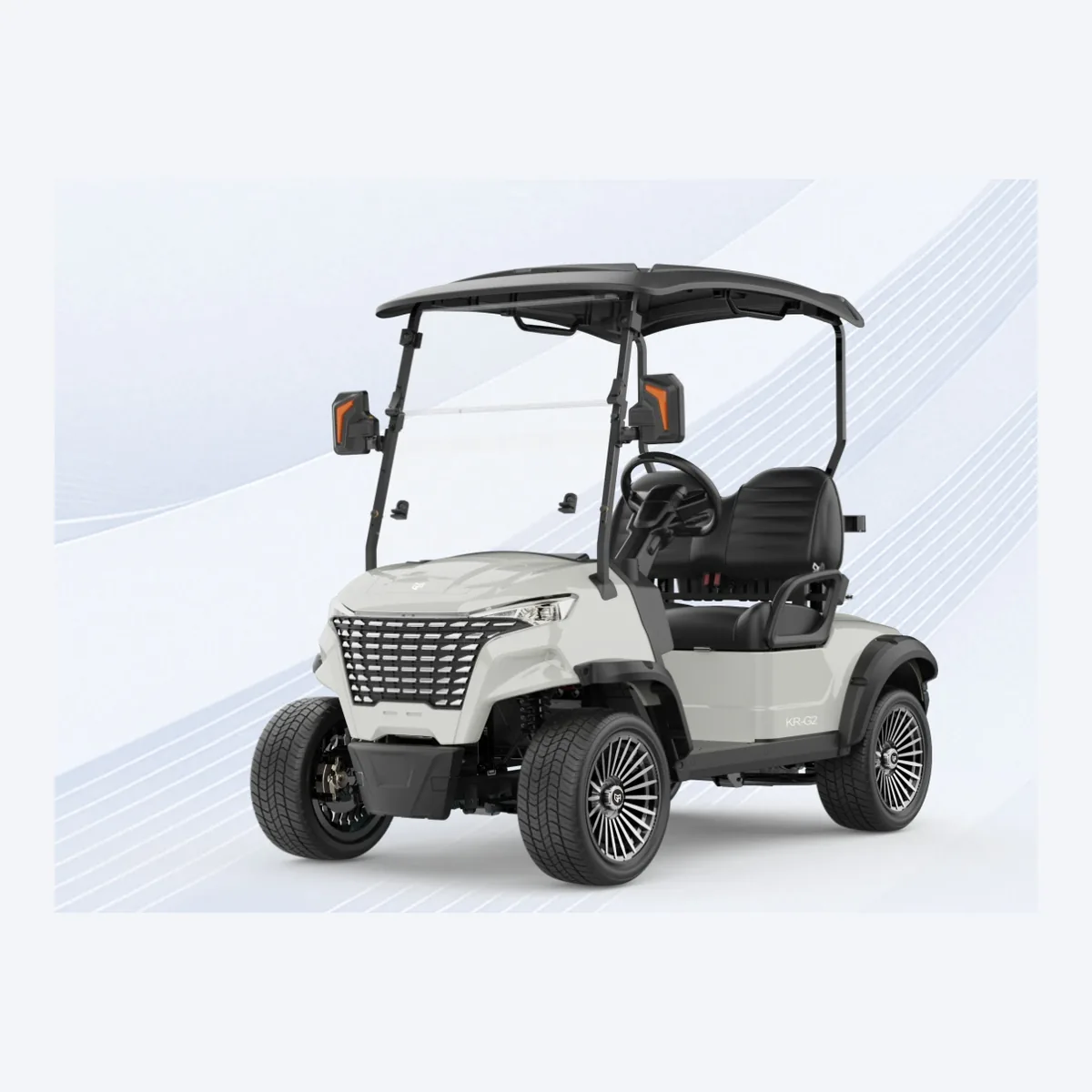
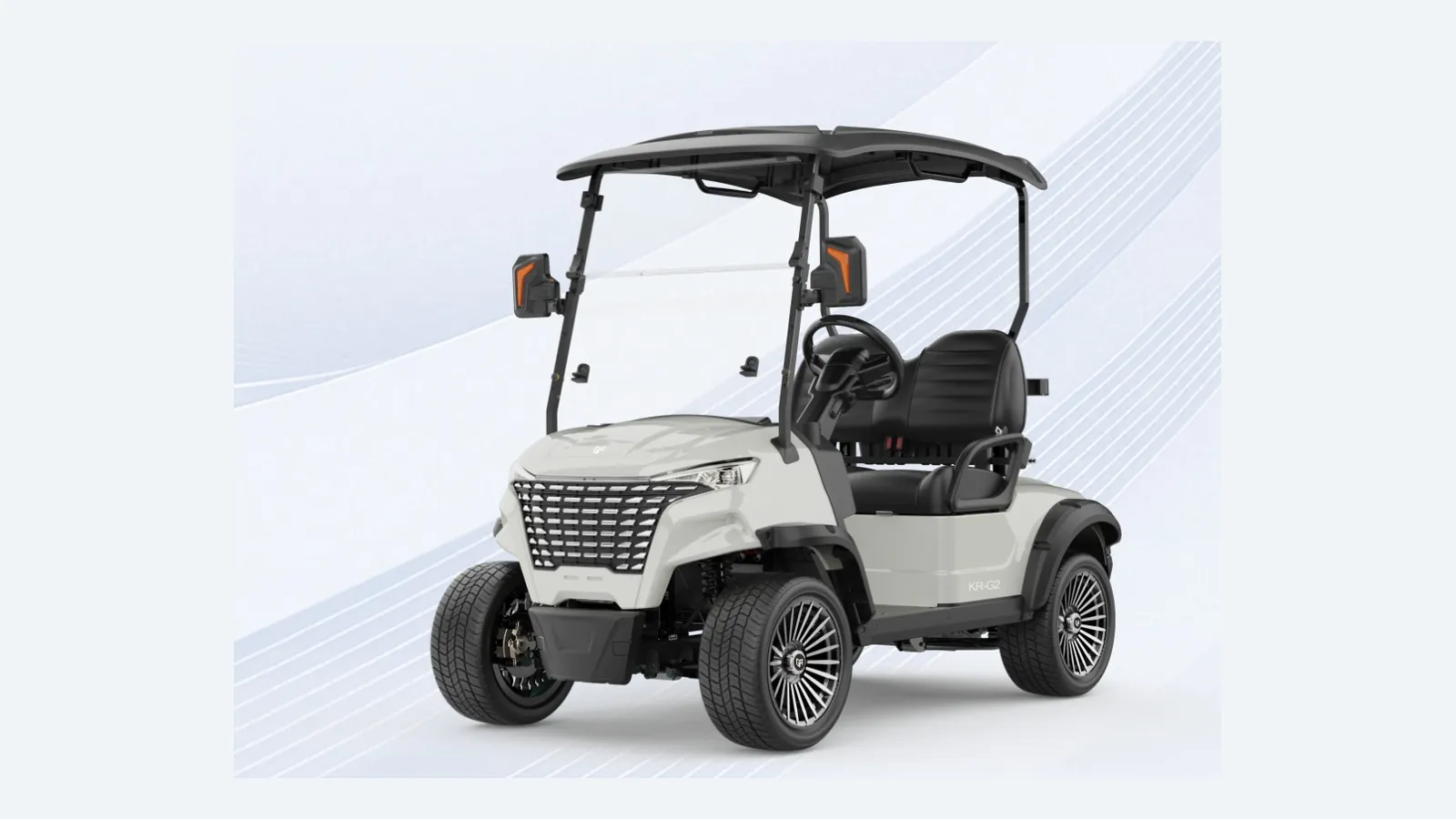
In this catalogue, the Ridge and Coast lithium models quote curb weights (excluding battery) from about 390 kg for the two-seat KR-G2 to about 550 kg for the six-seat KC-P6H. The battery adds weight on top. A lighter vehicle generally accelerates more easily, brakes in a shorter distance and puts less pressure on turf, but tyre choice and suspension design still dominate the turf question.
Do not choose a battery solely to save weight. Choose it for the charging model, then confirm the axle and tyre specification can handle the loaded weight. If the cart will run on soft grass or gravel, a wider, lower-pressure tyre matters more than a few kilograms.
What documentation should come with a lithium pack?
For international shipping, the battery documents are part of the product. Ask for:
- UN38.3 test summary for the pack.
- MSDS (material safety data sheet).
- Battery datasheet with voltage, capacity, chemistry and operating limits.
- Charger specification and compatibility statement.
- Packing instructions or the carrier’s acceptance letter for the shipment.
The UN38.3 and MSDS documents are commonly requested by freight forwarders and airlines. The datasheet matters for the buyer because it defines the warranty conditions and the charging limits. Keep all of these with the order file; they are difficult to reconstruct after the shipment has left.
Which chemistry fits which site?
Use the duty cycle, not the brochure, to decide.
| Site / duty | Recommended chemistry | Why |
|---|---|---|
| Private course, short loop, overnight charge | Lead-acid | Lowest cost, adequate range |
| Resort shuttle, multiple guest waves | LiFePO4 | Five-hour charge, midday top-up |
| Campus utility fleet, long shifts | LiFePO4 | Opportunity charging, lighter pack |
| Estate or community, short trips | Lead-acid or LiFePO4 | Decide on charging window and budget |
| Coastal or humid site | LiFePO4 | Sealed pack, less terminal maintenance |
| Cold-climate site | LiFePO4 with low-temperature protection | Better capacity retention, BMS protection |
A mixed fleet can use both: lead-acid for the short-loop guest carts, lithium for the shuttles and utility vehicles. The important thing is to keep the charger types separate and label them clearly.
What should you ask before converting a cart to lithium?
Converting an existing lead-acid cart to lithium is possible, but it is a system change, not a battery swap. Ask:
- Is the charger compatible with the new pack, or must it be replaced?
- Does the BMS communicate with the vehicle’s instrument panel?
- Are the mounting brackets, hold-downs and enclosure suitable?
- Does the controller have the correct low-voltage cut-off?
- Does the conversion affect the vehicle’s warranty or local electrical approval?
If the answer to any of these is unclear, buy a vehicle that was designed for lithium rather than converting. The Ridge and Coast platforms are built around the 51.2 V pack, which avoids the mismatch between an old charger and a new battery.
The right chemistry is the one that matches the charging window and the daily distance. Lead-acid is not obsolete, and lithium is not automatically better. Match the pack to the duty, ask for the datasheet, and keep the documents with the order.
Models and next steps
Compare the full product range or open a model page for dimensions, battery, range and options:
- GC-A Classic 2-seat — 80–100 km, lead-acid or LiFePO4.
- GC-B Classic 4-seat — 60 km, 60 V lead-acid.
- KR-G2 Ridge 2-seat — 30–35 miles, 51.2 V LiFePO4.
- KR-G4+2 Ridge 6-seat — 30–35 miles, 4.5 m turning radius.
- KR-P6 Ridge utility 6-seat — flatbed and 2,860 mm wheelbase.
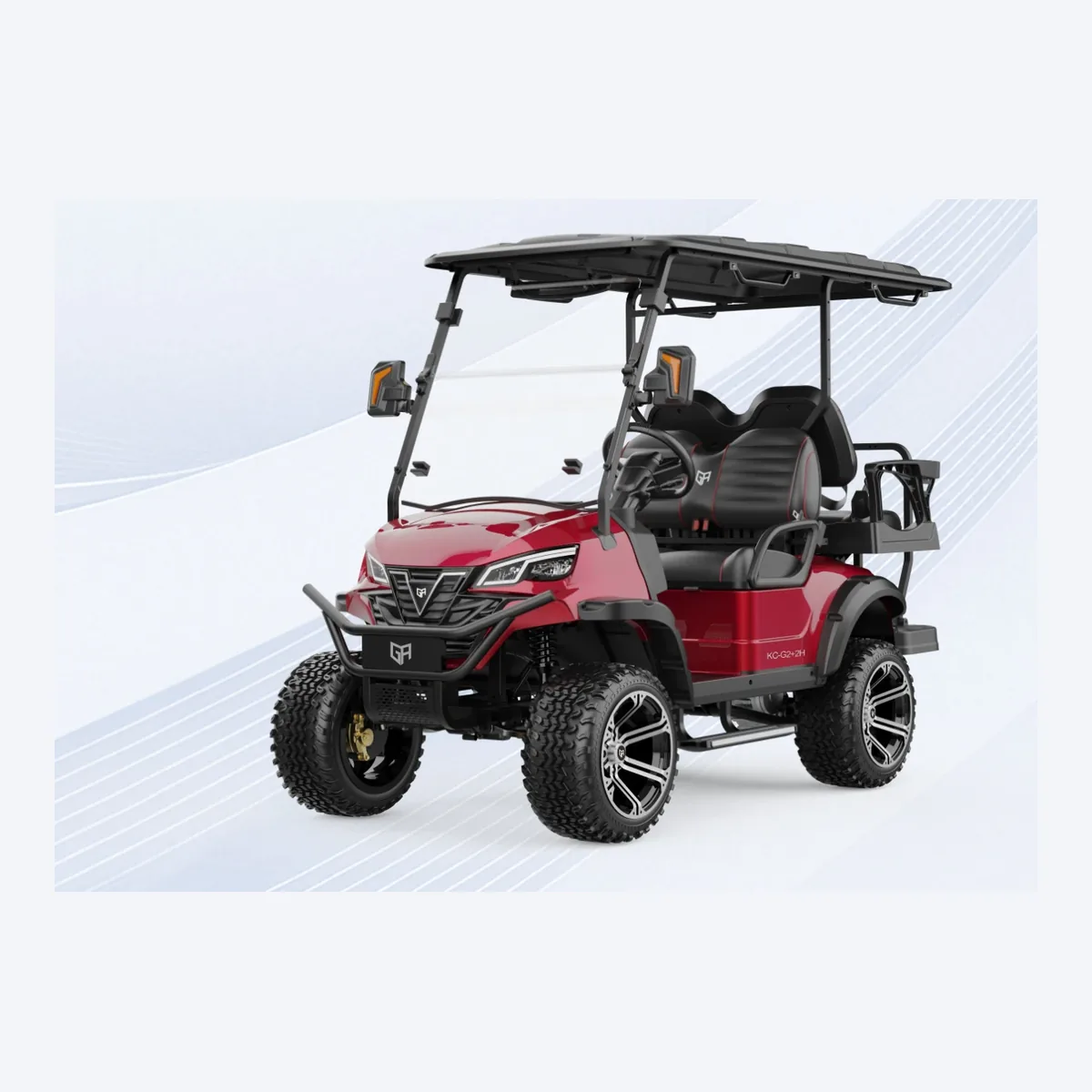
- KC-G2+2H Coast 4-seat — 2.43 m body, 190 mm clearance.
- KC-P4 Coast utility 4-seat — compact flatbed for campus work.
- KC-P6H Coast utility 6-seat — long flatbed and high clearance.
Related guides:
- How to choose the right golf cart
- Golf cart seating configurations
- Electric golf cart maintenance schedule
- Golf cart shipping and import checklist
- Sightseeing carts vs golf carts
Browse golf carts, utility vehicles and sightseeing carts. For a configuration-based quotation, send the seat count, route and destination or message the export desk on WhatsApp. You can also read about our export desk and see reference deployments.
The questions that decide the order.
Is lithium always better than lead-acid?
No. Lithium is better when the site needs fast charging, opportunity charging or lower weight. Lead-acid is often better when the route is short, charging happens overnight and the purchase budget is tight.
How long does a lithium golf cart battery last?
Cycle life depends on depth of discharge, temperature and charging habits. LiFePO4 generally offers a longer cycle life than lead-acid and tolerates partial charging better. Ask for the battery datasheet with the rated test conditions for the specific pack.
Can I charge a lithium cart with the same charger as a lead-acid cart?
No. The charger must match the battery chemistry, voltage and BMS. A lead-acid charger can damage a lithium pack and may create a safety risk. Use the onboard charger supplied with the vehicle or a charger approved for that pack.
What documents should come with a lithium battery?
At minimum, the UN38.3 test summary and the MSDS. For export, the packing list and shipping documents should identify the battery type and state that it is installed in the vehicle or packed according to the carrier's rules.
Does lithium reduce turf damage?
A lighter pack reduces total vehicle weight and therefore ground pressure, which can reduce scuffing. Tyre choice, ground conditions and driving style still matter more than the battery alone.