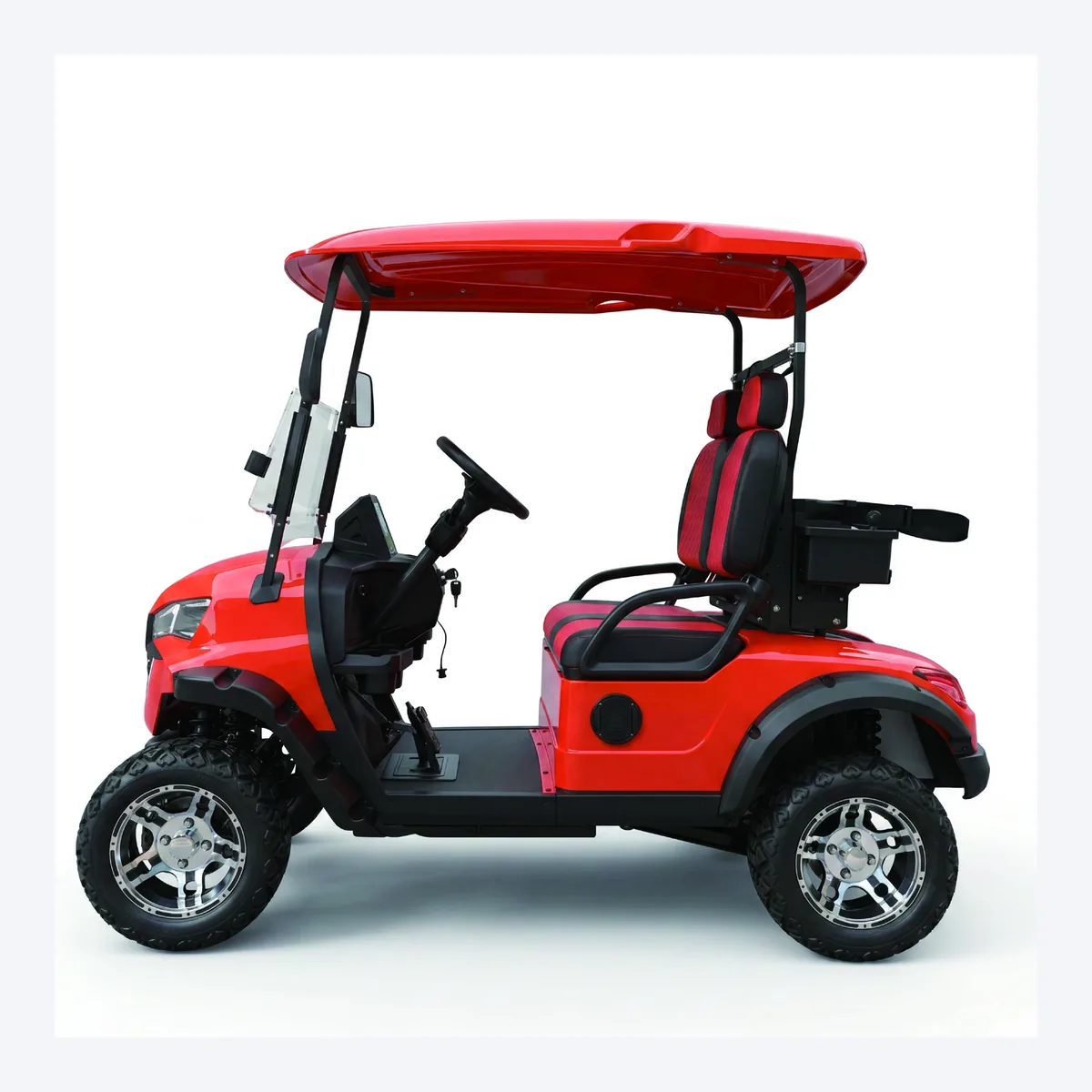
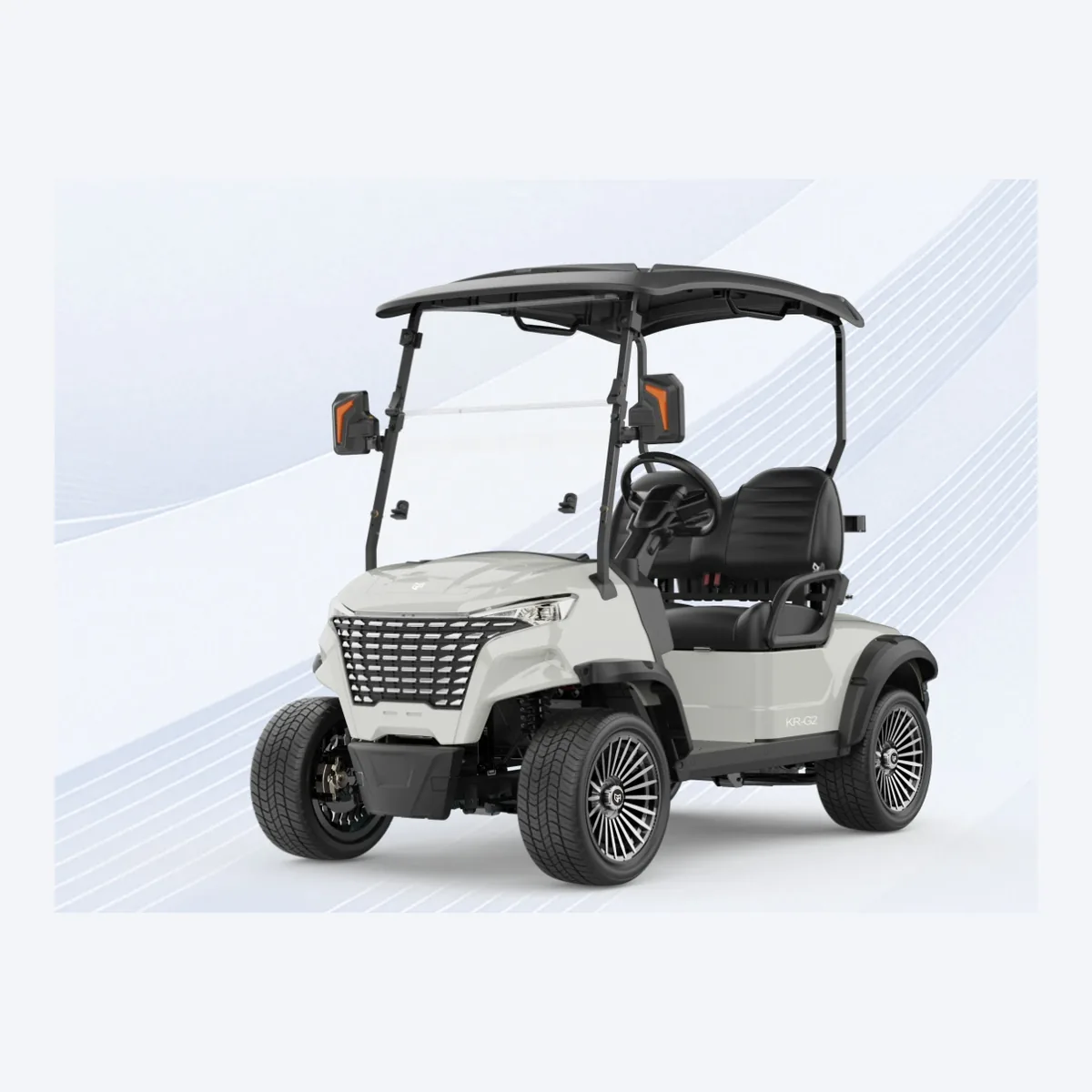
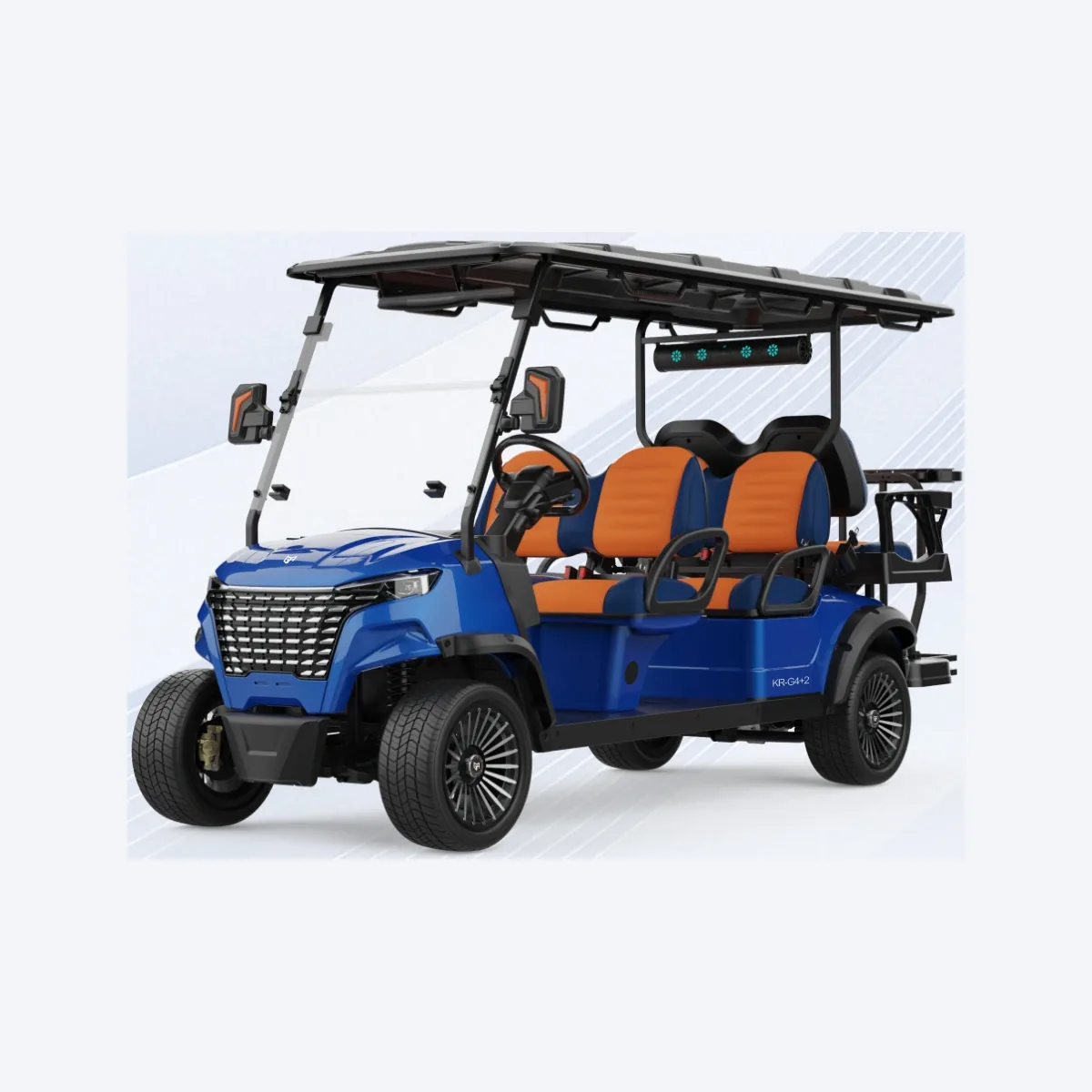
Choosing a Golf Cart: Course, Resort or Campus
A buyer's framework for seat count, battery chemistry, terrain, charging and quotations — with the numbers that actually change the decision.
Quick answer
Start with 2 seats for staff, 4 for guest pairs and 6 for shuttles. Compare 48–72 V systems, a 30–35 mile lithium range and a 5-hour charge before requesting a quote.
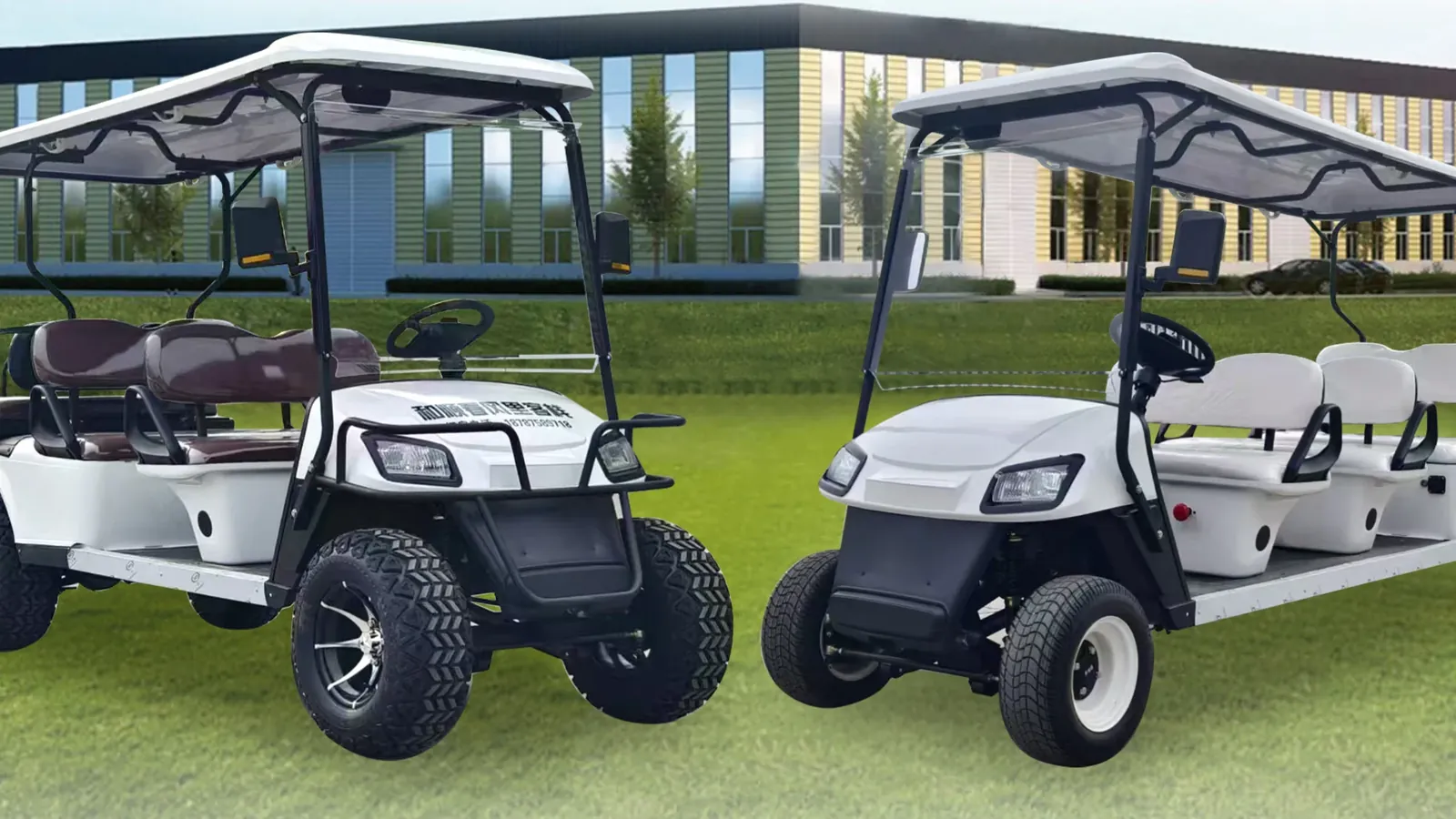
A golf cart looks like a simple purchase: a small electric vehicle with a bench seat and a canopy. In practice, the specification is decided by four numbers — how far it travels each day, how many people it carries, how steep the route is and how long the charging window lasts. Get those four right and the model choice becomes straightforward. Get them wrong and a fleet spends its life either queuing for a charger or running empty on the back nine.
This guide is written for the person signing the purchase order, not for the workshop. It covers the decisions that change the quotation, the questions to ask a supplier, and the documents that should arrive with the vehicles.
What will the cart actually do each day?
Start with a duty-cycle estimate, not a model name. A private 18-hole course may run 8–15 km per round, with frequent stops and long idle periods at tee boxes. A resort shuttle may cover 40–60 km in a day, carrying guests between reception, villas and the beach club. A campus maintenance cart may travel 20–55 km across service roads, loading bays and perimeter tracks.
Write down four figures:
- Daily distance in kilometres or miles, including the busiest day of the week.
- Passenger count per trip, not per day.
- Stops per shift, because stop-start duty drains a battery differently from steady cruising.
- Terrain, including the steepest grade and the surface (paved, gravel, grass, sand).
Those figures decide the battery, motor and clearance. A 60 km lead-acid cart is a poor fit for a 50 km resort loop with a two-hour charging window; a 30–35 mile lithium cart may be over-specified for a clubhouse loop that never exceeds 10 km.
How many seats do you need?
Seat count is the most visible decision and the easiest to oversize. Count the largest group that must move in one trip, then add a margin for staff and luggage — not a margin for “what if we grow”.
| Layout | Typical use | Body length | Trade-off |
|---|---|---|---|
| 2 seats | Marshal, starter, maintenance | 2.37–2.45 m | Smallest footprint, easiest parking |
| 2+2 (4 seats) | Guest pairs, estate transfers | 2.43–2.95 m | Two rear-facing seats limit luggage space |
| 4+2 (6 seats) | Resort shuttles, tours | 3.67–3.72 m | Longer body, larger turning radius |
| 6+2 (8 seats) | Staff and equipment movement | 4.25 m | Needs wider paths and a larger charging bay |
Two-seat carts are usually staff vehicles. Four-seat carts are the standard guest vehicle on a golf course: two players plus two bags fit on the benches and bag well. Six-seat carts suit resorts, tours and estate transfers where a single driver moves a group. Eight-seat layouts are closer to a small bus and should be checked against path widths, bridge limits and parking bays before ordering.
If the fleet will mix roles, standardise on one platform where possible. A two-seat marshal cart and a six-seat shuttle from the same family can share a charger specification, controller family and service procedure, even though the bodies differ.
Should you choose lead-acid or lithium?
Both chemistries are available on several models in this catalogue, and the right answer depends on the operating pattern rather than on a preference for “new technology”.
Lead-acid is the lower-cost option. It is familiar to most golf-cart technicians, works well with overnight charging and suits fixed short routes. A typical lead-acid cart in this range delivers around 60 km per charge, with a charging time of about 10 hours on a 220 V supply.
LiFePO4 costs more up front but changes the operating model. A 51.2 V 105 Ah pack in the Ridge and Coast platforms delivers 30–35 miles (48–56 km) on flat ground, charges in five hours or less with an onboard 48 V / 25 A charger, and tolerates partial charging between shifts. The pack is lighter, which reduces ground pressure and helps on turf and gravel.
| Decision factor | Lead-acid | LiFePO4 |
|---|---|---|
| Purchase price | Lower | Higher |
| Charging time | Around 10 hours (220 V) | 5 hours or less |
| Partial charging | Limited | Good |
| Weight | Heavier | Lighter |
| Maintenance | Water and terminal checks | BMS-managed |
| Typical fit | Fixed short loop, overnight charge | Multi-shift, opportunity charging, long routes |
If the cart charges overnight and never leaves a 10 km loop, lead-acid is adequate. If the same cart must cover a resort route, run two shifts or top up between guest waves, lithium is the better fit. Do not convert a lead-acid cart to lithium as an afterthought: the charger, BMS, mounting and electrical protection all change.
What terrain and climate will the cart face?
Ground clearance is the number buyers forget. A standard cart with 140 mm of clearance handles paved paths and light gravel. A high-clearance model with 190 mm handles kerbs, unpaved service roads and resort gardens. If the route includes a wooden boardwalk, a bridge or a steep ramp, confirm the load limit and the approach angle before choosing a long-wheelbase body.
Climate matters too. In hot climates, ventilation, seat material and battery thermal behaviour affect comfort and pack life. In coastal sites, salt exposure makes chassis coating and connector sealing important; the IP67 motor and controller on the Ridge and Coast platforms are specified for wash-down and wet grass, but the body and fasteners still need a rinsing routine. In cold climates, lead-acid capacity falls more sharply than LiFePO4, and charging below freezing requires a pack with the right BMS protection.
Gradeability is usually quoted as a percentage. A 20% grade is steep for a golf cart; if the route includes a 12% section with a full passenger load, say so in the inquiry. The motor, controller and brake specification should be checked against the loaded weight, not the empty vehicle.
How will you charge the fleet?
Charging is a site-design problem, not a vehicle feature. Map the overnight parking positions, the available single-phase outlets and the distance from the nearest distribution board. Most carts in this class use an onboard charger that plugs into a standard single-phase supply; three-phase is not normally required.
Then decide the charging pattern:
- Overnight only. Size the fleet so every vehicle returns with enough reserve. This is the simplest and cheapest pattern.
- Overnight plus midday top-up. Useful for resorts with a quiet period and for campuses with shift changes. It reduces the number of packs needed for the same daily distance.
- Opportunity charging. Requires lithium and a charger at the driver’s break location. It works well for patrol and utility fleets that return to a base every few hours.
Add battery isolation switches, a written charging sequence and a smoke detector in any unattended charging bay. If the site has a generator or a solar installation, confirm the charger’s input tolerance before ordering.
What does a complete quotation include?
A useful quotation is a configuration sheet, not a price on a single line. It should state:
- Model code, seat count and body dimensions.
- Motor rating and battery chemistry, including capacity and voltage.
- Charger type, input voltage and charging time.
- Tyres, wheels, suspension and ground clearance.
- Options fitted at the factory and options supplied loose.
- Incoterm, port of loading and estimated dispatch week.
- Packing method and the documents included.
- Warranty terms and the spare-parts list.
If a supplier cannot state the battery capacity or the charger input voltage, the quotation is not complete. If the price is dramatically lower than comparable offers, check whether the battery is lead-acid rather than lithium, whether the charger is included, and whether the quoted model is the seat count you actually need.
What should you check before signing?
Ask for the order confirmation to repeat every assumption: seat count, battery, charger, colour, options, Incoterm and destination. Then check the documents that will travel with the shipment — packing list, commercial invoice, battery UN38.3 and MSDS documents, and the operation manual. For a fleet, ask for a spare-parts list and confirm that wear parts (brake pads, lamps, mirrors, tyres) can be ordered separately.
Finally, confirm who handles pre-delivery inspection and what the record looks like. A photo set and a signed checklist are more useful than a verbal assurance. If the vehicles will be registered locally, confirm the technical documents available for the application before production starts, not after the container arrives.
The right cart is the one that matches the route, the charging window and the passenger count — not the one with the longest feature list. Start with those three numbers, and the rest of the specification follows.
Models and next steps
Compare the full product range or open a model page for dimensions, battery, range and options:
- GC-A Classic 2-seat — 80–100 km, lead-acid or LiFePO4.
- GC-B Classic 4-seat — 60 km, 60 V lead-acid.
- KR-G2 Ridge 2-seat — 30–35 miles, 51.2 V LiFePO4.
- KR-G4+2 Ridge 6-seat — 30–35 miles, 4.5 m turning radius.
- KR-P6 Ridge utility 6-seat — flatbed and 2,860 mm wheelbase.
- KC-G2+2H Coast 4-seat — 2.43 m body, 190 mm clearance.
- KC-P4 Coast utility 4-seat — compact flatbed for campus work.
- KC-P6H Coast utility 6-seat — long flatbed and high clearance.
Related guides:
- Lithium vs lead-acid golf cart batteries
- Golf cart seating configurations
- Electric golf cart maintenance schedule
- Golf cart shipping and import checklist
- Sightseeing carts vs golf carts
Browse golf carts, utility vehicles and sightseeing carts. For a configuration-based quotation, send the seat count, route and destination or message the export desk on WhatsApp. You can also read about our export desk and see reference deployments.
The questions that decide the order.
How long does it take to get a golf cart quotation?
A complete quotation usually takes one business day once we have the seat count, battery preference, destination port and quantity. If the site has unusual terrain or a registration requirement, we may ask for photos or the route profile first, which can add a day.
Is a two-seat cart enough for an 18-hole course?
Two seats are usually enough for marshals, starters and maintenance staff. If the course rents carts to players, the guest fleet is normally four-seat, because two players plus bags need more than a single bench. Many courses run both: two-seaters for staff and four-seaters for guests.
Can a golf cart be used on public roads?
It depends on the destination country and the vehicle category. Many carts are used only on private courses, resorts and campuses. If the site needs road registration, confirm the local requirements before ordering; we can supply technical documents but cannot guarantee approval in every market.
What is the difference between 2+2 and 4+2 seating?
The first number is the forward-facing seats and the second is the rear-facing bench. A 2+2 cart carries four people, with two facing forward and two facing back. A 4+2 carries six. The layout affects body length, turning radius and how luggage or bags are loaded.
Should I buy lead-acid or lithium?
Lead-acid has the lower purchase price and is familiar to most technicians. LiFePO4 charges faster, weighs less and tolerates partial charging, which suits multi-shift or opportunity-charging sites. Choose based on daily distance, charging window and how long the vehicle will stay in service.