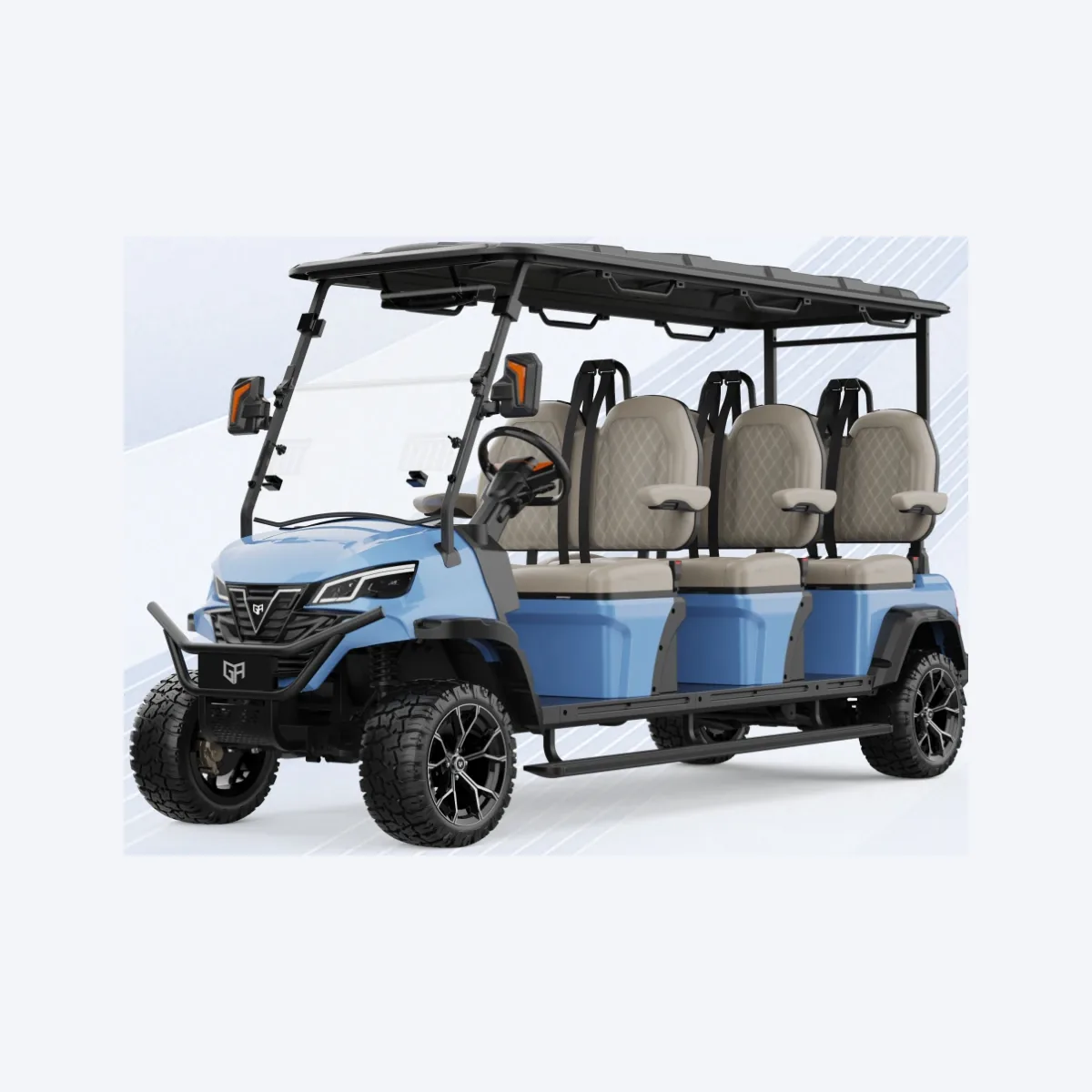
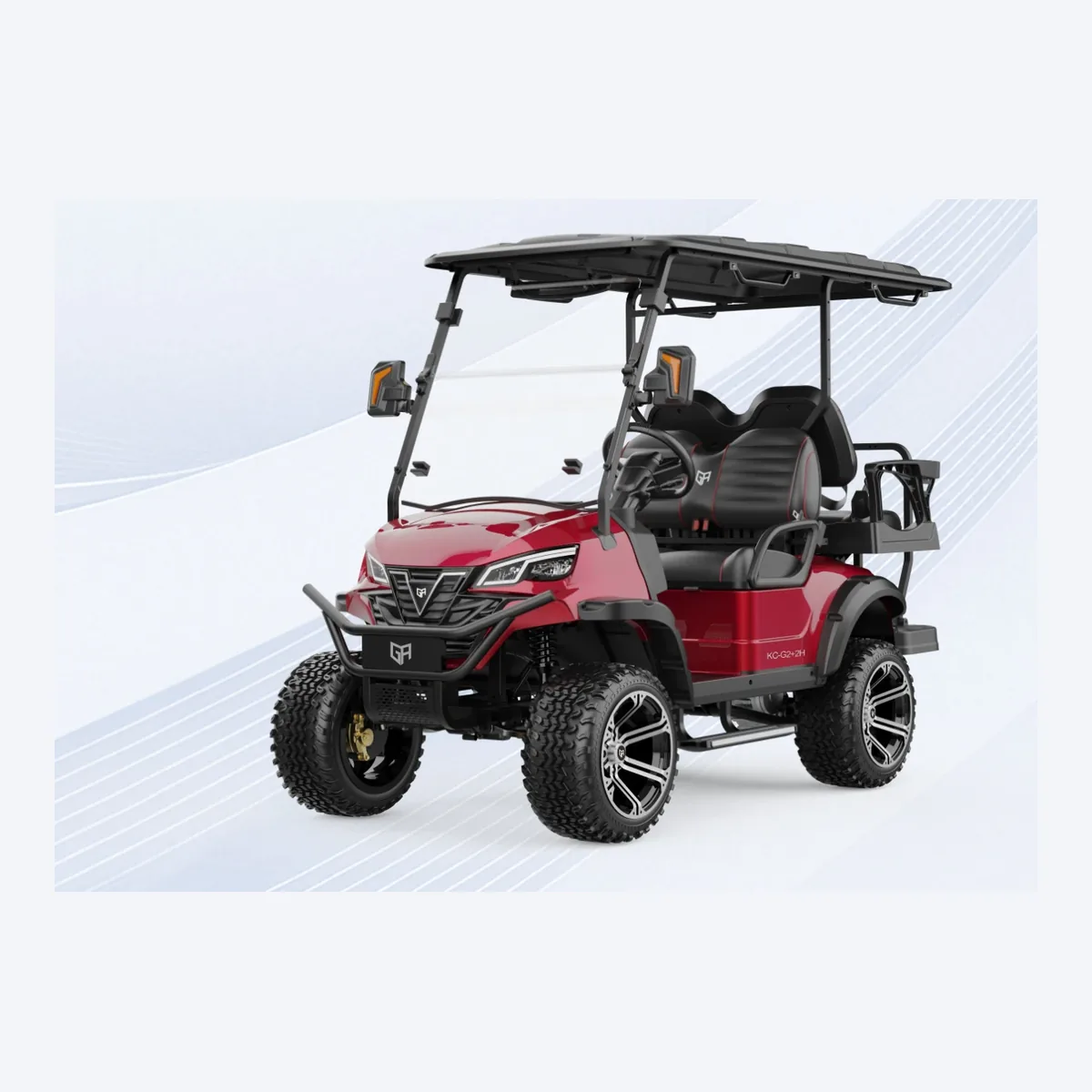
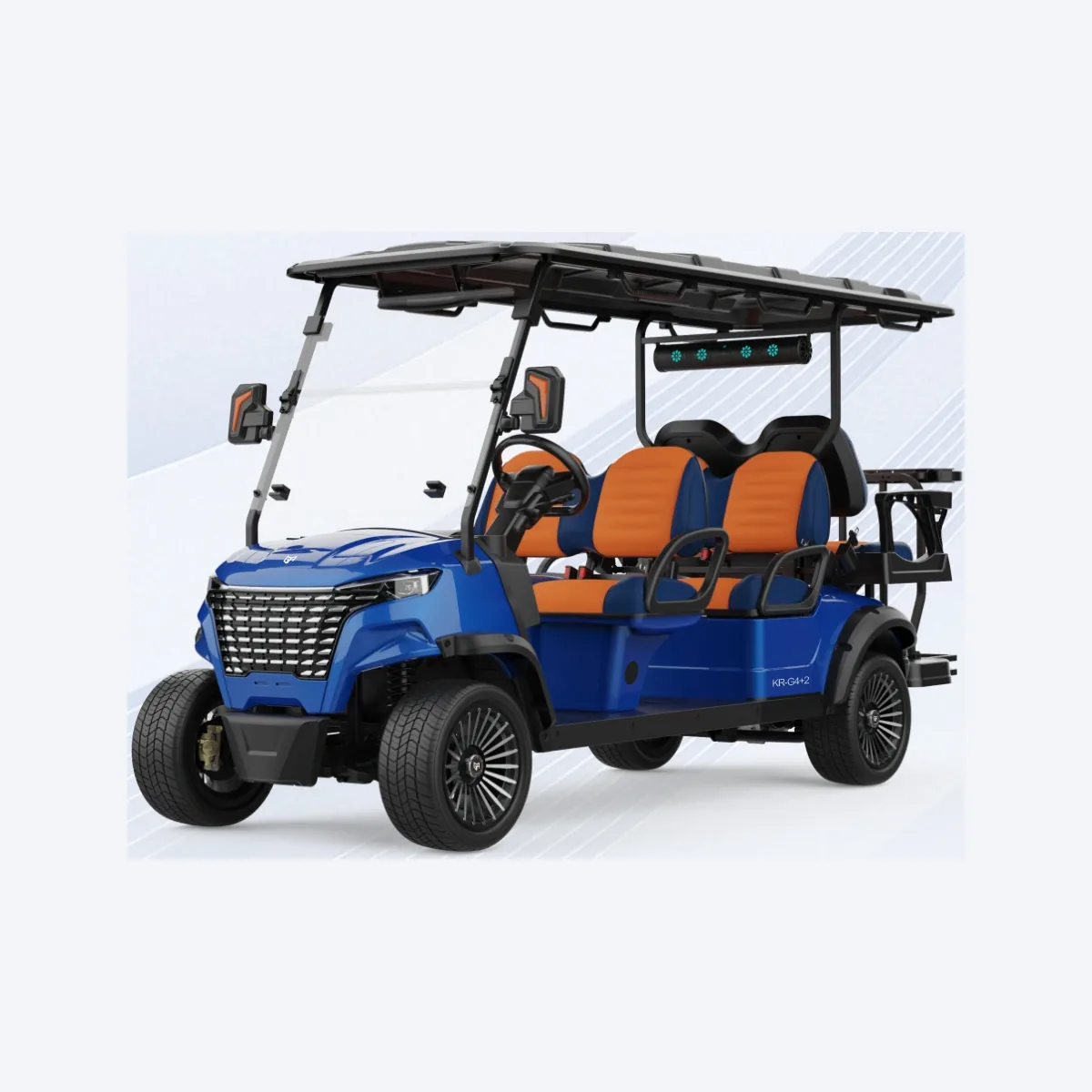
Sightseeing Cart vs Golf Cart: Which Fits?
Seating layout, route geometry, charging and fleet mix — a practical comparison for resorts, attractions and large estates.
Quick answer
A golf cart is shorter and lighter for 2–4 passengers; a sightseeing cart adds row seating and wider steps for 6–23. Both usually charge on single-phase in about 5 hours; use a train for fixed loops.
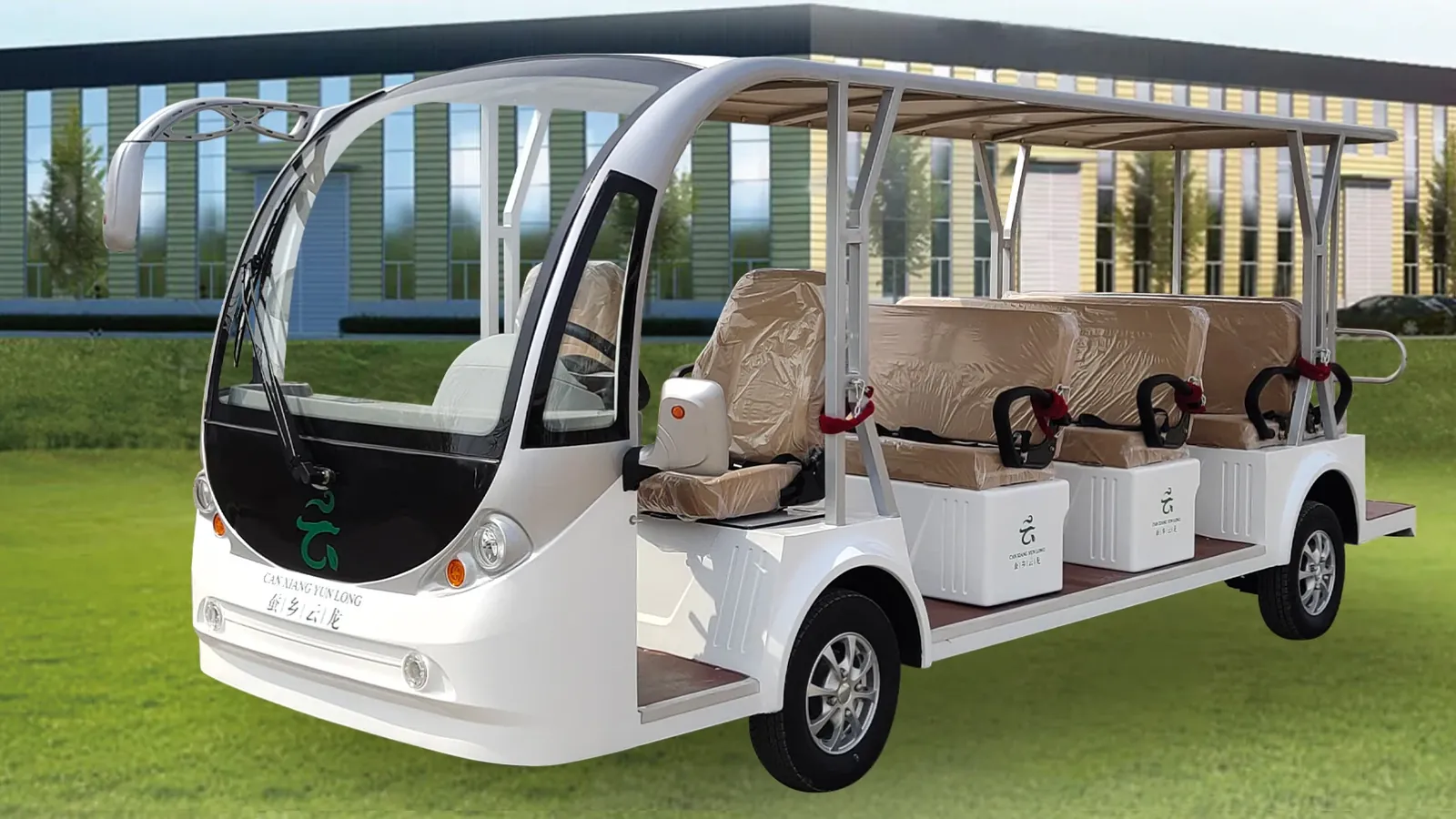
A resort usually needs to move people in two different ways: guests who want a comfortable, frequent shuttle, and staff who need to carry luggage, linen and equipment. The first job sounds like a sightseeing cart; the second sounds like a utility cart. But the boundary is not always obvious, and buying the wrong body can leave a fleet that is either too slow at peak times or too large for the paths.
This comparison looks at the two vehicle types from the site’s perspective — seating, route, charging and fleet mix — and explains when a larger sightseeing vehicle or a train makes sense.
What is the difference in body and seating?
A golf cart is built around two players and two bags. The body is short, the floor is low, and the seating is usually a forward bench with a bag well behind it. A four-seat golf cart adds a second bench or a rear-facing seat, but the body remains compact.
A sightseeing cart is built around a group and a stop. It is longer, with row seating, wider steps, grab handles and a canopy that covers the whole cabin. The floor may be higher, and the body may have open sides for ventilation. The design priority is boarding speed and passenger comfort, not bag access or turf pressure.
| Feature | Golf cart | Sightseeing cart |
|---|---|---|
| Typical seats | 2–8 | 8–23 depending on body |
| Body length | 2.4–4.3 m | Longer, model-specific |
| Boarding | Low step, one or two benches | Wide steps, row seating |
| Primary duty | Course rounds, estate transfers | Guest loops, attraction tours |
| Turf pressure | Lower | Higher |
| Path requirement | Narrow cart paths | Wider roads and turning areas |
The seat counts are not a strict rule. Some six-seat golf carts are used as resort shuttles, and some compact sightseeing vehicles are used on estate roads. The body shape and boarding layout matter more than the label.
Which vehicle suits guest transfers?
For short, frequent transfers on narrow paths, a six-seat golf cart is often the better fit. It carries a family, fits older cart paths and can be parked in a standard bay. The rear-facing bench makes conversation easy, and the low step helps older guests.
For a high-volume guest loop with fixed stops, a sightseeing cart is better. The row seating and wide steps speed up boarding, and the longer body carries more passengers per driver. The trade-off is a larger turning radius, a wider path requirement and a higher purchase price.
The decision usually comes down to peak-hour throughput. If the resort moves 20 guests per hour, one six-seat shuttle doing four trips may be enough. If it moves 100 guests per hour, a larger vehicle or a train is more efficient.
Which suits staff and utility duty?
Neither, really. A guest shuttle is a poor utility vehicle: the seats get dirty, the luggage space is limited, and the body is not designed for tools or linen. A utility cart with a flatbed or lockable box is the right tool for housekeeping, maintenance and luggage.
The practical resort fleet often looks like this:
- Six-seat shuttles for the guest loop.
- One or two utility carts for luggage, linen and supplies.
- Compact four-seat carts for housekeeping and maintenance.
- One two-seat cart for the duty manager or security.
The shuttle and the utility cart may share a platform and charger, which simplifies service. They should not share a body.
How does route geometry change the choice?
Measure the route before choosing the vehicle. The critical dimensions are:
- Narrowest path width — gates, bridges and service corridors.
- Tightest turn — the turning radius of the vehicle plus a safety margin.
- Steepest grade — especially with a full passenger load.
- Surface — paved, gravel, grass or sand.
- Boarding points — platform height, shelter and space for a stopped vehicle.
A six-seat golf cart with a 4.5 m turning radius may fit a route that a longer sightseeing cart cannot. A sightseeing cart may need a dedicated road and a boarding platform. If the route includes a wooden boardwalk, confirm the load limit before specifying a heavy vehicle.
What about charging and fleet mix?
Charging is a shared constraint. A mixed fleet should use one charger specification where possible, so the same bay can charge a shuttle and a utility cart. The Ridge and Coast lithium models in this catalogue use a 48 V / 25 A onboard charger; a sightseeing fleet should be specified with a compatible charging plan.
At a resort, the charging pattern usually follows the guest wave: overnight for the shuttles, a midday top-up during the quiet period, and opportunity charging for utility carts. The number of chargers depends on the fleet size and the turnaround time, not on the vehicle type alone.
When does a sightseeing train make sense?
A sightseeing train is a different product category. It moves a large number of visitors along a fixed loop with one driver, and it becomes part of the attraction. It makes sense when:
- Visitor volume is high and predictable.
- The route is fixed, with defined stations.
- The ride is part of the experience, not just a transfer.
- The site can support a wider road, a turning loop and boarding platforms.
For a small resort or estate, several six-seat shuttles are usually more flexible and cheaper to start. For a theme park, zoo or large garden, a train can reduce the number of drivers and vehicles needed at peak times.
How should you compare quotations?
Compare quotations on the same basis:
- Vehicle type and seat count — confirm the total passengers, not the label.
- Battery chemistry and capacity — lead-acid or LiFePO4, voltage and Ah.
- Charger — onboard or portable, input voltage, charging time.
- Body and options — canopy, side curtains, livery, luggage platform.
- Incoterm and port — FOB, CIF or delivered.
- Documents — packing list, invoice, battery UN38.3 and MSDS.
- Warranty and spare parts — what is covered and what is orderable.
A low price for a vehicle with a smaller battery, no charger or a shorter body is not comparable. Ask for the configuration sheet and the loading plan, and check that the quoted vehicle fits the route you measured.
The right choice is the one that matches the route, the passenger flow and the service plan. A golf cart can be a resort shuttle; a sightseeing cart can be a guest attraction. The label matters less than the body, the boarding layout and the charging window.
Models and next steps
Compare the full product range or open a model page for dimensions, battery, range and options:
- GC-A Classic 2-seat — 80–100 km, lead-acid or LiFePO4.
- GC-B Classic 4-seat — 60 km, 60 V lead-acid.
- KR-G2 Ridge 2-seat — 30–35 miles, 51.2 V LiFePO4.
- KR-G4+2 Ridge 6-seat — 30–35 miles, 4.5 m turning radius.
- KR-P6 Ridge utility 6-seat — flatbed and 2,860 mm wheelbase.
- KC-G2+2H Coast 4-seat — 2.43 m body, 190 mm clearance.
- KC-P4 Coast utility 4-seat — compact flatbed for campus work.
- KC-P6H Coast utility 6-seat — long flatbed and high clearance.
Related guides:
- How to choose the right golf cart
- Lithium vs lead-acid golf cart batteries
- Golf cart seating configurations
- Electric golf cart maintenance schedule
- Golf cart shipping and import checklist
Browse golf carts, utility vehicles and sightseeing carts. For a configuration-based quotation, send the seat count, route and destination or message the export desk on WhatsApp. You can also read about our export desk and see reference deployments.
What should you confirm before ordering?
Confirm the route width, boarding height, station dwell time and peak passenger flow before choosing between a golf cart, a sightseeing cart and a train. A six-seat cart is the flexible option for narrow paths; a sightseeing cart or train is better when a fixed loop must move groups at a predictable interval. Check the charger location and the overnight window as part of the same plan.
The questions that decide the order.
Is a sightseeing cart just a larger golf cart?
Not quite. A sightseeing cart usually has row seating, wider steps, grab handles and a longer body for frequent stops. A golf cart is shorter, lighter and designed around a golf bag and two players.
Can a golf cart be used for resort guest transfers?
Yes, especially a six-seat model with a rear-facing bench. It is often the more economical choice for short transfers and narrow paths. A dedicated sightseeing cart is better when passenger volume is high and boarding speed matters.
Which is easier to charge?
Both use onboard chargers and single-phase supply in most configurations. A mixed fleet should standardise on one charger specification where possible, so the same bay can charge either vehicle.
Do sightseeing carts need a driver?
Yes. These are road vehicles with a steering wheel and foot controls, not autonomous shuttles. Driver licensing and route permissions depend on the destination market.
When does a sightseeing train make sense?
A train makes sense when visitor volume is high, the route is fixed and the ride is part of the attraction. For smaller properties, several six-seat shuttles are usually more flexible and cheaper to start.