Golf Cart Shipping & Import Checklist
Documents, packing, Incoterms and battery paperwork — the details that decide whether a container clears customs without a delay.
Quick answer
A 40-foot high-cube usually carries several carts. Prepare the commercial invoice, packing list, bill of lading and 2 battery documents (UN38.3 and MSDS), plus a certificate of origin if the destination requires one.

A golf cart is a bulky, battery-containing vehicle, and that combination makes shipping more document-heavy than a pallet of parts. The vehicle itself is straightforward to load; the paperwork around the battery and the customs classification is where delays happen.
This checklist covers the documents, packing decisions and arrival checks for a first or repeat order. It is written from the export desk’s perspective, but it is useful for the buyer who wants to compare quotations on equal terms.
What documents should accompany a golf cart shipment?
A complete document set usually includes:
| Document | Purpose | Who prepares it |
|---|---|---|
| Commercial invoice | Customs value and sale terms | Seller |
| Packing list | Cartons, crates, weights and dimensions | Seller |
| Bill of lading / sea waybill | Contract of carriage | Freight forwarder |
| Certificate of origin | Preferential duty or destination requirement | Seller / chamber of commerce |
| Battery UN38.3 test summary | Air/sea acceptance of lithium cells | Battery supplier |
| MSDS | Hazard communication for the battery | Battery supplier |
| Insurance certificate | Cargo cover, if insured by seller | Seller / insurer |
| Operation manual | Safe use and maintenance | Seller |
The invoice and packing list must agree with each other and with the bill of lading. A mismatch in the number of carts, the model code or the gross weight is a common reason for a customs query.
How are golf carts packed for container transport?
Carts are usually shipped in containers, either fully assembled or with the roof and canopy removed to reduce height. The packing method depends on the model and the container type.
For a 40-foot high-cube container, the loading plan typically considers:
- Cart length and width, including mirrors.
- Whether the roof is removed and packed separately.
- Whether carts are loaded nose-to-tail or side-by-side.
- Wheel chocks, straps and protective foam.
- Battery isolation and charger packing.
- Space for spare parts and accessories.
Ask for a loading diagram or a photo of a previous shipment with the same model. A supplier who has shipped the model before should be able to show how many units fit and where the straps go. If the plan looks improvised, ask for a written packing procedure.
Which Incoterm should you choose?
The Incoterm decides who arranges freight, insurance and customs clearance. The common options for cart shipments are:
- FOB (Free On Board) — the seller delivers to the port and loads the vessel; the buyer arranges the main carriage and insurance. This is the most common starting point for buyers with a forwarder.
- CIF (Cost, Insurance and Freight) — the seller arranges and pays freight and insurance to the destination port. Simpler for a first-time importer, but the buyer has less control over the freight cost and route.
- DAP (Delivered at Place) — the seller delivers to an agreed destination, with the buyer handling import clearance and duties.
- DDP (Delivered Duty Paid) — the seller handles everything, including duties. This is convenient but requires the seller to understand the destination’s customs and tax rules.
For a first order, FOB is usually the clearest: the buyer can compare freight quotes and keep control of the insurance. If the buyer has no forwarding experience, CIF reduces the coordination burden but should be compared with a separate freight quote.
What battery documents are required?
Lithium batteries are regulated for transport. The exact requirements depend on the mode (sea or air), the pack size and the carrier, but the core documents are:
- UN38.3 test summary — confirms the pack has passed the UN transport tests.
- MSDS — identifies the chemistry, hazards and handling requirements.
- Packing instruction — how the pack is packed and labelled.
- Carrier acceptance — some forwarders require a declaration or approval.
Lead-acid batteries also have transport rules, particularly for wet-cell packs. Confirm with the forwarder whether the battery is shipped installed in the vehicle, removed and packed separately, or exempt under the applicable regulation.
Do not accept a shipment without the battery documents. If the forwarder asks for them at the port and they are missing, the container can be held for days.
How do you prepare for customs clearance?
Preparation starts before the container leaves. The buyer should confirm:
- The correct HS code for the vehicle and the battery.
- The destination’s import licence or registration requirement.
- Whether the vehicle must meet a local safety or emissions standard.
- The duty rate and any preferential tariff under a trade agreement.
- The importer of record and the customs broker.
- The address and contact for delivery.
The commercial invoice should describe the goods accurately: “electric golf cart, model KR-G2, 2 seats, 48 V lithium battery” is more useful than “golf cart”. Include the model code, quantity, unit value and Incoterm. If the shipment includes spare parts or chargers, list them separately.
What should you inspect on arrival?
Inspect the container before unloading and photograph everything.
- Container seal and condition: note any damage or tampering.
- Load security: check straps, chocks and protective materials.
- Body and canopy: look for scratches, cracks, dents and missing parts.
- Battery and charger: confirm the pack is isolated, the charger is present and the connectors are undamaged.
- Accessories: compare the packing list with the contents.
- Function test: check lights, horn, brakes, steering and charging on each cart at low speed.
If there is transit damage, record it on the delivery receipt and notify the seller and the insurer immediately. Photos taken before unloading are the strongest evidence.
What should the order sheet include?
The order sheet is the document that prevents most disputes. It should state:
- Model code, seat count and body colour.
- Battery chemistry, voltage and capacity.
- Charger type and input voltage.
- Tyres, wheels, suspension and clearance.
- Factory-fitted options and loose accessories.
- Incoterm, port of loading, destination port and estimated dispatch week.
- Packing method and loading plan.
- Document set included.
- Warranty terms and spare-parts list.
If a detail is not on the order sheet, it is not part of the contract. Confirm the sheet in writing before production starts, and keep a copy with the shipping documents.
Shipping a golf cart is not difficult when the documents, packing and battery paperwork are planned together. The delays come from missing papers, not from the vehicle itself. Build the document set early, compare quotations on the same Incoterm, and inspect the container before unloading.
Models and next steps
Compare the full product range or open a model page for dimensions, battery, range and options:
- GC-A Classic 2-seat — 80–100 km, lead-acid or LiFePO4.
- GC-B Classic 4-seat — 60 km, 60 V lead-acid.
- KR-G2 Ridge 2-seat — 30–35 miles, 51.2 V LiFePO4.
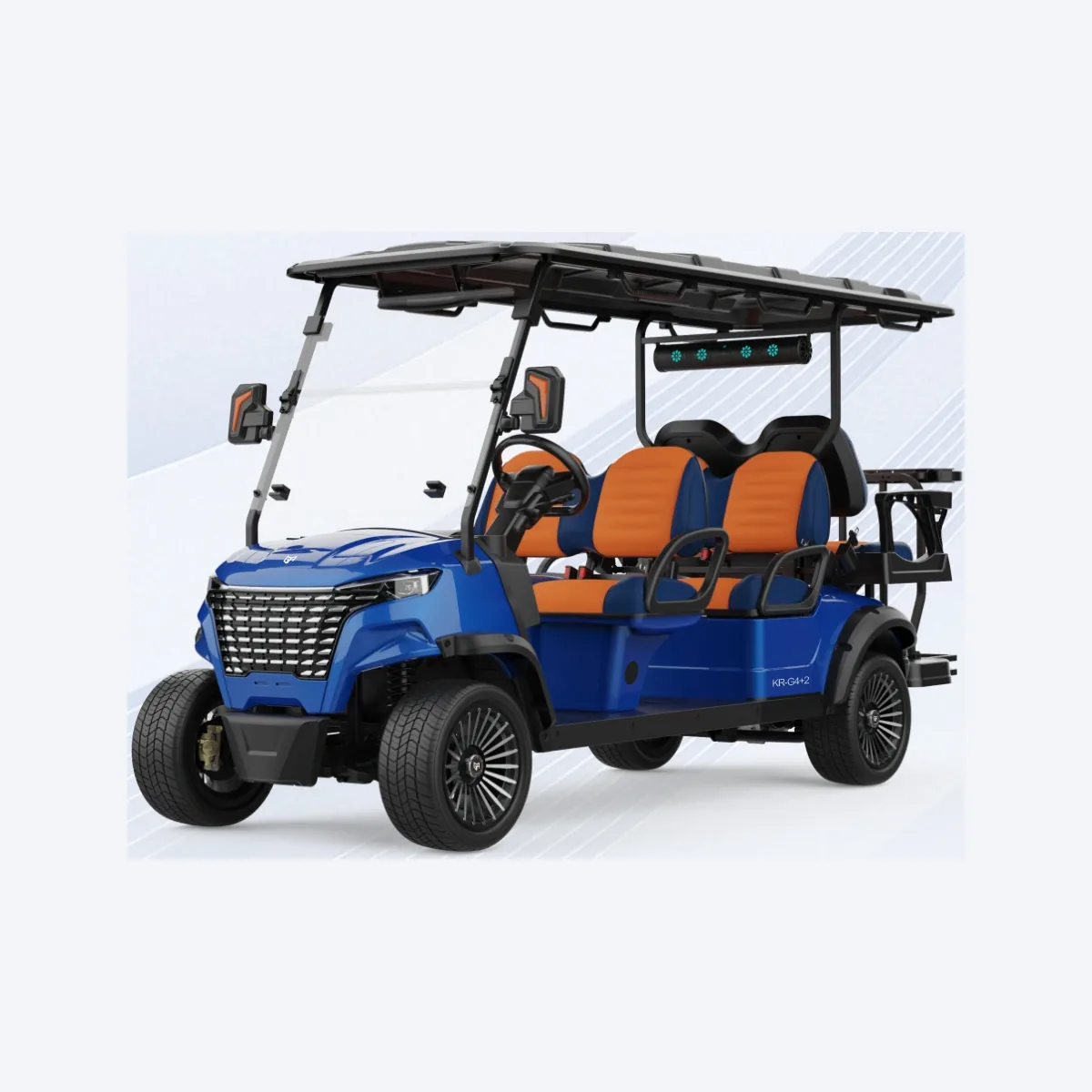
- KR-G4+2 Ridge 6-seat — 30–35 miles, 4.5 m turning radius.
- KR-P6 Ridge utility 6-seat — flatbed and 2,860 mm wheelbase.
- KC-G2+2H Coast 4-seat — 2.43 m body, 190 mm clearance.
- KC-P4 Coast utility 4-seat — compact flatbed for campus work.
- KC-P6H Coast utility 6-seat — long flatbed and high clearance.
Related guides:
- How to choose the right golf cart
- Lithium vs lead-acid golf cart batteries
- Golf cart seating configurations
- Electric golf cart maintenance schedule
- Sightseeing carts vs golf carts
Browse golf carts, utility vehicles and sightseeing carts. For a configuration-based quotation, send the seat count, route and destination or message the export desk on WhatsApp. You can also read about our export desk and see reference deployments.
What should you confirm before booking?
Confirm the container size, loading plan, battery state of charge and consignee details before the forwarder books. A 40-foot high-cube is common for several carts; a 20-foot container may fit one or two shorter models. Ask for the loading diagram and packing list together so the container plan and the documents describe the same shipment. Check the delivery address and whether a forklift or ramp is available at destination; a cart that arrives without unloading equipment can block the yard.
The questions that decide the order.
What documents are needed to ship a golf cart?
At minimum: commercial invoice, packing list, bill of lading, and the battery UN38.3 and MSDS documents. Some destinations also require a certificate of origin or a product test report. Confirm the destination requirements with your forwarder before booking.
Can golf carts be shipped in a normal container?
Yes. A 40-foot high-cube container typically holds several carts, depending on model length and packing method. The exact load depends on the cart dimensions, whether the roof is removed, and the packing plan. Ask for a loading diagram with the quotation.
Which Incoterm is best for a first order?
FOB is the most common starting point because it gives the buyer control of the freight and insurance. CIF is simpler for a first-time importer but limits control. DAP or DDP can be arranged where the destination and customs process allow it.
How should the battery be packed?
The battery must be isolated and packed according to the carrier's dangerous-goods rules. For lithium packs, provide the UN38.3 test summary and MSDS. Do not ship a damaged or swollen pack.
What should I check when the container arrives?
Check the container seal, take photos before unloading, inspect the body and canopy for transit damage, confirm the charger and accessories are present, and test each cart at low speed before accepting the delivery.