Golf Courses
Quiet, low-speed fleets for 18-hole operations
Marshal cars, starter carts and guest vehicles sized to the course loop, with turf-friendly tyres and overnight charging.
Quick answer
For an 18-hole course, start with one cart per two players in the peak hour plus 2–4 spare marshal and maintenance vehicles. A 4 m turning radius fits service paths, and a 48 V lithium pack recharges in about 5 hours.
Updated 2026-11-03 · Export Desk
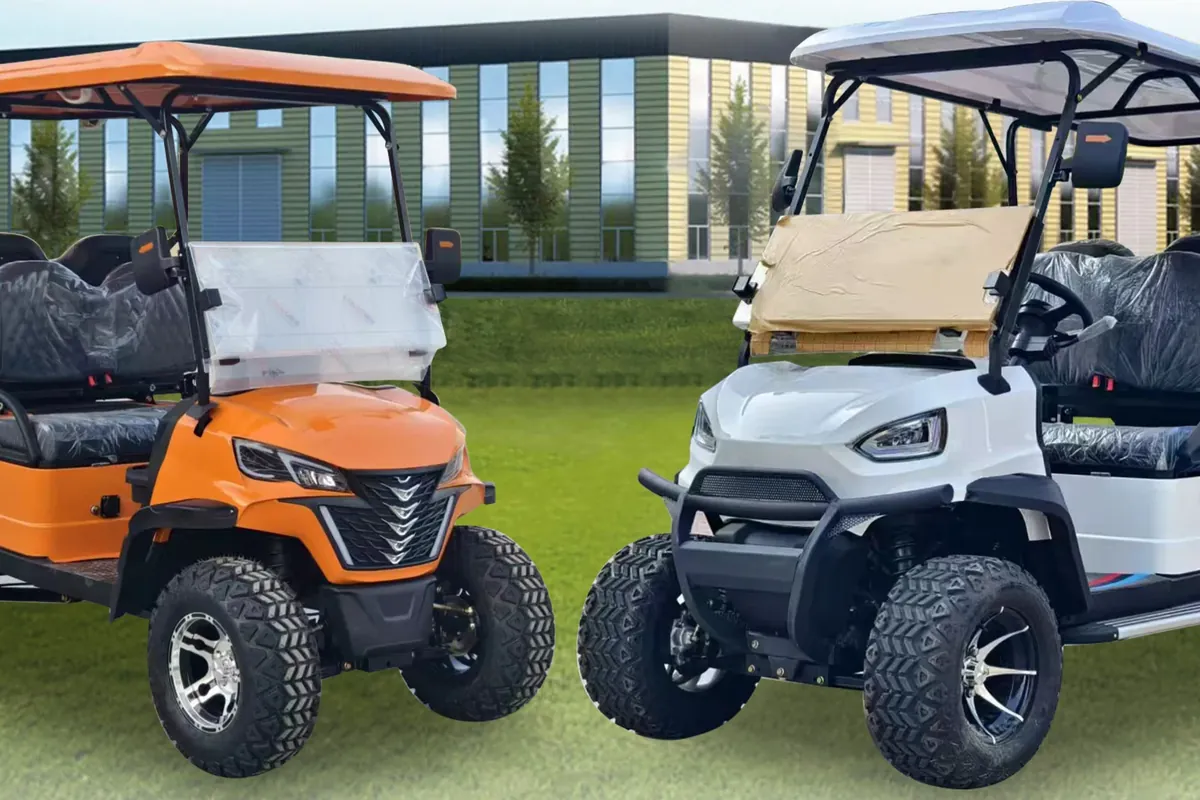
A golf course is a low-speed, high-frequency environment. Vehicles leave the clubhouse, follow a fixed loop, stop every few minutes and return. The critical numbers are not top speed but turning radius, ground pressure, noise and the ability to charge overnight without disrupting the morning tee sheet.
A typical fleet mixes roles: two-seat cars for marshals and starters, four-seat cars for guest pairs, and a utility cart for range maintenance and supplies. Standardising on one platform reduces spare parts, charger types and technician training.
Turf protection matters. Wide, low-pressure tyres and predictable torque delivery reduce scuffing on fairways and approaches. If the course crosses public roads or steep banks, confirm the local registration and braking requirements before specifying a road-legal package.
Configuration starts from the site.
Role-based fleet mix
Separate marshal, guest and maintenance vehicles instead of one compromise spec.
Shared platform
Common controller, charger and service parts across the fleet.
Battery choice by route
Lead-acid for short fixed loops, LiFePO4 for longer or multi-shift use.
Models that fit this duty cycle.
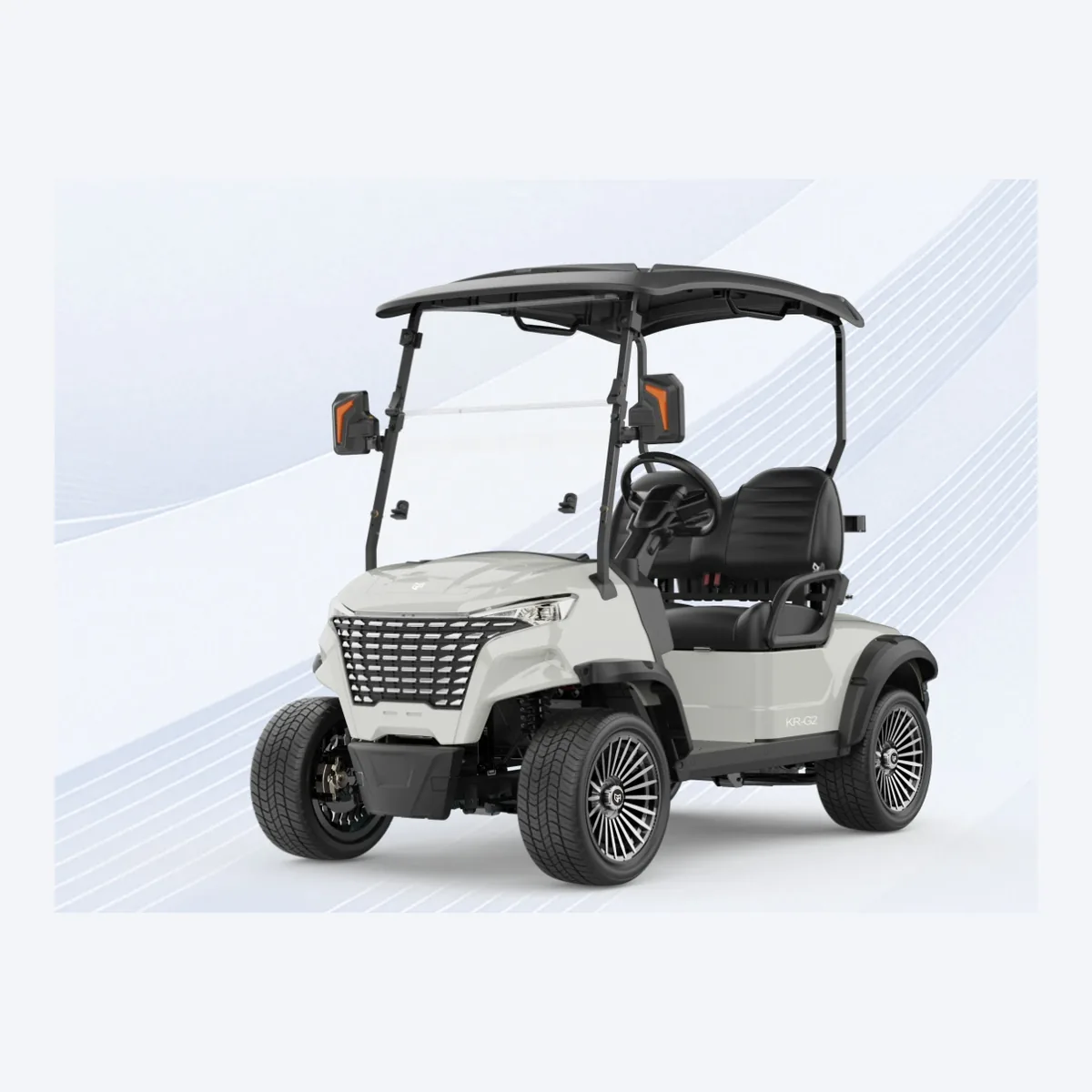
KR-G2 Ridge 2-Seat Lithium Golf Cart
Lithium two-seater with a 30–35 mile working range
- Range
- 30–35 mi
- Battery
- 51.2 V 105 Ah LiFePO4
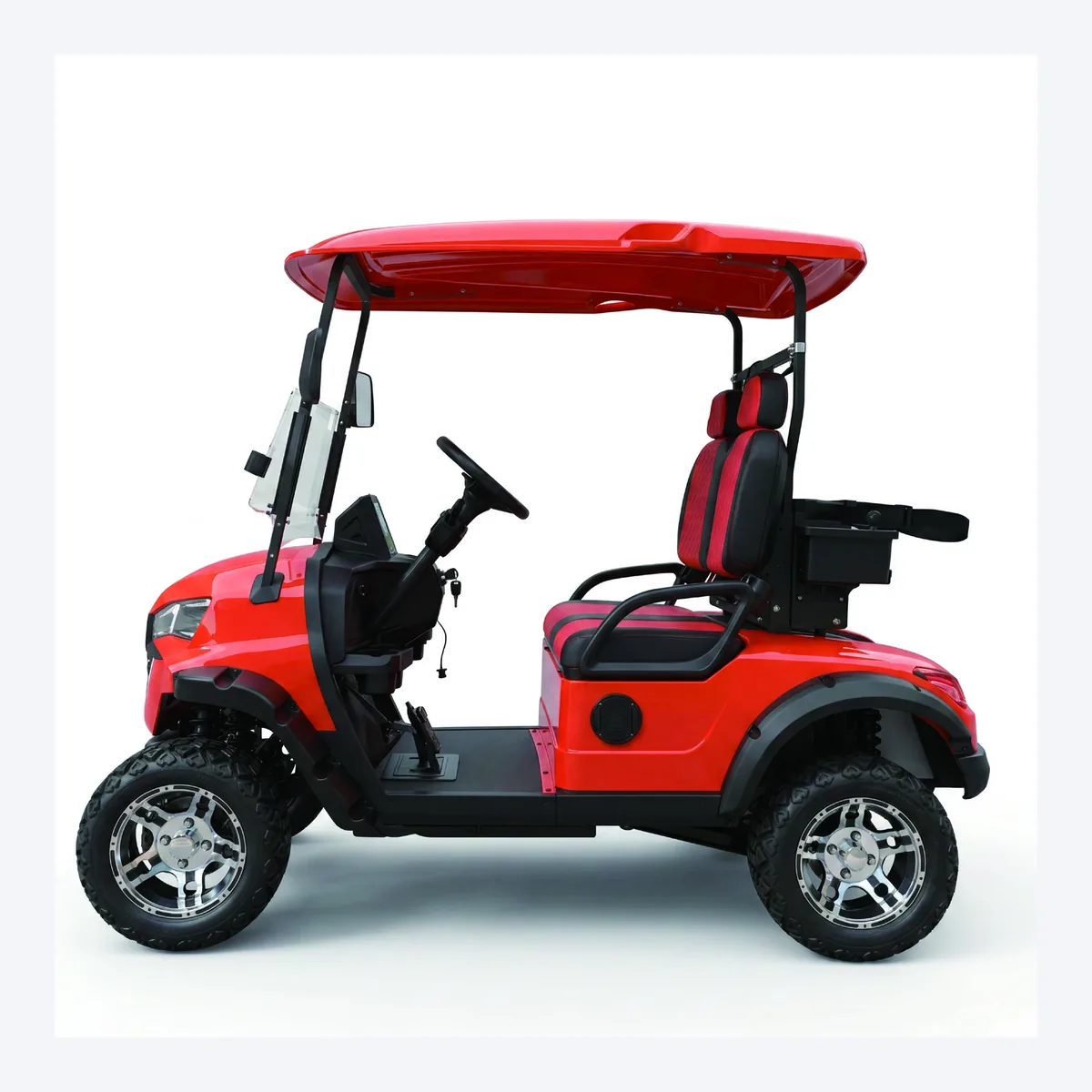
GC-A Classic 2-Seat Golf Cart
Long-range classic with lead-acid or lithium power
- Range
- 80–100 km
- Motor
- 4 / 5 / 7.5 kW
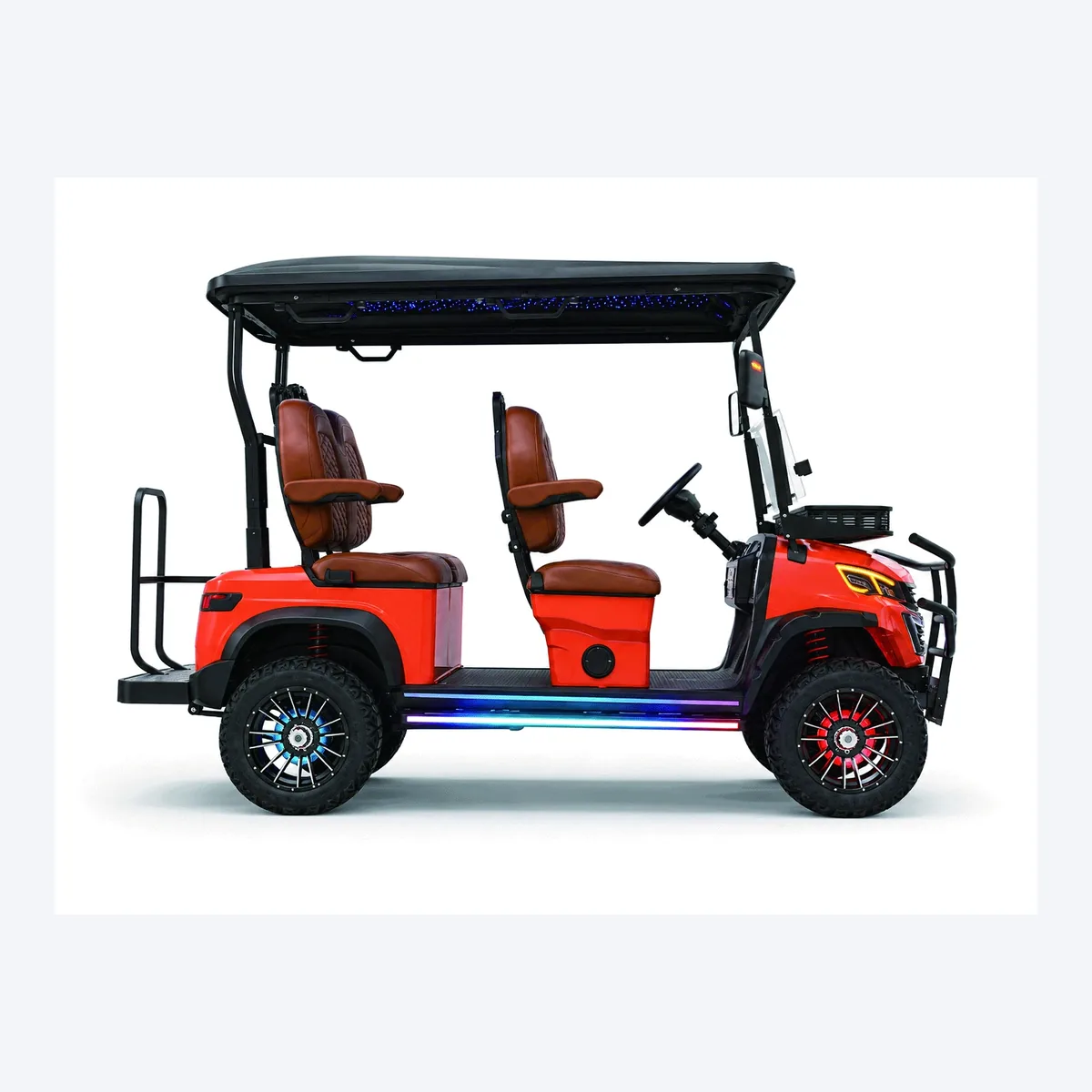
GC-B Classic 4-Seat Golf Cart
Four seats, 60 V lead-acid, straightforward ownership
- Range
- 60 km
- Motor
- 60 V 4 kW AC
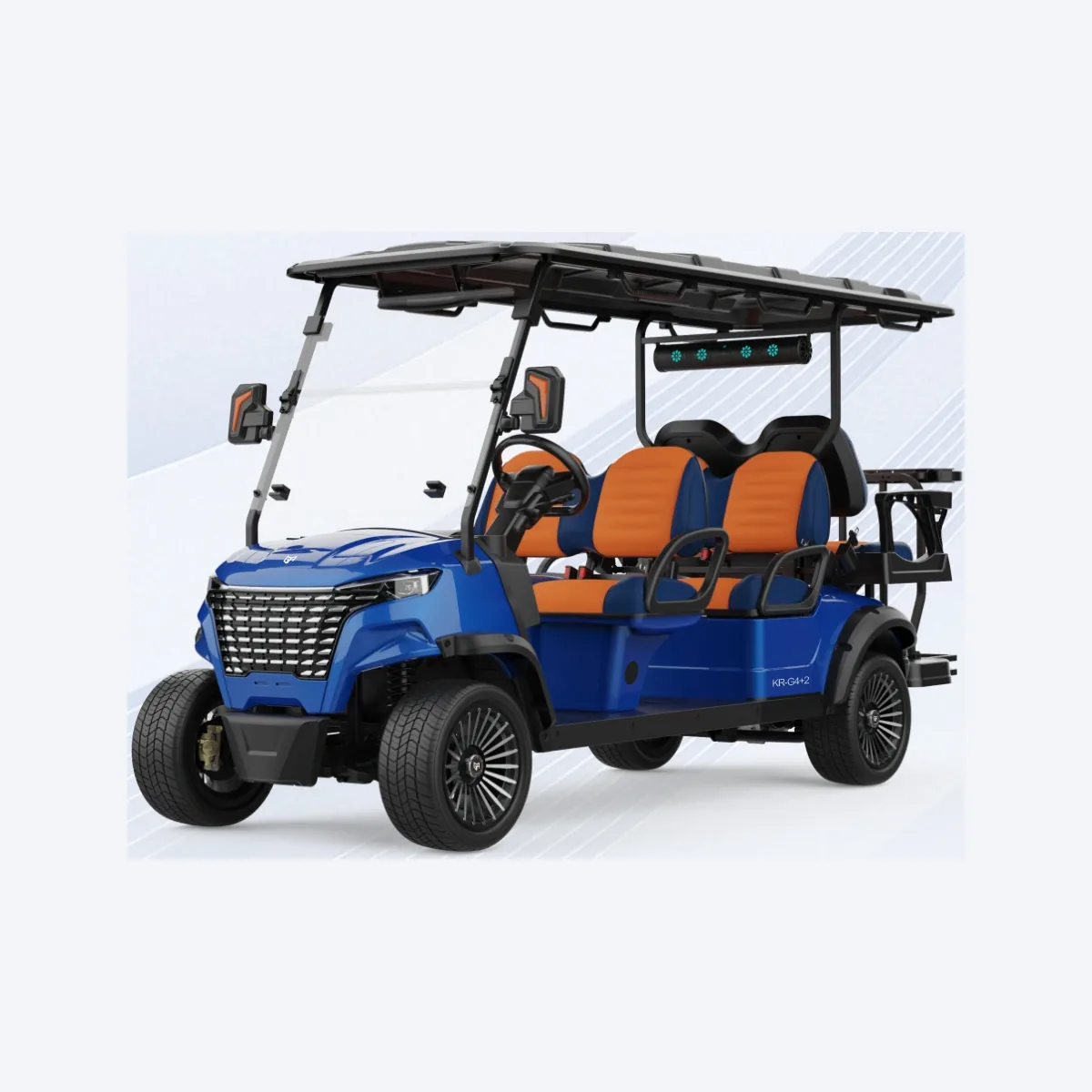
KR-G4+2 Ridge 6-Seat Lithium Golf Cart
Six seats on a 3.67 m lithium platform
- Range
- 30–35 mi
- Battery
- 51.2 V 105 Ah LiFePO4
The questions that decide the order.
How many carts does an 18-hole course need?
It depends on tee-time spacing, cart-path layout and whether the course uses a cart-per-pair model. A common starting point is one cart per two players in the peak hour plus two to four spare vehicles for marshals and maintenance. Measure the peak-hour dispatch rate before sizing the fleet.
Can carts be used on fairways?
That is a course policy decision. Low ground pressure and turf tyres reduce damage, but wet conditions still require cart-path rules. Confirm the course agronomist’s policy before choosing tyre and suspension specifications.
What charging infrastructure is required?
Most carts use an onboard charger that plugs into a standard single-phase supply. The number of outlets depends on the fleet size and charging window. Confirm the supply capacity with an electrician; three-phase is not normally required for this class of vehicle.
Do you supply course-specific accessories?
Sand bottles, ball washers, bag racks, coolers, scorecard holders and rain curtains can be specified. Send the accessory list and we will confirm which items are factory-fitted and which are supplied loose.
Tell us the terrain, the seats and the port.
A useful quotation needs three things: where the golf cart will run, how many people it carries, and where it ships. Send those and we will come back with a configuration sheet.
Request a quote
Tell us the model, seating and destination. We will reply with a configuration sheet and quotation.