Winter Storage and Golf Cart Battery Care
A seasonal shutdown routine for lead-acid and LiFePO4 golf cart packs: preparation, isolation, checks during storage and the return to service.
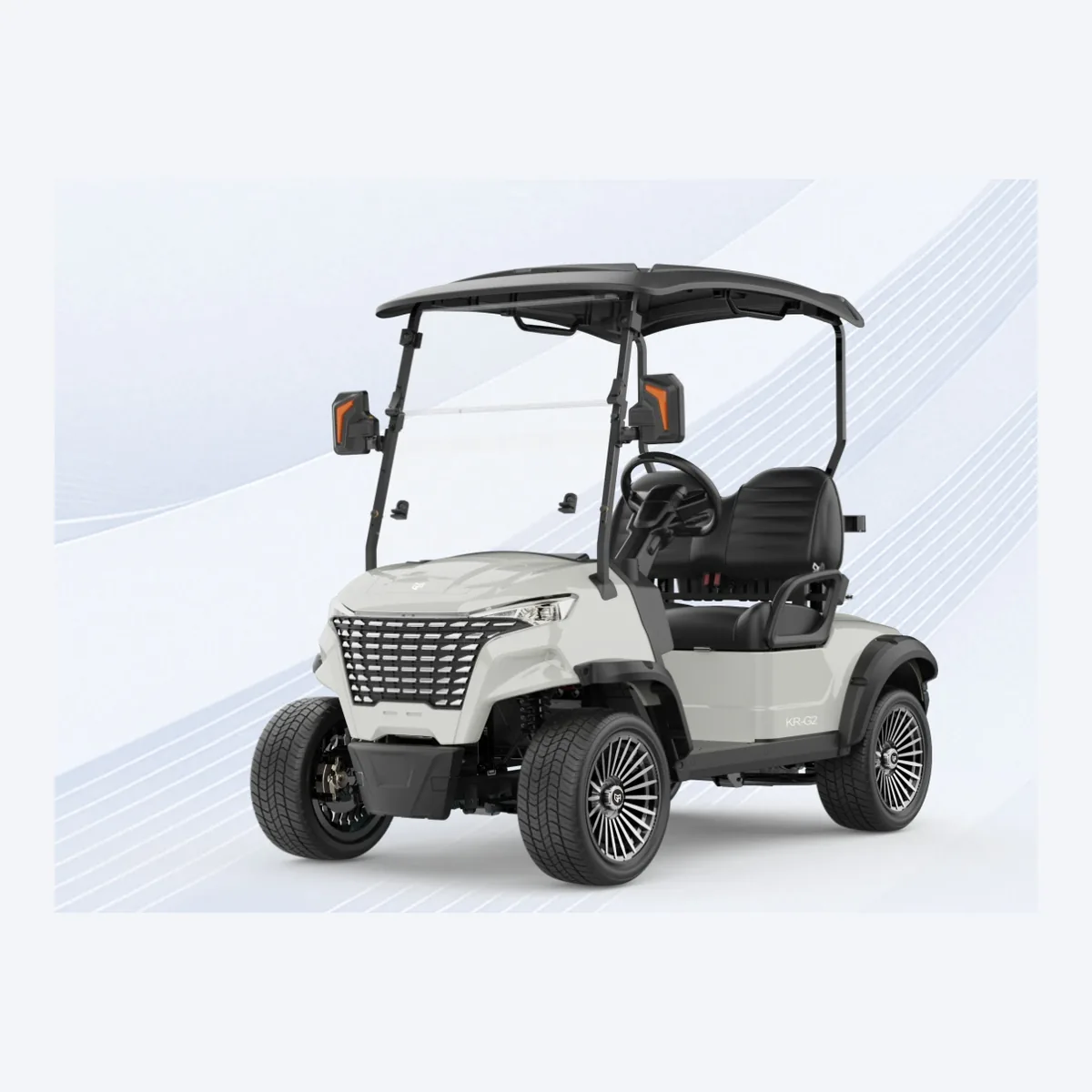
A golf cart battery does not stop working when the season ends. It self-discharges, it reacts to temperature, and on lead-acid packs it can be damaged by being left in the wrong state of charge. Winter storage is therefore a short maintenance task, not a switch-off.
This guide sets out a storage routine for both chemistries used in this catalogue — the 51.2V 105Ah LiFePO4 pack on the Ridge and Coast models and the 60V 105Ah lead-acid pack on the GC-B — and the checks that bring a cart safely back into service.
What happens to a golf cart battery during storage?
Every battery self-discharges slowly. Lead-acid packs lose charge faster than lithium packs, and a lead-acid pack left discharged for months can sulphate, which reduces capacity permanently. If a discharged lead-acid pack freezes, the electrolyte can expand and damage the plates or the case.
A LiFePO4 pack holds its charge better, but it is not inert. The battery management system draws a small current, and charging a cold lithium pack can damage the cells. The BMS may block charging until the pack warms, which is protection working as intended, not a fault.
The storage routine therefore has three aims: leave the pack at the right state of charge, keep it within its temperature range, and check it often enough to catch a problem before spring. A cart stored under a leaking roof, or in a shed that swings between warm and cold, is worse off than one kept in a stable, dry space; condensation on the terminals is a common winter fault.
How should a lead-acid pack be prepared for winter?
Start by charging the pack fully. A lead-acid pack should go into storage charged, not empty. Clean the terminals, check that the connections are tight, and inspect the case for cracks or leaks. If the pack has accessible cells and the datasheet requires water top-up, add water to the specified level as the datasheet instructs.
Then disconnect the pack. Remove the negative terminal first and secure the cable away from the battery post. Store the cart or the pack in a dry, ventilated place, because charging and discharging can release gas. If the pack stays in the cart, leave the compartment open enough to ventilate.
During storage, recharge at the interval stated in the battery datasheet. A lead-acid pack that is checked once a month and topped up when the state of charge falls is far less likely to sulphate than one left unattended until spring.
How should a LiFePO4 pack be prepared?
The principle is similar but the target state of charge is different. Follow the storage state of charge in the pack datasheet rather than assuming that a full pack is best. A partial charge is often the correct storage condition for lithium, and the BMS reports the level.
Switch the vehicle off, disconnect the pack or use the isolation procedure in the manual, and confirm the state of charge through the instrument panel or the Bluetooth monitoring where the pack supports it. Store the cart in a dry place within the temperature range stated in the datasheet.
Do not charge a frozen or very cold pack. Let it reach a suitable temperature first. If the BMS refuses to charge, read the fault before assuming the charger is broken; low-temperature protection is a normal response.
Should the battery be removed from the cart?
Removal is optional. If the cart is stored dry, secure and within the temperature range, leaving the pack in place and disconnecting it is usually the simpler choice. It also avoids lifting a heavy pack and disturbing the mounting hardware.
Remove the pack only when the storage location is damper, colder or less secure than a suitable indoor space. If you remove it, insulate the terminals, keep the pack upright, label the cables and store it away from metal objects that could bridge the terminals.
Whether the pack stays or goes, the cart itself needs attention: inflate the tyres, release the parking brake or chock the wheels to avoid a stuck brake, close the windows or cover the body, and keep rodents away from the wiring.
How often should you check a stored cart?
| Task | Lead-acid | LiFePO4 | Interval |
|---|---|---|---|
| Visual check | Case, terminals, electrolyte level where applicable | Enclosure, terminals, cable condition | Monthly |
| State of charge | Check and recharge to full | Check through BMS or instrument | Monthly |
| Charger | Store dry, inspect cable and plug | Store dry, inspect cable and plug | Monthly |
| Cart | Tyre pressure, brake, cover, pests | Tyre pressure, brake, cover, pests | Monthly |
| Record | Note voltage, water top-up, faults | Note state of charge, BMS faults | Each check |
A written log is worth the effort. It shows whether a pack is holding charge between checks, and it gives the service team a baseline if a cart underperforms at the start of the season.
How do you return a cart to service?
Before the first round, inspect the cart: tyre pressure, brakes, lights, steering and the charger cable. If the cart lives outdoors, check the cover and the battery compartment after storms before the first charge. Charge the pack to full at a suitable temperature. On a lithium cart, confirm that the BMS shows a normal state of charge and no stored fault.
Then run a short loop at normal load before adding the cart to the dispatch list. A pack that charges normally, holds its charge and completes the loop without an abnormal drop is ready. A pack that heats unusually, charges slowly or falls quickly under load should be tested before the season starts, not after it has stranded a guest.
Record the return-to-service date and the first range observation. It becomes the reference for the rest of the year, and it makes a warranty or service conversation much easier if the pack later behaves differently.
The questions that decide the order.
Can I leave the charger connected all winter?
Do not treat the onboard charger as a maintenance device unless the battery datasheet says it is designed for that. Charge the pack, unplug the charger, and recharge at the interval stated in the datasheet. A charger left connected to a stored cart adds risk without a proven benefit.
Will cold weather damage the battery?
Cold slows the chemistry and reduces usable capacity. A discharged lead-acid pack is more exposed to freezing damage, and a lithium pack should not be charged below the temperature limit in its datasheet. Store the pack within the stated range and let it warm before charging.
Should I remove the battery from the cart?
Removal is optional. If the cart stays dry, secure and within the storage temperature range, leave the pack in place and disconnect it. Remove it only if the storage area is damper, colder or less secure than a suitable indoor location.
How do I know the battery survived storage?
Charge it to full at a suitable temperature, check the state of charge through the BMS where fitted, and run a short route at normal load. A pack that charges normally and completes the loop without an abnormal drop is ready for service. If it does not, have the pack tested before the season starts.