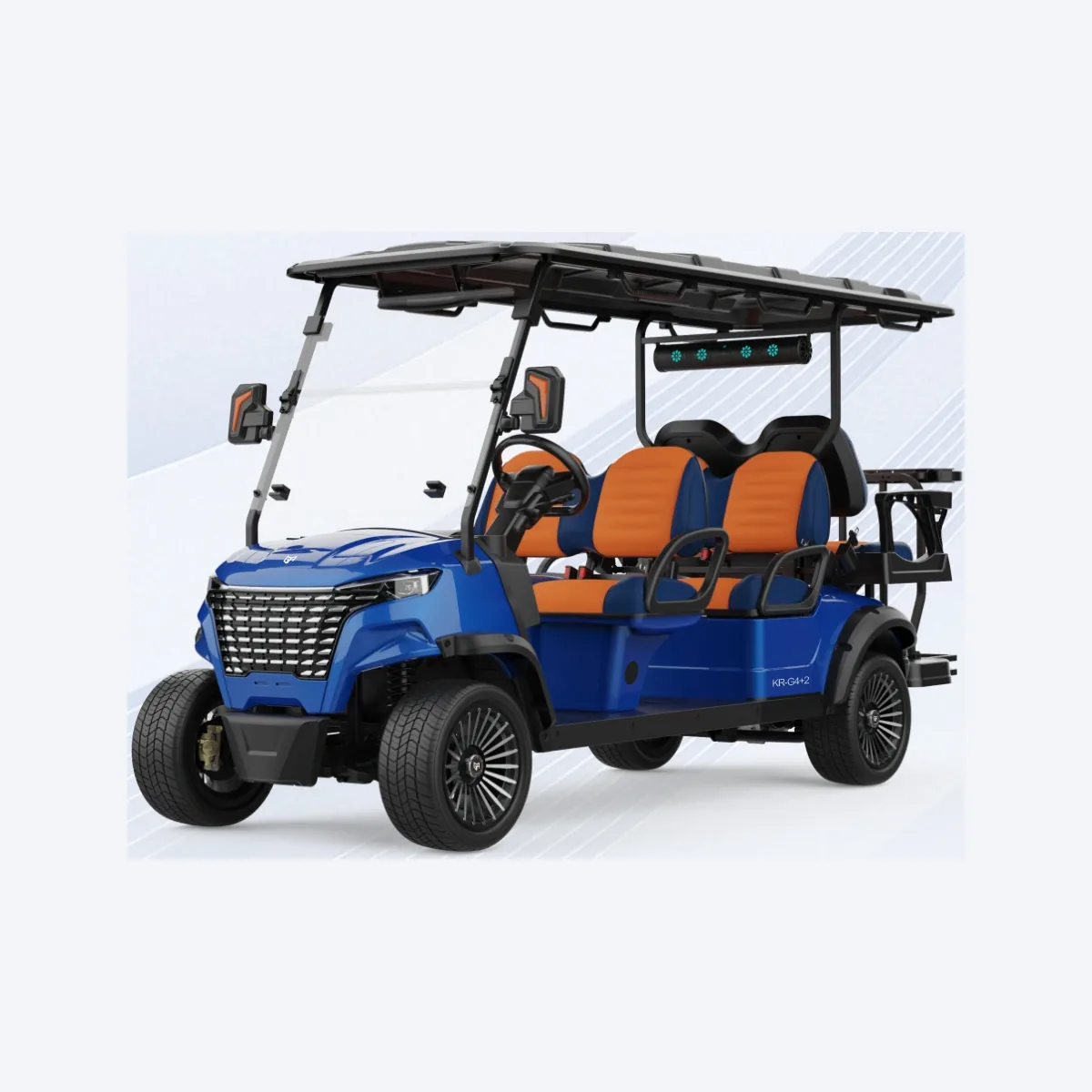
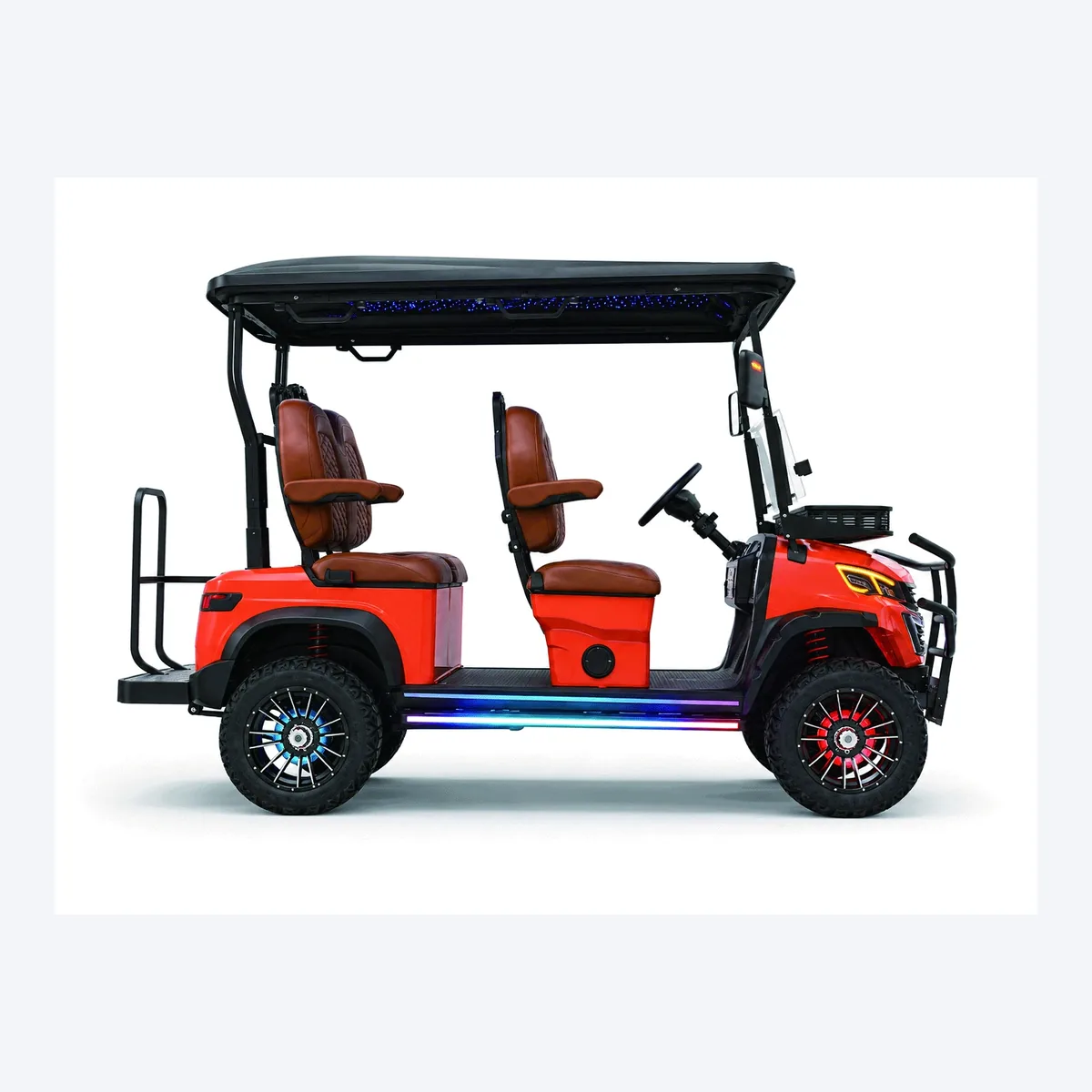
Golf Cart vs Sightseeing Cart: Which Fits?
Passenger capacity, boarding, body size and duty cycle: how a golf cart and a sightseeing cart differ, and which one suits a resort, estate or attraction.
Quick answer
A golf cart carries 2–6 passengers; a sightseeing cart adds row seating, wider steps and 6–23 seats. Use a cart for narrow on-demand paths, a sightseeing cart for fixed loops with about 90-second station dwell.
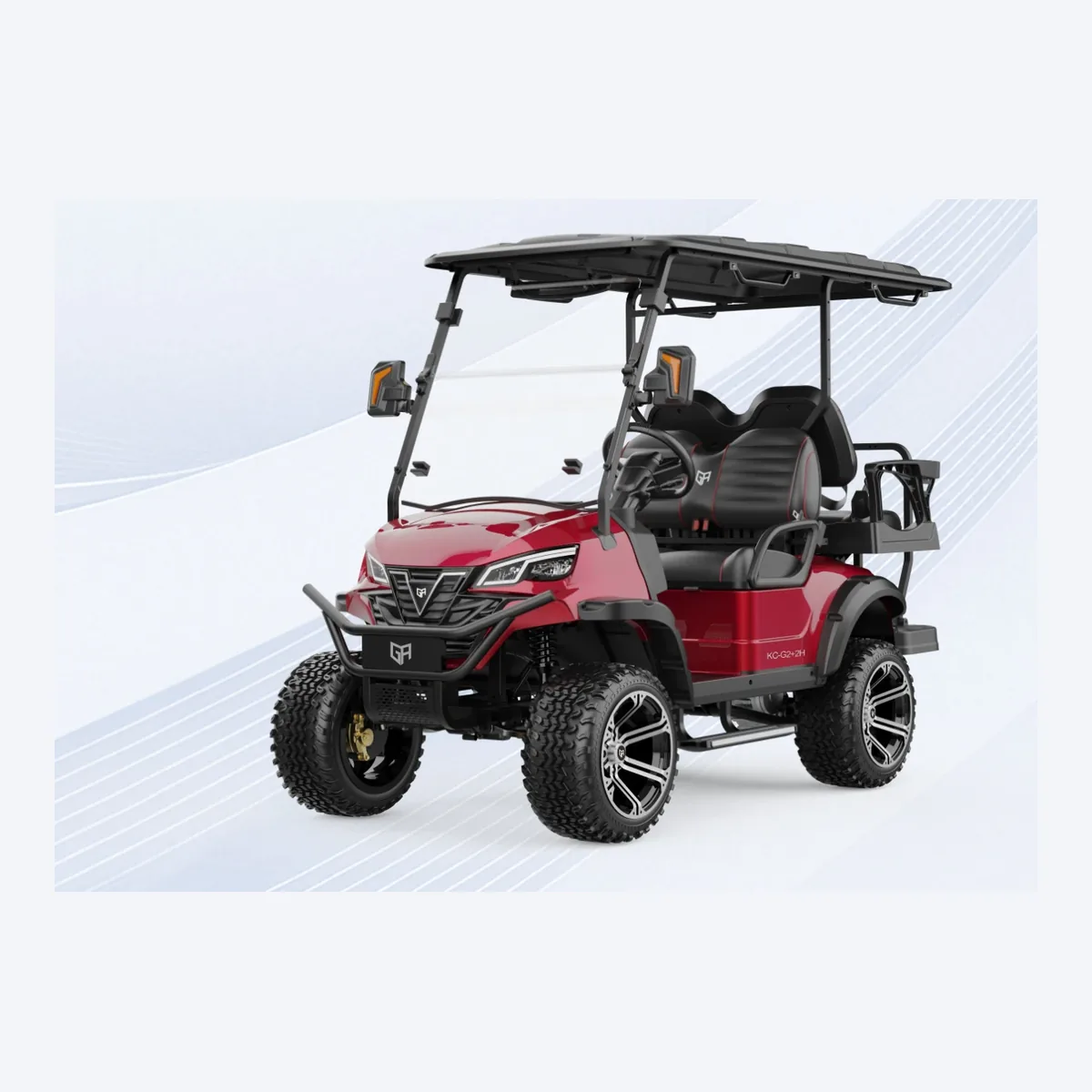
Both vehicles carry paying guests around a site, and both are open, low-speed and electric. The difference is scale and boarding. A golf cart is built for two to six people who step in from a path; a sightseeing cart is built for a group that boards at a stop, sits in rows and listens to a guide. The route, the group size and the boarding point decide which one fits.
This comparison sets out the categories and the operating questions, without assuming that a larger vehicle is automatically the better one.
What is the difference in passenger capacity?
A golf cart in this range carries two to six adults. A sightseeing cart usually carries eight or more, often in three or four forward-facing rows, and some designs link two sections into a train. The capacity gap is the first decision: a group of ten needs either two six-seat carts with two drivers or one sightseeing cart with one driver.
More capacity is not automatically better. A sightseeing cart runs a schedule; a golf cart runs on demand. If most trips carry two to four people, a large cart spends its life half empty and consumes more energy per passenger.
How do the bodies differ?
A golf cart is compact and open-sided, with bench seats and a step-in height suited to a path. Body lengths in this range run from about 2.4 m to 3.8 m. A sightseeing cart is longer and wider, with a low-floor aisle, rows of seats, grab rails, a canopy and often a public-address system. Some models add doors or weather blinds.
The body shape changes the route. A sightseeing cart needs wider paths, a larger turning circle and a boarding area that keeps the aisle clear. A golf cart can use the same paths as a car and park in a standard bay.
How do speed and route length compare?
Both are site vehicles with governed speeds. A sightseeing cart is normally set up for a continuous loop with fixed stops, so its battery and motor are specified for hours of low-speed running with frequent boarding. A golf cart is specified for shorter trips: our lithium models cover 30–35 miles on flat ground and recharge in five hours or less.
Route length and stop frequency matter more than top speed. A long loop with many stops rewards a vehicle with easy boarding and a comfortable seat; a short transfer rewards a compact cart that turns tightly and parks easily.
| Attribute | Golf cart | Sightseeing cart |
|---|---|---|
| Seats | 2–6 | 8 and above, often in rows |
| Body | Compact, open-sided | Long, low-floor aisle, grab rails |
| Boarding | Step over the side | Step and aisle at a stop |
| Typical duty | On-demand transfers, staff, tours | Scheduled loops, guided tours |
| Route needs | Narrow paths, standard bays | Wider paths, turning space, boarding area |
| Fleet fit | Shared platform and chargers | Separate platform and service routine |
Which suits a resort, estate or attraction?
A resort usually runs both. Six-seat carts handle on-demand transfers, luggage and VIP movement, while a sightseeing cart handles a scheduled tour or a shuttle between distant facilities. An estate may use carts for staff and guest transfers and a sightseeing cart for visitor tours.
An attraction with high visitor volume is the clearest sightseeing case: a fixed route, a boarding platform and a commentary. A site with dispersed demand and small groups is the clearest golf-cart case.
What about boarding and accessibility?
A sightseeing cart usually has a low step, an aisle and grab rails, which suits older guests and groups. A golf cart requires passengers to step over the side and sit on a bench; that is fine for most adults but harder for guests with limited mobility.
If accessibility is a requirement, ask for step height, door width, aisle width and the availability of a ramp. A sightseeing layout is generally easier to board, but the specific model still needs checking.
How does weather protection compare?
Both normally carry a canopy. A sightseeing cart often offers side curtains, doors or a fully enclosed option because it runs a schedule in poor weather. A golf cart typically uses a rain curtain and a folding windshield as options, which is adequate for short trips but less comfortable on a long loop.
Can a golf cart run a sightseeing route?
Yes, for small groups and short loops. Two six-seat carts can move twelve guests, but they need two drivers, two parking spaces and a way to keep the group together. Commentary, scheduled departures and boarding at a fixed stop are easier with a sightseeing cart.
The economics also differ. Multiple carts spread the capital cost and let the fleet flex with demand; one sightseeing cart is more efficient per driver when the group is full, but it is underused when demand is low.
Which is easier to operate in a mixed fleet?
A golf cart fleet benefits from shared chargers, controllers and spare parts. Adding a sightseeing cart introduces a second platform, a second set of service procedures and a different driver briefing. That is justified when tour volume is a core business, not when it is occasional.
For most resorts and estates, the practical answer is a fleet of two- to six-seat carts, with a sightseeing cart added only when group size and schedule demand it.
What should a buyer measure before deciding?
Walk the route and measure the narrowest gate, the tightest turn and the boarding point. Count the typical group size, not the peak, and note how often the peak occurs. Check where the vehicle will charge and whether the bay fits its length.
Then match the vehicle to the duty: on-demand transfers, scheduled tours or a mix. The category becomes obvious once the route and the group size are written down.
The questions that decide the order.
How many passengers can a golf cart carry?
Models in this range carry two to six adults in forward-facing and rear-facing bench layouts. A six-seat cart uses a 4+2 layout: four forward seats in two rows plus a rear-facing bench for two. Larger groups need multiple carts or a sightseeing cart.
When is a sightseeing cart better than a six-seat golf cart?
A sightseeing cart is better when the site runs a scheduled loop, boards groups at a fixed stop and needs more than six seats. A six-seat cart is better for on-demand transfers, narrow paths and small groups, where a larger vehicle would run half empty.
Can a golf cart tow a sightseeing trailer?
Some carts include a parking brake with a towing function, but towing capacity is not the same as passenger capacity. Confirm trailer weight, hitch, braking and local site rules before planning a towed passenger operation. A purpose-built passenger vehicle is usually the safer choice.
Do sightseeing carts need a different charging setup?
They often carry a larger pack and run longer duty cycles, so the charger and the power supply must be sized for the vehicle. Charging bays, cables and ventilation should be planned around the actual pack and charger, not around a golf-cart assumption.