Electric vs Gas Golf Cart: Which Should You Buy?
Electric and gas golf carts compared on energy, maintenance, noise, range and site rules, with the duty cycles where each powertrain makes sense.
Quick answer
Electric carts use a 51.2 V 105 Ah LiFePO4 pack and charge in 5 hours or less; lead-acid needs 6–10 hours. Electric usually wins on service and energy for short daily routes; gas suits long remote routes.
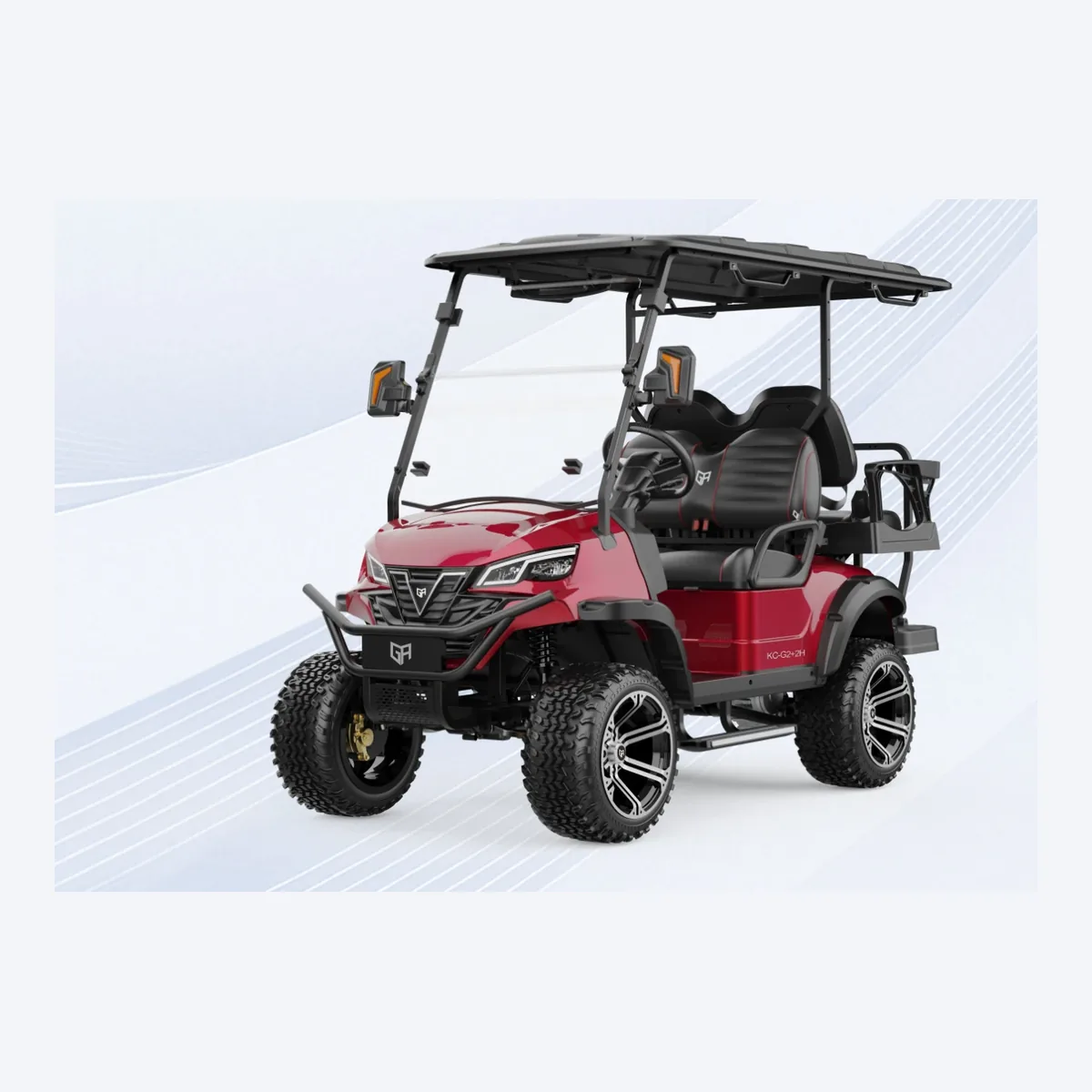
Electric and gas carts do the same job with different energy chains, and that difference shows up in where you park them, how you service them and what the daily routine looks like. The choice is rarely about top speed. It is about whether the site has reliable power, how long the route runs without a break, and whether the vehicle operates near guests, rooms or quiet areas.
This comparison sets out the categories, the cost structure and the site conditions that decide between them. Prices are configuration-based, so the figures that matter come from a quotation, not from a brochure.
What are the main differences between electric and gas carts?
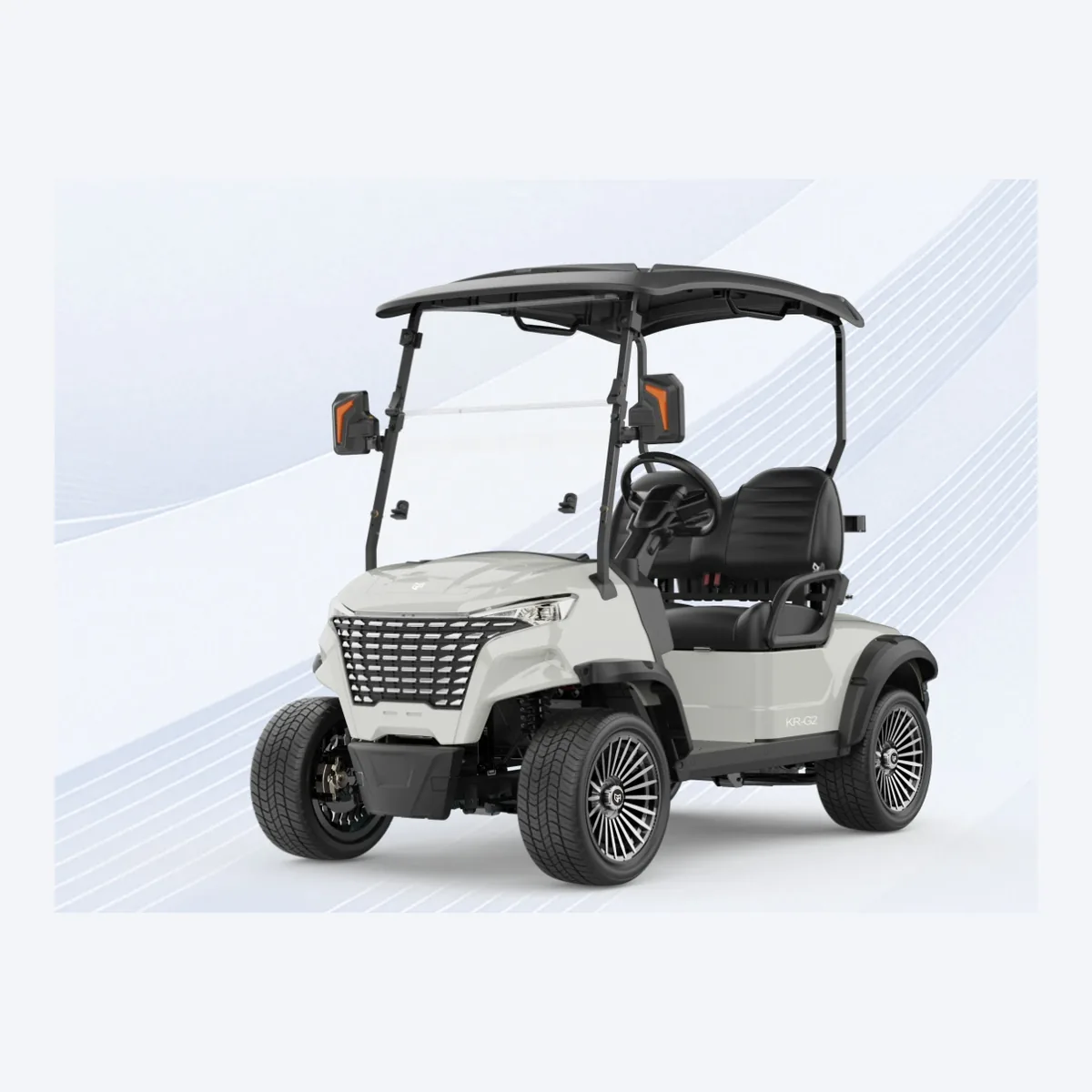
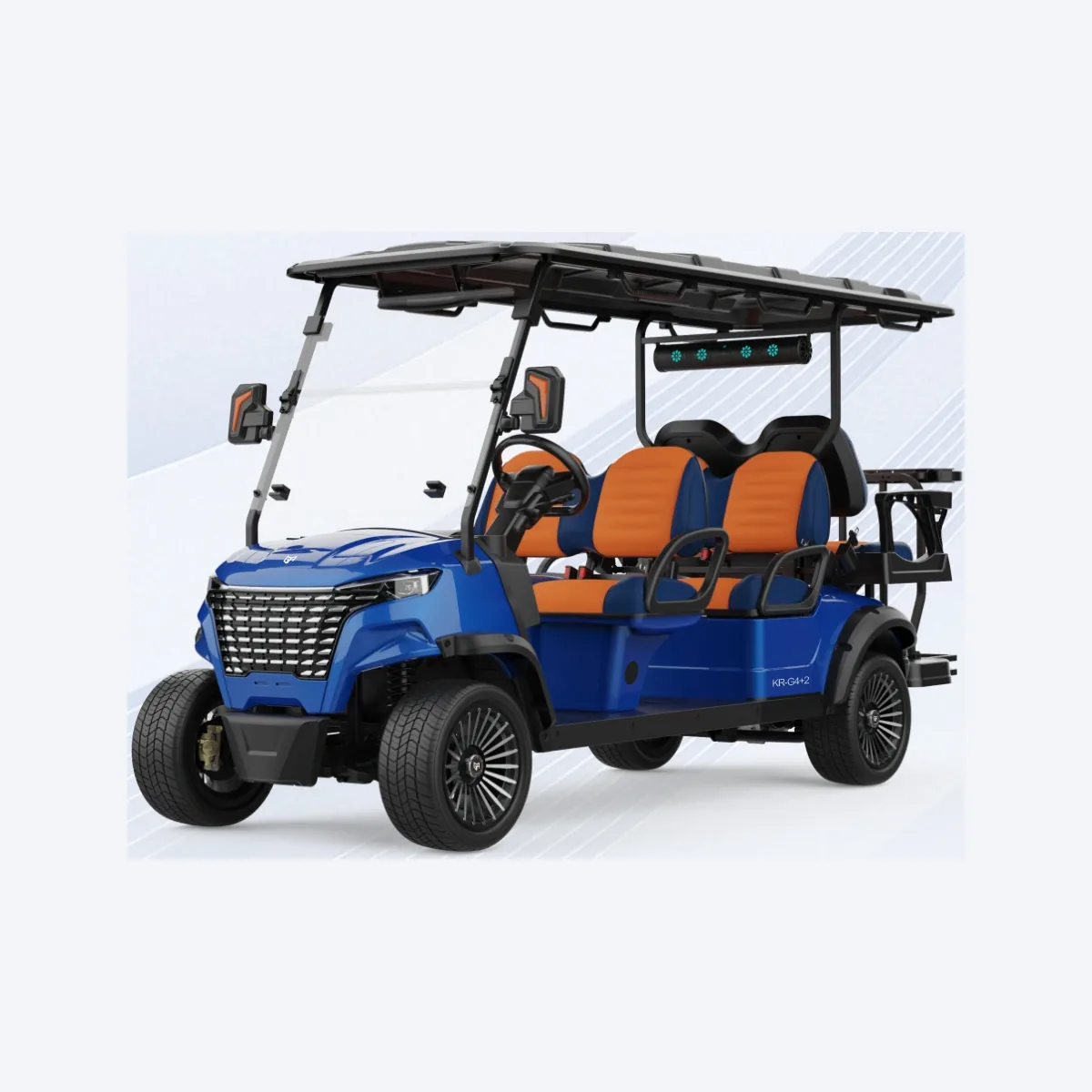
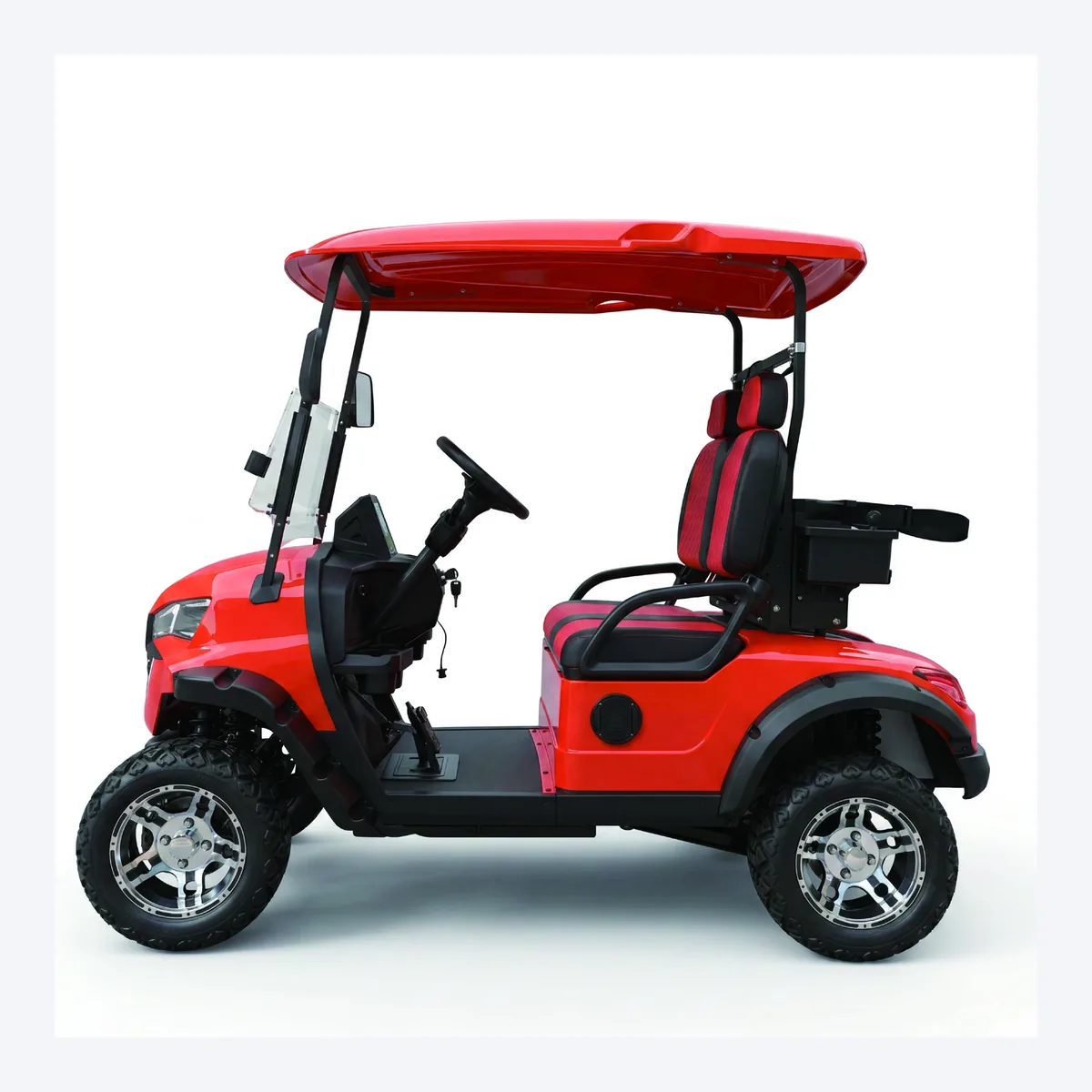
An electric cart stores energy in a battery pack and drives the wheels through a motor and controller. A typical fleet model in this range uses a 48 V 5 kW AC motor and a 51.2 V 105 Ah LiFePO4 pack, charges in five hours or less and covers 30–35 miles on flat ground. A gas cart carries a small petrol engine, a fuel tank, an exhaust system and a starter, and refuels in minutes.
The practical differences follow from that. Electric drive delivers torque from standstill, runs quietly and produces no exhaust at the vehicle. Gas drive carries its energy densely, refuels quickly and does not depend on a charging point, but adds engine noise, vibration, exhaust and a longer list of service items.
| Aspect | Electric cart | Gas cart |
|---|---|---|
| Energy source | Battery pack, charged on site | Petrol tank, refuelled on site |
| Refuelling time | Hours, usually overnight | Minutes |
| Noise and exhaust | Quiet, no exhaust at the vehicle | Engine noise, vibration, exhaust |
| Drivetrain parts | Motor, controller, battery, charger | Engine, fuel system, exhaust, starter |
| Scheduled service | Battery care, brakes, tyres, electrical | Oil, filters, plug, belts, fuel system |
| Torque | Available from standstill | Builds with engine speed |
| Cold weather | Reduced battery range | Cold start and warm-up |
| Infrastructure | Charging bays and power capacity | Fuel storage and handling |
How does the cost structure differ?
The purchase price is quotation-based for both. Electric carts carry the cost of a battery pack and charger, and lithium packs usually sit above lead-acid in the initial quotation. Gas carts avoid that pack cost but add an engine, fuel system and exhaust, and they commit the site to fuel supply.
Running costs follow a different pattern. Electric energy is bought from the site’s electricity supply, and the cost per mile depends on the local tariff, charger efficiency and route. Gas running cost depends on fuel price, engine efficiency and duty cycle. Maintenance is the third line: electric carts have no oil, filter, spark plug or belt schedule, while gas carts do. A fair comparison uses the same annual mileage and ownership period for both, then asks for a quotation that states what is included.
Which powertrain suits a golf course?
Electric is the default for most courses. Carts leave and return to the same clubhouse, charge overnight and run short loops at low speed. Quiet operation matters near tees and greens, and no exhaust means no fumes in the cart barn. A 30–35 mile range covers repeated 18-hole loops with a charge between shifts.
Gas still suits courses with long uninterrupted routes, remote holes without power at the turnaround point, or a maintenance team already equipped for engine service. The trade-off is noise and exhaust where players are close, plus a fuel storage and handling routine.
What about resorts, hotels and campuses?
Electric carts fit guest-facing work: lobby transfers, housekeeping rounds, estate paths and night shifts. They can be charged in a service yard without disturbing rooms, and the lack of exhaust makes them usable under canopies and near open windows. The planning task is charging capacity, not fuel delivery.
Gas carts are less comfortable in those settings. Noise carries further than most operators expect, and exhaust is noticeable on a slow guest route. They remain an option where power is unavailable at the parking area, or where a site already runs petrol equipment and has the safety systems for fuel storage.
How does maintenance compare?
Electric maintenance centres on the battery, tyres, brakes, steering and electrical connections. There is no engine oil, oil filter, air filter, spark plug or drive belt to replace on a schedule. Battery care is the main discipline: charge within the recommended window, keep terminals clean and avoid deep discharge. Lithium packs add a battery management system that monitors cells and protects the pack.
Gas maintenance adds engine service: oil and filter changes, plug replacement, belt inspection, cooling and fuel-system checks. The items are familiar to any small-engine technician, but they consume labour hours and create more chances for a vehicle to be off the road.
How does cold weather affect each?
Both lose usable range in cold conditions, because battery chemistry slows and because heating and lights draw power. Lead-acid packs are more sensitive than lithium in cold, and a gas engine needs a cold start and a longer warm-up before it runs cleanly. In freezing conditions, an electric fleet benefits from charging indoors or in a sheltered bay; a gas fleet needs fuel suited to the temperature and a starter battery in good condition.
When is a gas cart still the right choice?
Choose gas when the site has no practical charging infrastructure, when the route is long and continuous with no planned stop, or when rapid refuelling matters more than quiet operation. It can also be the pragmatic choice for a remote maintenance outpost where electricity is limited and fuel is delivered anyway.
Do not choose gas only because the purchase quotation looks lower. Add fuel storage, engine service, noise mitigation and the resale or disposal route to the comparison before deciding.
What should a buyer check before choosing?
Confirm the charging power available at the parking area and whether the electrical supply can support the number of carts charged at once. Measure the longest daily route and the steepest gradient. Check whether the vehicle operates near guest rooms, outdoor dining or quiet zones. Ask who will service the vehicle and whether that team is equipped for battery diagnostics or engine work.
Road-use rules are set locally and vary by market; this comparison covers site operation only. For any public-road use, confirm the vehicle category and equipment requirements with the local authority before ordering.
The short version: electric suits fixed routes, overnight charging and guest proximity. Gas suits remote sites, long continuous duty and existing fuel infrastructure. The quotation should show the configuration and the included service items for each option so the comparison is like for like.
The questions that decide the order.
Is an electric golf cart cheaper to run than a gas cart?
The structure usually favours electric: fewer service items, no fuel handling and lower energy cost per mile on most tariffs. The result still depends on local electricity and fuel prices, annual mileage and who performs the maintenance. Ask for a quotation covering the same period and mileage for both options.
How long does an electric golf cart take to charge?
It depends on the pack and charger. The lithium models in this range use a 51.2 V 105 Ah LiFePO4 pack and an onboard 25 A charger, reaching full charge in five hours or less. Lead-acid models typically need six to ten hours, which suits overnight charging.
Can a gas cart be used indoors or near guest rooms?
An engine produces exhaust and noise, so indoor use and operation close to guest rooms need careful assessment. Electric carts produce no exhaust at the vehicle and run quietly, which is why they are the default for hotels, resorts and indoor service areas.
Do gas carts handle hills better than electric carts?
Not automatically. Electric drive delivers torque from standstill, and motor and controller ratings are selected for the gradient. A 5 kW AC motor with a 20 percent gradeability rating covers most resort and course terrain. Compare the rated gradeability and the route profile rather than assuming one powertrain wins.