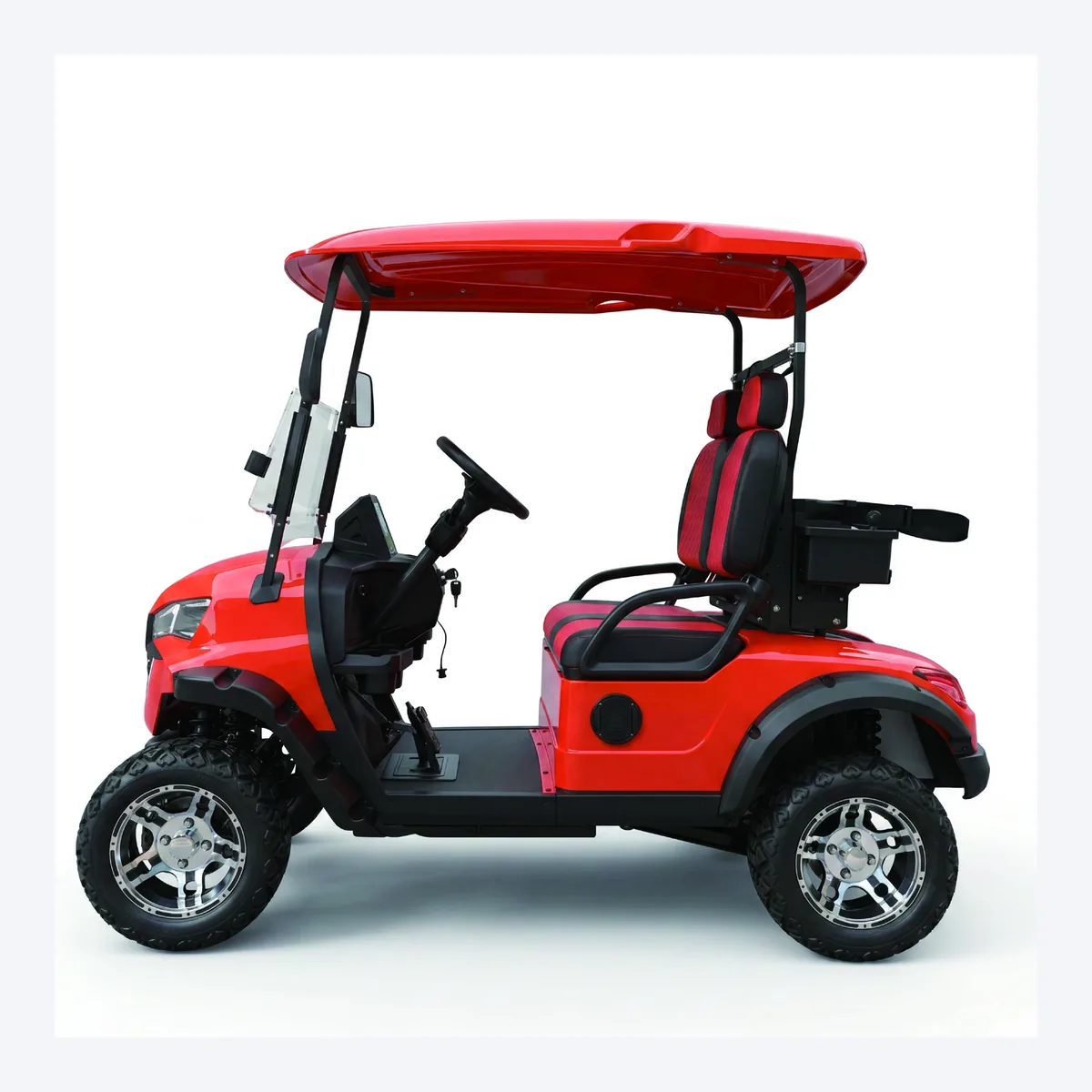
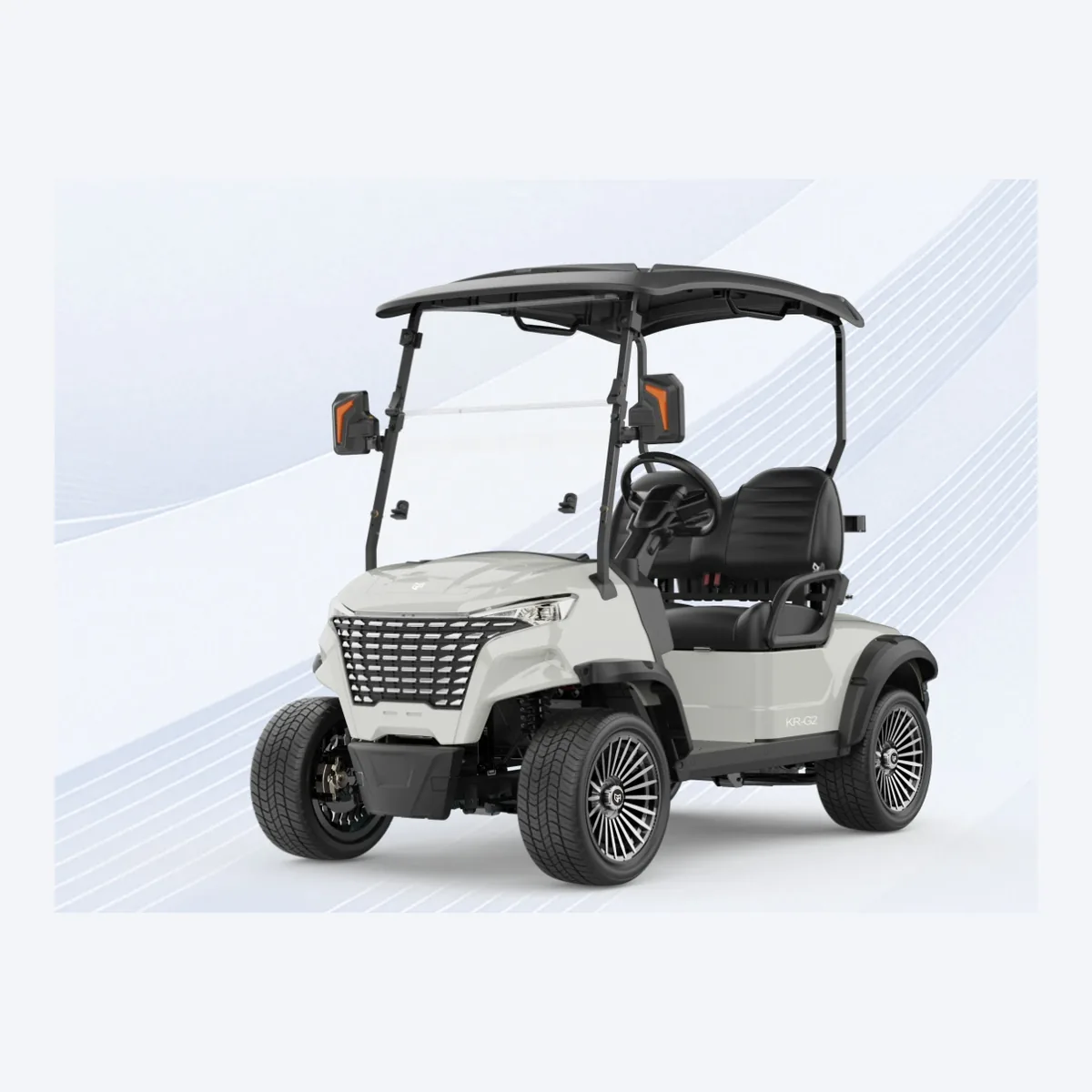
Golf Cart vs Buggy vs Golf Car: The Difference
Golf cart, buggy and golf car usually mean the same 2–6 seat site vehicle. How the terms differ by market and how to write an unambiguous RFQ.
Quick answer
The three terms usually describe the same 2–6 seat low-speed vehicle: buggy is common in the UK, Ireland, Australia and New Zealand; cart in North America. Confirm 2/4/6 seats, 48–72 V and road-use status in the request.
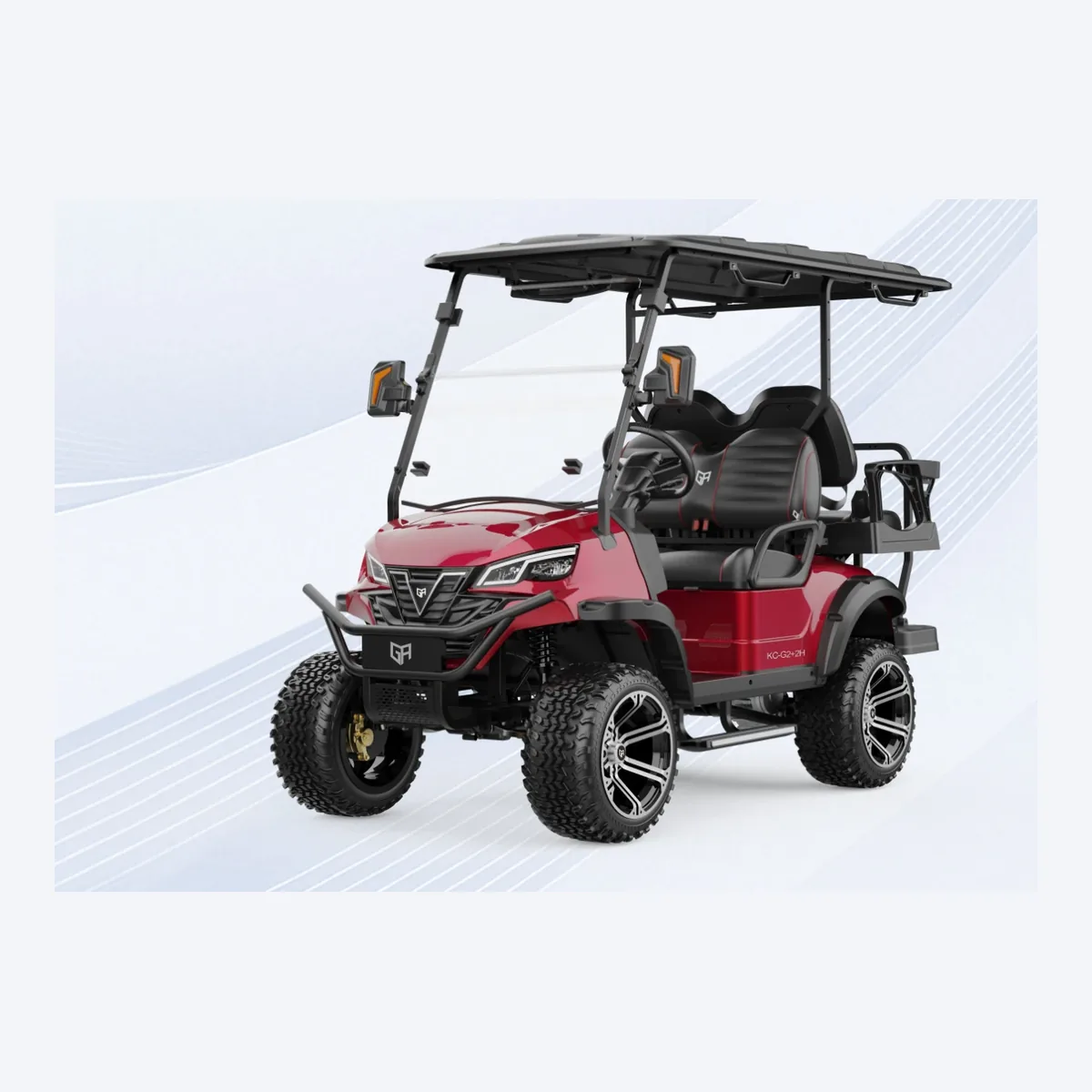
Three names follow the same small vehicle across different markets. A buyer in one country asks for a golf buggy, a buyer in another asks for a golf car, and both may receive the same quotation for a two- to six-seat electric cart. The confusion is linguistic more than technical, but it matters when a specification, a search or a purchase order uses the wrong term.
This guide explains where each term is used, what it usually describes and how to write an enquiry that cannot be misread.
Are golf cart, golf buggy and golf car the same vehicle?
In ordinary commercial use, yes. All three describe a small, low-speed, open or canopy-covered vehicle built to carry two to six people around a golf course, resort, estate or campus. The layout is consistent: bench seats, a light body, small wheels, a battery pack or a small engine, and a top speed suited to site roads rather than highways.
The differences appear in regional language, in marketing tone and occasionally in regulation. None of the three terms, on its own, tells you the seat count, the battery chemistry, the motor rating or the body type.
Where is each term used?
Golf cart is the most common term in international trade and in North America. It is also the term most suppliers use in a quotation, a packing list or a product title, which makes it the safest default in an enquiry.
Golf buggy is common in the United Kingdom, Ireland, Australia, New Zealand and parts of southern Africa. In British English, buggy can also mean a pushchair, so a search or a translation can return the wrong product. Golf car is used by manufacturers, rental operators and some vehicle-classification documents. It sounds more formal than cart and is sometimes reserved for vehicles intended for road registration, but usage is not consistent.
Does the name change the technical specification?
No. The same platform can be sold as a cart, a buggy or a car. What changes the specification is the configuration: seat count, body length, battery voltage and capacity, motor rating, top speed, ground clearance, cargo bed and options.
A buyer who asks only for a golf car may receive a two-seat course vehicle, a six-seat shuttle or a road-oriented model, depending on the supplier’s catalogue. The word does not narrow the category enough to quote accurately.
Which term should you use in a quotation request?
Use golf cart as the primary term, then add the details that actually define the vehicle: number of seats, intended use, battery preference, route conditions and destination market. If your market calls it a buggy, include both terms so the supplier does not correct you into a different product.
A useful first line reads: “Please quote a six-seat electric golf cart, lithium or lead-acid, for resort transfers, delivered to [port].” That sentence removes most of the ambiguity that the three names create.
What does golf car mean in regulation?
Vehicle-category rules vary by market, and some of them use the term golf car while others use low-speed vehicle, personal transport vehicle or a local category. The label in a regulation does not automatically apply to a site vehicle, and a site vehicle does not automatically qualify for road use.
For any public-road plan, ask the local authority which category applies and which equipment is required. Do not treat the product name as evidence of road status. For private-site work, the category question is simpler: the vehicle operates on private roads and the site sets the rules.
What else can buggy mean?
Buggy is a broad word. It can describe a pushchair, a beach or dune buggy built for off-road recreation, a horse-drawn carriage or a shopping trolley. In parts of the golf industry it also describes a ride-on cart with a canopy and bag racks.
That breadth is why a supplier’s reply may look unrelated to the request. If the first response describes an off-road recreational vehicle or a child’s pushchair, the term was read in the wrong sense. Restate the requirement with seat count and site use.
How do you avoid buying the wrong category?
Compare like with like. Ask every supplier for the same data set: seats, body dimensions, wheelbase, minimum turning radius, battery voltage and capacity, motor rating, top speed, ground clearance, body type and intended application. A table of those numbers exposes differences that the name hides.
Then confirm the body type. A passenger cart, a utility cart with a flatbed and a sightseeing cart are different products even when all three are called golf cars. The other articles in this cluster cover those distinctions.
| Term | Common markets | Usual meaning | Watch out for |
|---|---|---|---|
| Golf cart | North America, international trade | Small site vehicle, 2–6 seats | Widely understood; still needs a seat count |
| Golf buggy | UK, Ireland, Australia, New Zealand, southern Africa | Same vehicle category | Also means pushchair or off-road buggy |
| Golf car | Manufacturer and rental usage, some regulations | Same vehicle category, more formal tone | Can imply a road-vehicle category |
| Utility cart | Resorts, campuses, facilities | Cart with a cargo bed | Not a passenger shuttle |
| Sightseeing cart | Attractions, resorts | Multi-row passenger vehicle | Larger than a golf cart |
What should a buyer confirm before ordering?
Confirm the seat count and the body type first, because those two decide the platform. Then confirm the battery chemistry, voltage and capacity, the motor rating and the charger specification. Ask for dimensions, wheelbase, turning radius and ground clearance in writing.
Finally, confirm the intended use and the site conditions. A vehicle for a golf course, a resort transfer route and a campus maintenance team may share a name but not a specification. The clearer the use case, the less the terminology matters.
The three names are not a technical distinction, and treating them as one only causes mismatched quotations. Use golf cart as the default, add the numbers that define the vehicle, and the label stops being a problem.
The questions that decide the order.
Is a golf buggy the same as a golf cart?
In ordinary commercial use, yes. Both describe a small, low-speed vehicle for two to six people used on golf courses, resorts and estates. Buggy is the common term in the UK, Ireland, Australia, New Zealand and parts of southern Africa; cart is more common in North America and international trade.
Why do some suppliers say golf car instead of golf cart?
Golf car is used by manufacturers, rental operators and some vehicle-classification documents. It sounds more formal and is sometimes associated with road-oriented models, but usage is not consistent. The term alone does not confirm a specification or a road category.
Does the name affect the price?
No. Quotations are configuration-based: seat count, battery chemistry, motor rating, body type and options set the price. A cart, buggy and car with the same specification should be quoted at the same level.
Which term should I use when requesting a quotation?
Use golf cart as the primary term because it is the most widely understood in export trade, then add seat count, intended use, battery preference and destination. If your market says buggy, include both terms so the supplier does not redirect you to a different product.