Golf Cart vs Utility Vehicle: Which Do You Need?
Passenger golf carts and utility vehicles compared: seating, payload, beds, turning radius and the site duties that decide which body fits.
Quick answer
A passenger cart carries 2–6 people; a utility vehicle trades seats for a bed and payload. Use a 48 V / 51.2 V lithium platform for both and confirm a 4 m turning radius and bed load before choosing.
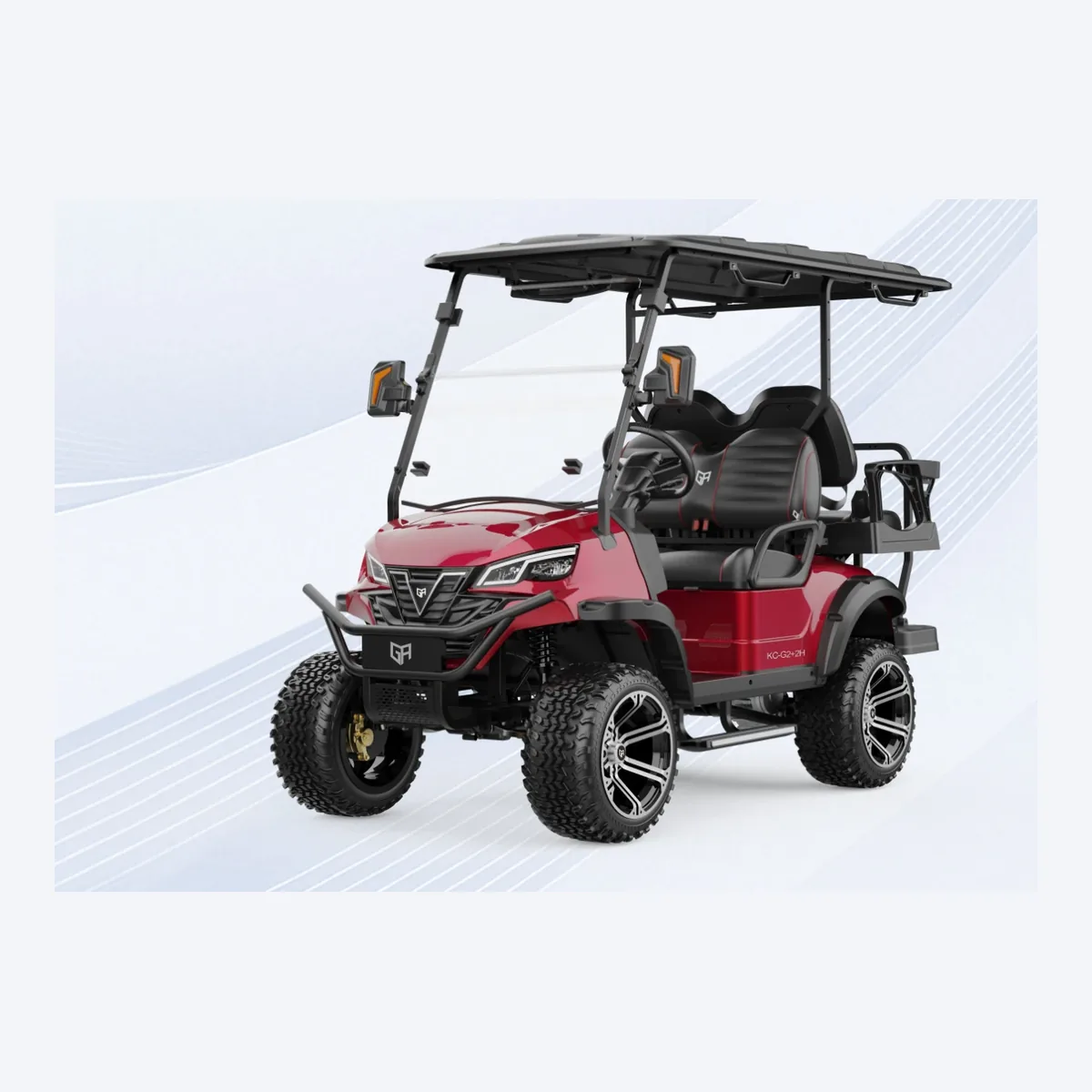
A golf cart and a utility vehicle can look similar from a distance: four wheels, an open cabin, a low top speed. Up close they are built around different priorities. The golf cart is arranged around passengers; the utility vehicle is arranged around a load. Choosing the wrong one shows up as a second trip, a damaged bench or a payload that cannot be carried.
This comparison covers passenger golf carts, utility carts with flatbeds and the broader utility-vehicle category, and sets out the questions that decide between them.
What is the core difference between them?
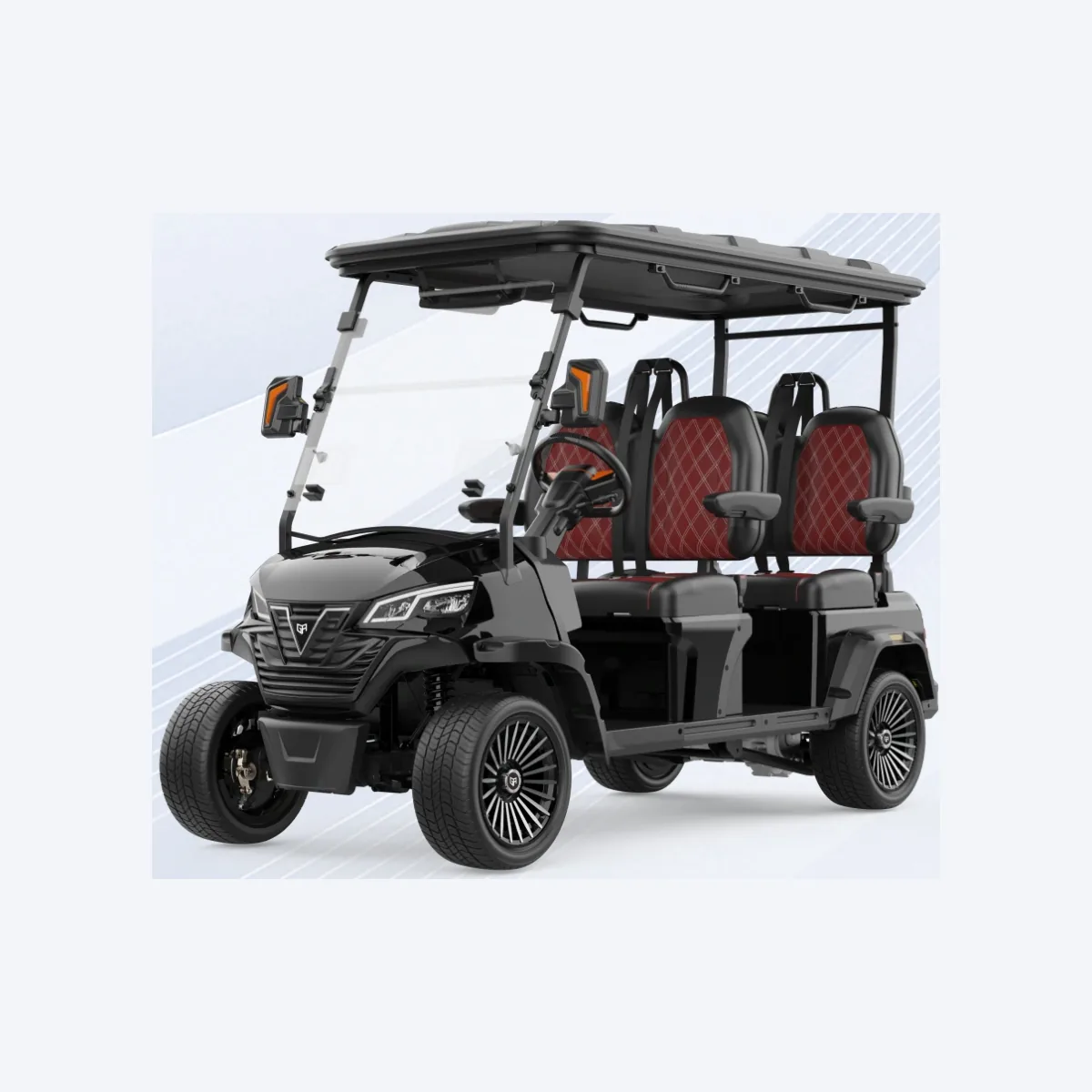
A passenger golf cart is designed around seats, a low floor and a light footprint. Tyres are chosen for turf and paved paths, the body is compact, and the rear space usually holds bags or a small basket. A utility vehicle is designed around a cargo area, a stronger chassis and fittings for tools, racks and tie-downs.
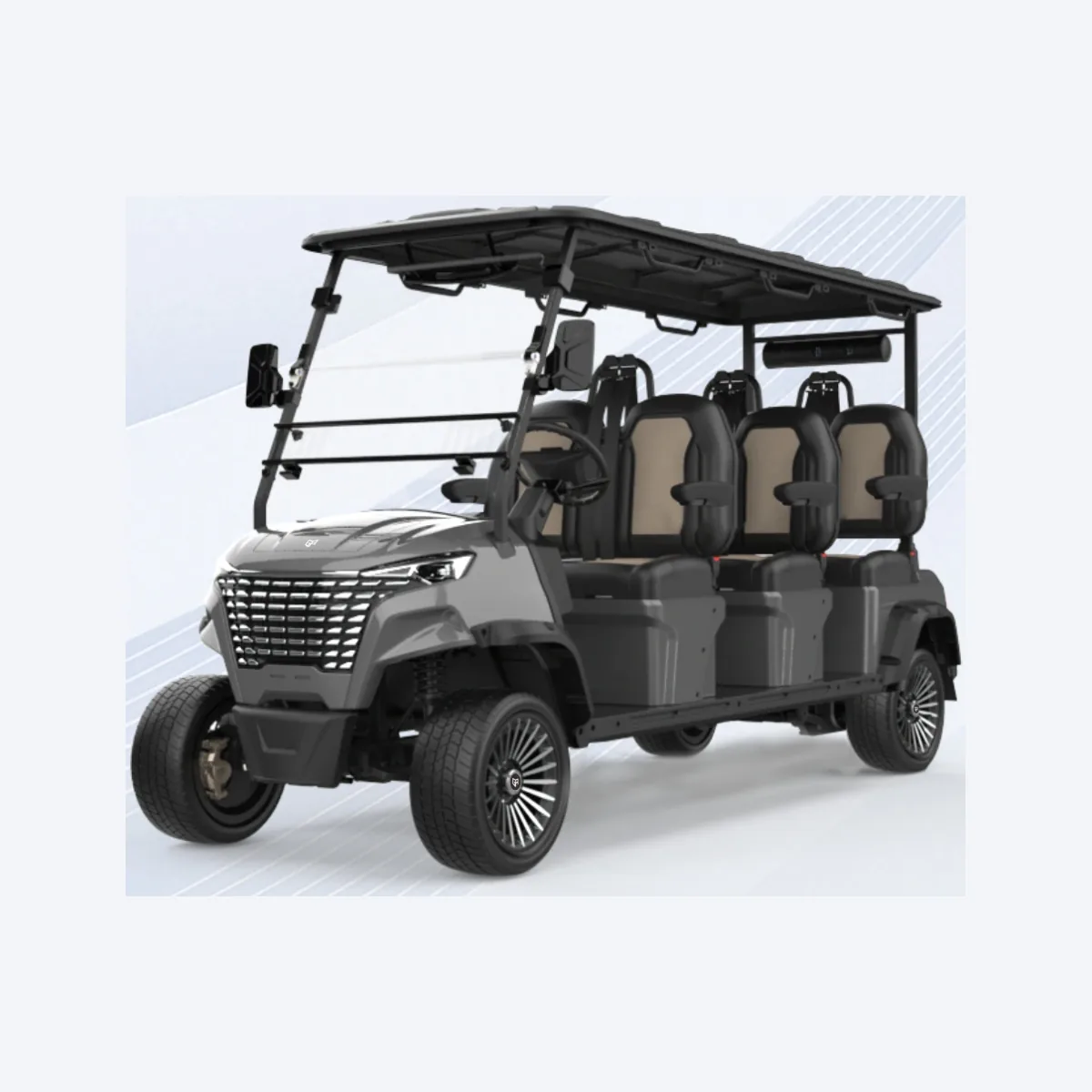
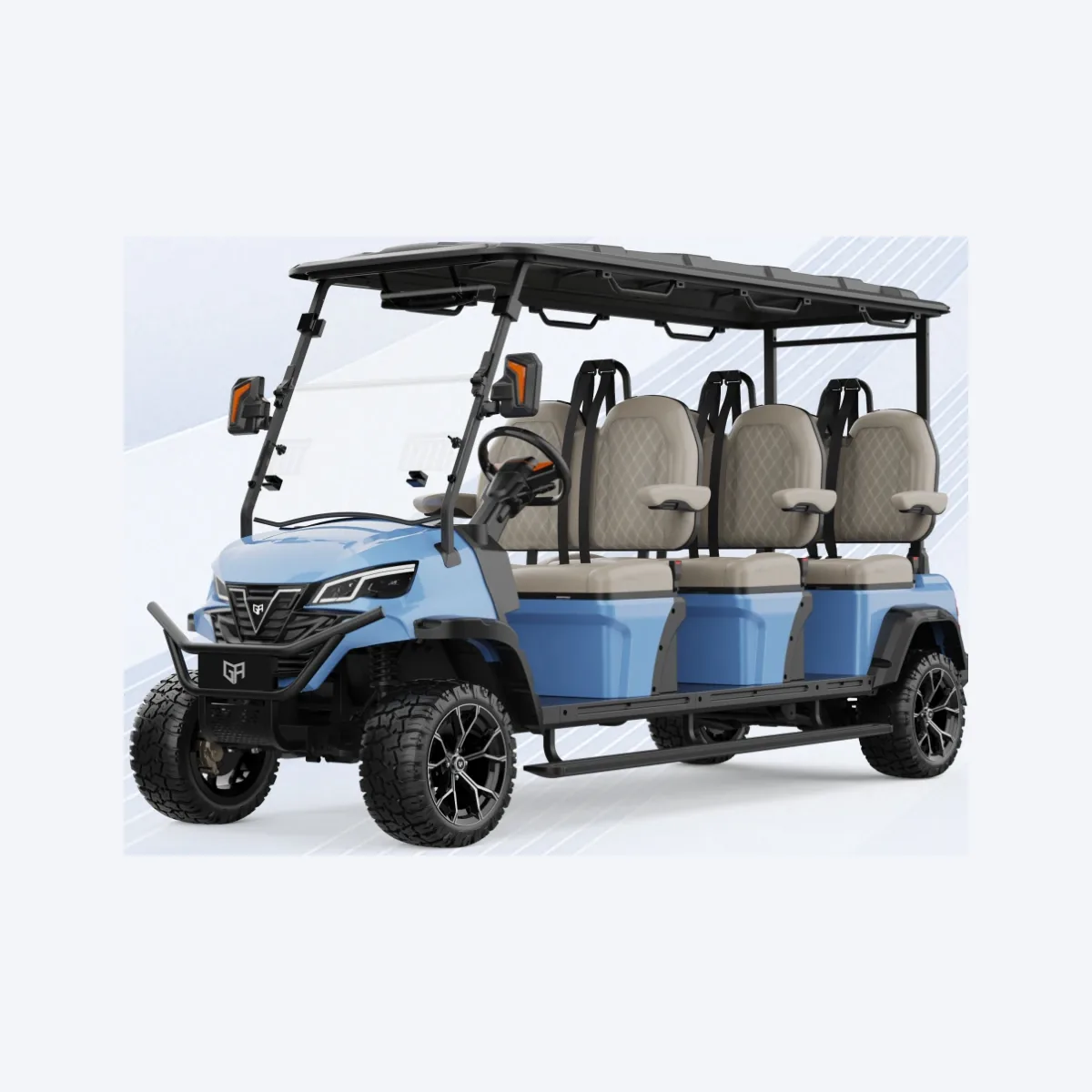
The term utility vehicle also covers side-by-side UTVs with different chassis, suspension and load ratings. Those are a separate category from a low-speed site cart. In this range, utility models are golf-cart platforms with a flatbed: the KR-P6, KC-P4 and KC-P6H carry four to six people plus a bed, and remain site vehicles rather than road trucks.
How do the bodies and load areas differ?
The passenger cart keeps a continuous bench layout and a bag well. The utility cart replaces the rear passenger area with a flatbed, often with drop sides, tie-down points and removable racks. The KR-P6 uses a 3720 mm body and a 2860 mm wheelbase to support its bed while keeping six seats. The KC-P4 is the compact option: 2935 mm long, a 2075 mm wheelbase, four seats and a flatbed.
Length and wheelbase change the turning circle and the parking bay. A long-bed utility cart needs more room at the tightest turn, so measure the service yard and the narrowest gate before choosing.
| Attribute | Passenger golf cart | Utility cart with flatbed |
|---|---|---|
| Primary design | Seats and passenger access | Cargo bed and load handling |
| Typical seats | 2–6 | 4–6 plus bed |
| Rear area | Bag well, small basket | Flatbed, drop sides, tie-downs |
| Payload focus | Passengers and light bags | Passengers and cargo, shared rating |
| Turning radius | Smaller, shorter body | Larger, longer wheelbase |
| Best duty | Guest transfers, tours, staff movement | Housekeeping, grounds, events, maintenance |
Which one carries more payload?
Payload is a shared budget between passengers and cargo. A utility cart’s rated payload is stated on the order sheet for the exact configuration, and it must not be exceeded. Loads should be distributed evenly and secured with the provided tie-down points.
A passenger cart’s rear bench is not a load deck. Placing heavy equipment on a seat frame risks the frame, the upholstery and the passengers. If the load is heavy or frequent, specify a bed.
How do seat counts and layouts compare?
Passenger carts run from two to six seats in forward and rear-facing layouts. Utility carts in this range combine four or six seats with a bed, so a crew can travel with tools in one trip. The trade-off is that the bed takes the space a rear-facing bench would use.
For pure guest transport, a passenger cart is more comfortable and usually shorter. For mixed crews, a six-seat utility cart replaces a passenger cart plus a trailer.
What about towing and attachments?
Some carts include an electromagnetic parking brake with a towing function, and utility beds accept racks and tie-downs. Towing capacity is not the same as payload, and it is not a substitute for a utility vehicle built around a load. Confirm trailer weight, hitch type and local site rules before ordering a tow package.
Which is better for housekeeping, grounds and events?
Housekeeping needs linen, amenities, tools and a small team. A utility cart with a bed keeps clean linen separate from the crew and avoids multiple trips. Grounds teams need plants, equipment and waste; a flatbed with drop sides is the practical choice. Event crews move barriers, signage and sound equipment, again a bed-first task.
Passenger carts suit guided tours, guest transfers and staff movement where the load is light. If a site does both, the fleet normally splits the duties rather than forcing one body to do everything.
Can one vehicle do both jobs?
A mixed-use specification can help: a folding or removable rear bench, a storage box and a bed extension let a cart alternate between passengers and light cargo. This works when the cargo is light and occasional.
It does not work for heavy or frequent loads. Converting a passenger cart by removing seats does not change its axle rating, brake balance or mounting points. If the cargo duty is the main job, buy a utility model; if passenger duty is the main job, buy a passenger cart and plan a second vehicle.
How should a fleet split the two?
Count trips, not vehicles. List the daily tasks that need seats and the tasks that need a bed, then estimate how often each occurs. A resort may need six passenger carts for guest movement and one utility cart for housekeeping and maintenance; a campus may need the reverse ratio.
Keeping the fleet on one platform reduces charger, controller and spare-parts variety, which matters more as the fleet grows. The Ridge utility and passenger models share the same lithium drivetrain for that reason.
What should a buyer check before ordering?
Confirm the heaviest load and the largest crew that must travel together. Measure the bed against the actual equipment: tool boxes, linen carts, plant trays and event cases rarely match a brochure photo. Check the route for gradients, kerbs and surfaces, because a loaded cart behaves differently from an empty one.
Ask for the rated payload, the bed dimensions and the mounting points in writing. Test a loaded vehicle if possible, and confirm who will service it. The purchase decision is simpler once the daily task list is honest about what the vehicle must carry.
The questions that decide the order.
Can a golf cart be used as a utility vehicle?
For light and occasional loads, yes, especially with a folding rear bench or a storage box. For heavy or frequent cargo, a purpose-built utility cart with a flatbed is the better choice. Removing seats does not change the axle rating, brake balance or mounting points.
What payload can a utility cart carry?
The rated payload depends on the bed specification, axle and tyres, and is stated on the order sheet for the exact configuration. Passengers and cargo share that rating, so plan the crew and the load together and never exceed it.
Are utility carts allowed on public roads?
Road use depends on the destination market and vehicle category. Most utility carts in this range work on private sites such as resorts, campuses and event grounds. We supply the technical documents needed for registration, but homologation is market-specific.
Should a mixed fleet use one platform or two?
One platform reduces charger, controller and spare-parts variety, which matters as the fleet grows. The Ridge passenger and utility models share the same lithium drivetrain for that reason. If cargo duty is heavy, a dedicated utility model is still worth the second platform.