18-Hole Course Fleet Reference
A mixed fleet for tee sheets, marshals and range duty
A planning reference for a private 18-hole course: two-seat marshal cars, four-seat guest carts and one utility cart for range and supplies.
Quick answer
Reference fleet: 12–16 vehicles on a 10-minute weekend tee interval, with 2–4 spare carts and overnight single-phase charging.
Last reviewed
- Site type
- Private 18-hole course
- Fleet size
- 12–16 vehicles
- Core models
- KR-G2 · GC-A · GC-B
- Charging
- Overnight, single-phase
What is the planning problem?
The course runs a 10-minute tee interval on weekends and a 12-minute interval on weekdays. Guest carts must be back and charging before the first tee time; marshal cars leave earlier and stay out longer. The club wanted one service architecture so the same technician could maintain every vehicle.
What is the configuration?
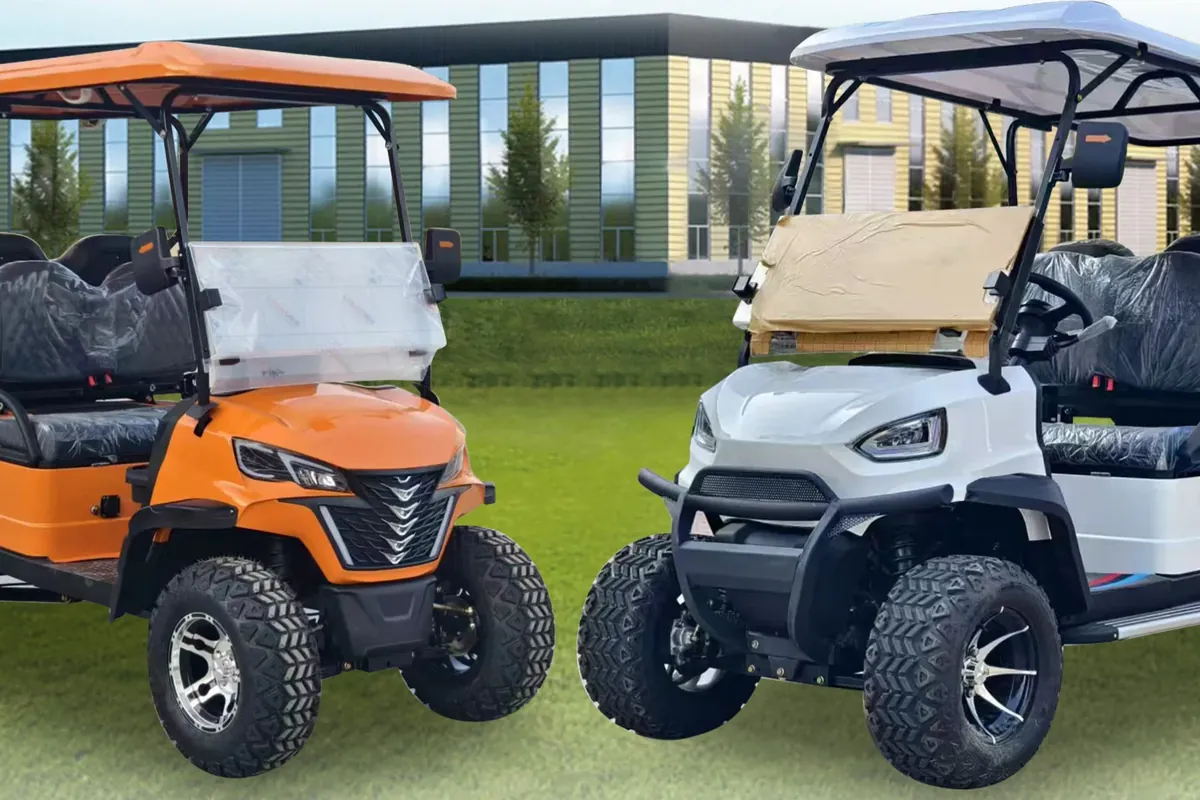
The reference fleet uses KR-G2 two-seaters for marshals and starters, GC-A two-seaters for guest pairs on the long loop, and GC-B four-seaters for slower groups and clubhouse transfers. A KR-P6 utility cart covers range picking, supplies and event setup. Lithium models handle the long-loop and multi-shift duty; lead-acid models cover the fixed short loops.
How should the fleet charge?
Carts park under a canopy with single-phase outlets at each bay. The club charges overnight and tops up marshal cars between shifts. Battery isolation switches and a written charging sequence are part of the handover; no vehicle is left on charge unattended overnight without a smoke detector in the bay.
What does this reference not claim?
This is a planning example, not a record of a named client or a measured result. Fleet size, charging capacity and model mix must be recalculated for the actual tee sheet, course length, climate and electrical supply.
What should the club verify before ordering?
Confirm the actual tee interval, cart-path width, charging supply and spare-parts plan. The reference assumes a 10-minute weekend interval, a 4 m turning radius and single-phase charging at each bay; measure all three on site.
Models used in this profile.
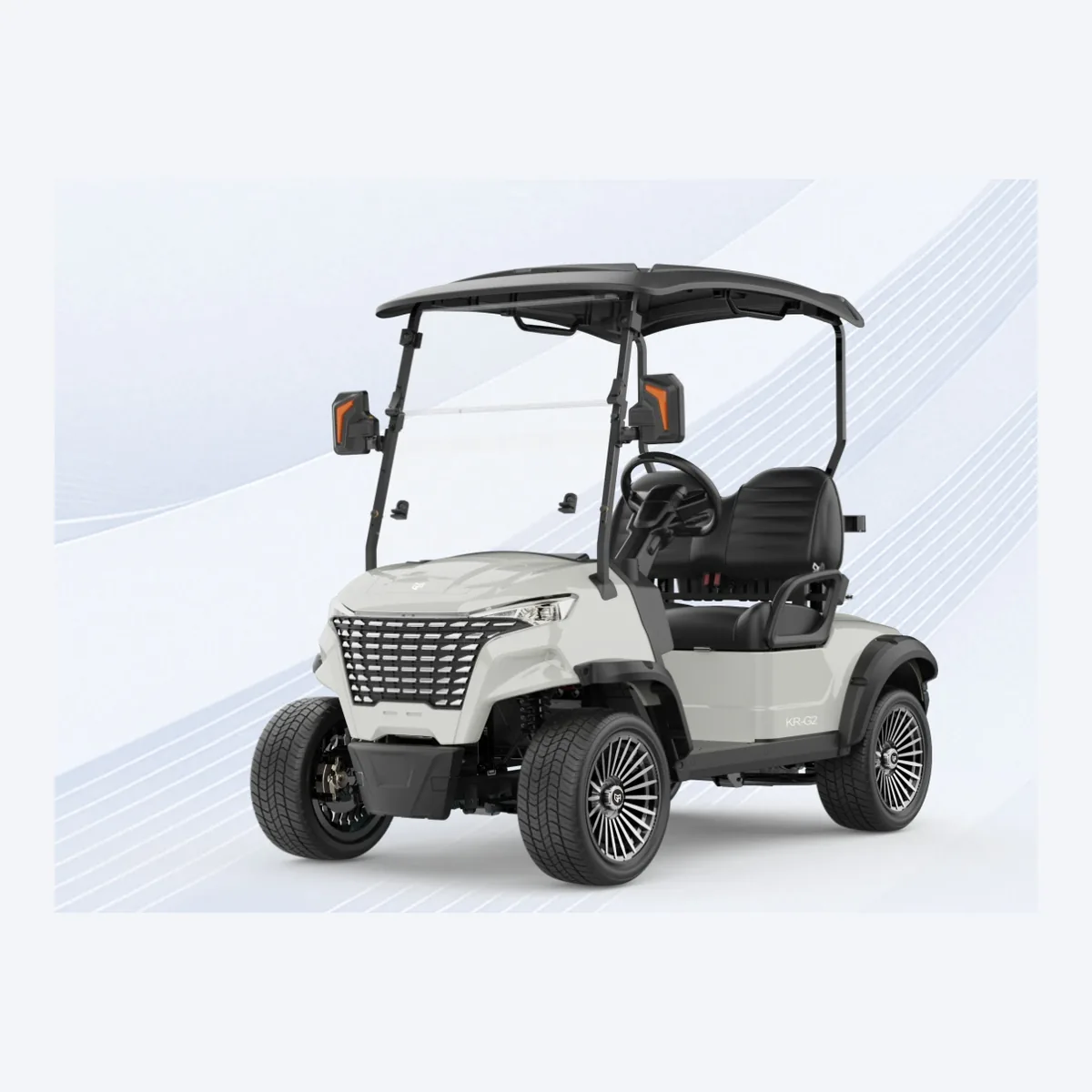
KR-G2 Ridge 2-Seat Lithium Golf Cart
Lithium two-seater with a 30–35 mile working range
- Range
- 30–35 mi
- Battery
- 51.2 V 105 Ah LiFePO4
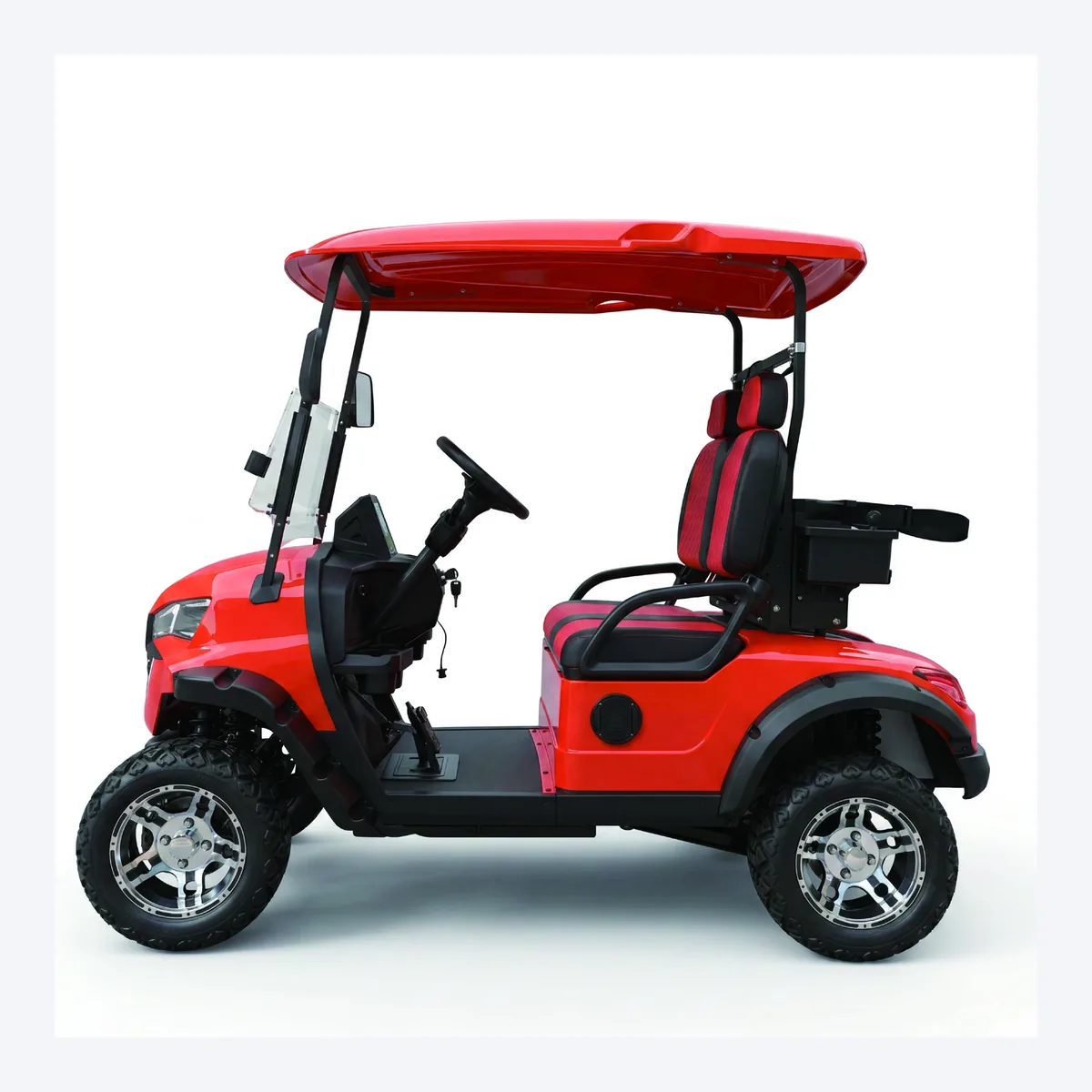
GC-A Classic 2-Seat Golf Cart
Long-range classic with lead-acid or lithium power
- Range
- 80–100 km
- Motor
- 4 / 5 / 7.5 kW
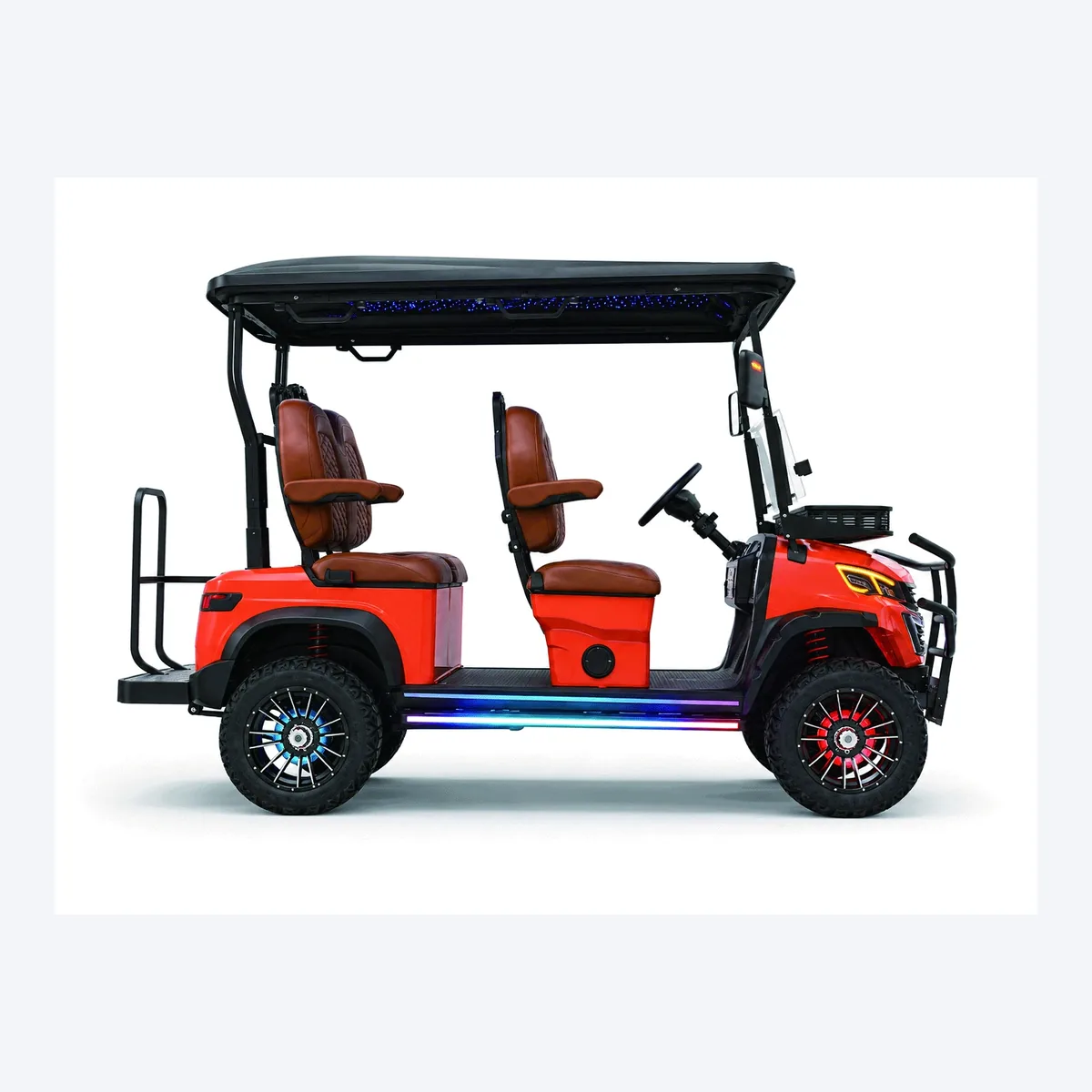
GC-B Classic 4-Seat Golf Cart
Four seats, 60 V lead-acid, straightforward ownership
- Range
- 60 km
- Motor
- 60 V 4 kW AC
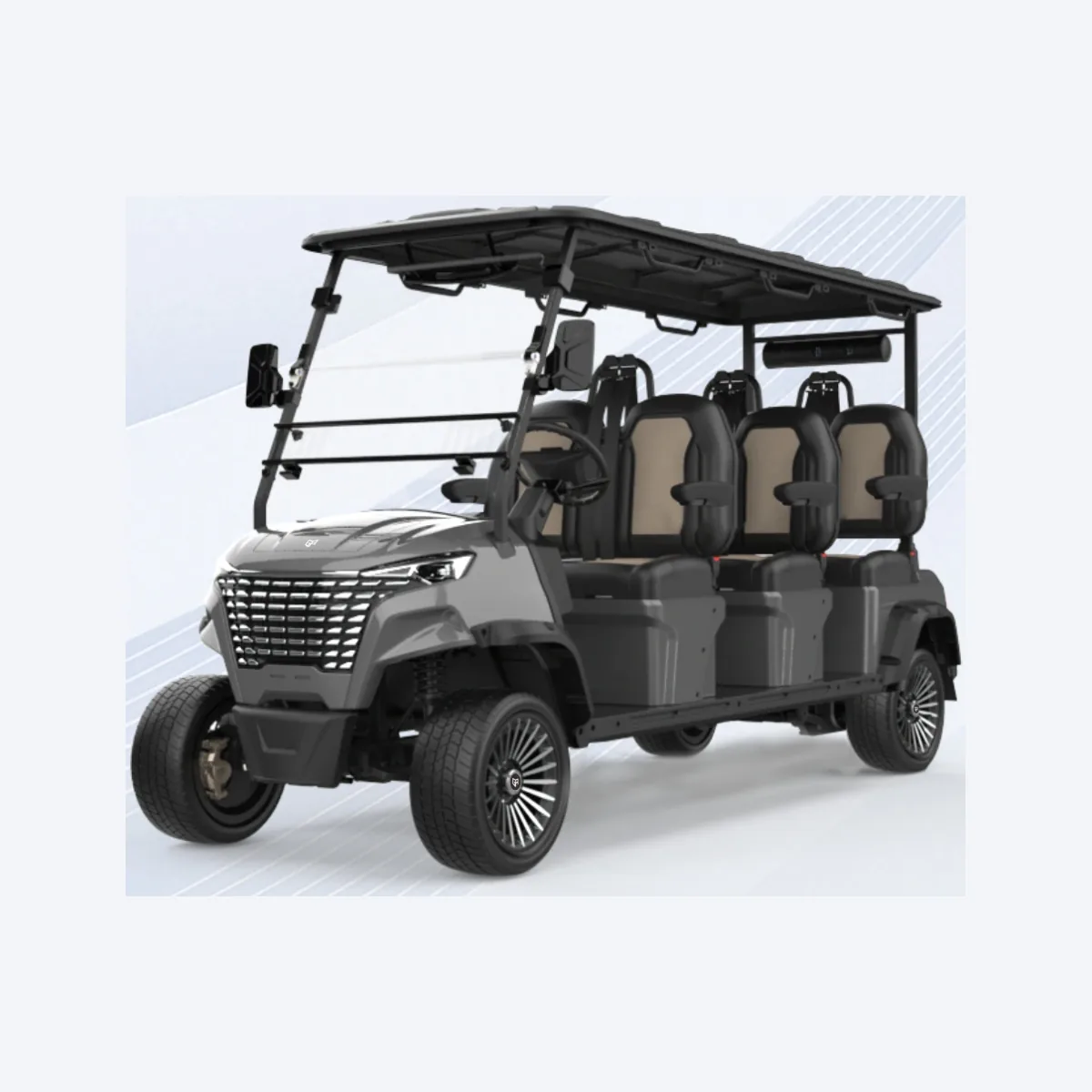
KR-P6 Ridge Utility 6-Seat
Six seats plus a flatbed on the long-wheelbase Ridge chassis
- Bed
- Flatbed
- Wheelbase
- 2860 mm
The questions that decide the order.
How many carts does an 18-hole course need?
The reference fleet uses 12–16 vehicles for a 10-minute weekend tee interval, including 2–4 spare marshal and maintenance carts. Recalculate for the actual tee sheet and course length.
Why mix two-seat and four-seat carts?
Two-seaters handle marshal, starter and maintenance duty; four-seaters carry guest pairs and bags. A mixed fleet matches the duty cycle without over-specifying every vehicle.
Can the fleet charge on single-phase power?
Yes. The reference plan uses one single-phase outlet per parking bay and charges overnight; marshal cars top up between shifts. Confirm the site supply capacity with an electrician.
Is this a real client case?
No. It is a planning reference based on common configurations, not a named client, contract or measured result.
Send us your site conditions.
A useful quotation needs three things: where the golf cart will run, how many people it carries, and where it ships. Send those and we will come back with a configuration sheet.
Request a quote
Tell us the model, seating and destination. We will reply with a configuration sheet and quotation.