Lead-Acid vs Lithium: Five-Year Cost Structure
A five-year cost comparison for golf cart batteries: purchase, charging, service life, maintenance and the duty cycles each chemistry suits.
Quick answer
A 51.2 V 105 Ah LiFePO4 pack charges in 5 hours; lead-acid needs 6–10 hours. Compare 5 years of replacement, watering and 30–35 mile range, not just the purchase line.
Battery choice is the largest single cost decision in an electric golf cart order, and the one most often settled by looking at the purchase price alone. That comparison is incomplete. Lead-acid and LiFePO4 put their costs in different places: one at purchase, the other across charging time, weight and replacement. A five-year view makes those differences visible.
This guide sets out the cost lines to compare, the infrastructure each chemistry implies, and the duty cycles where one clearly beats the other. It does not quote prices, because those are configuration-based and confirmed on the quotation.
Which battery costs less at the point of purchase?
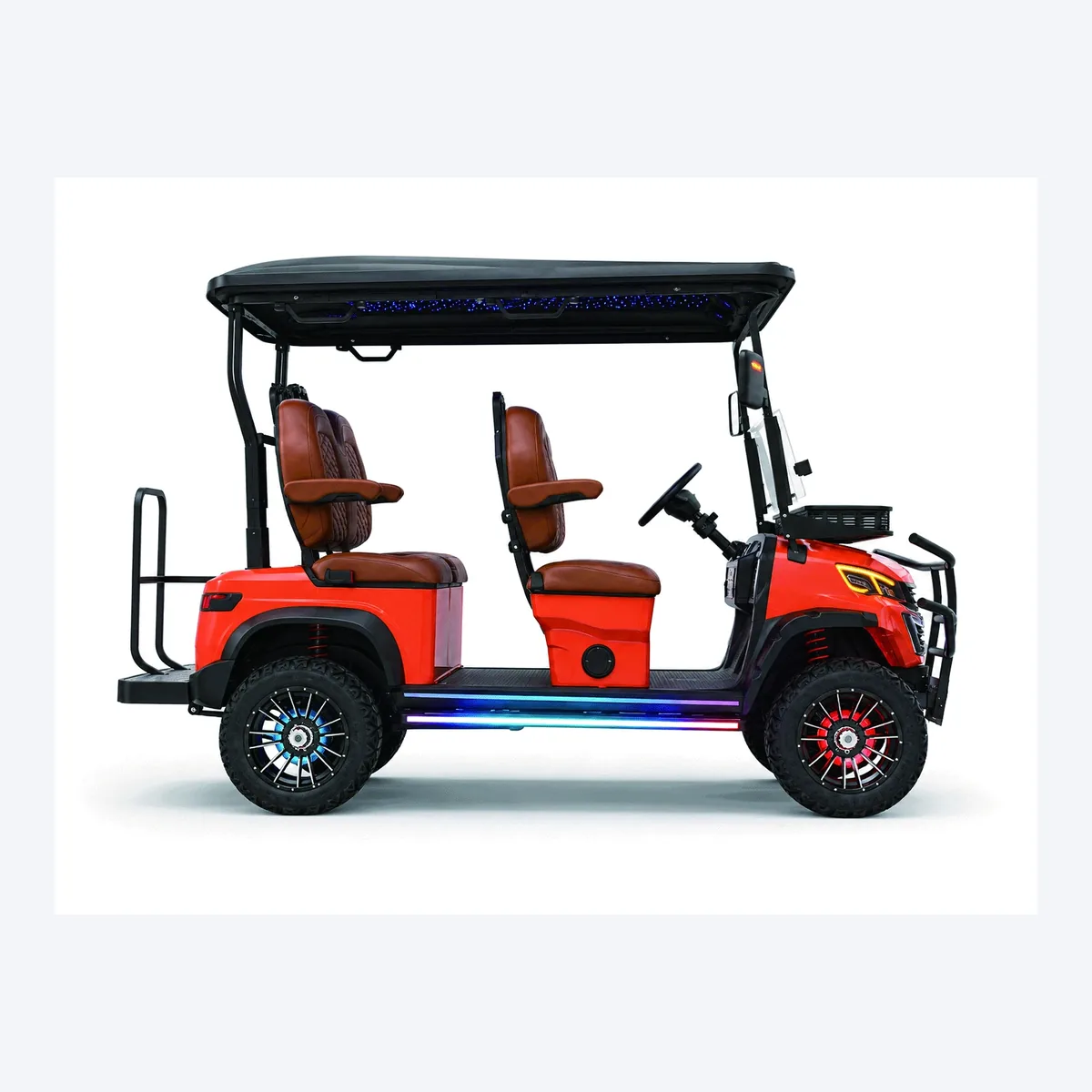
Lead-acid is the lower-cost pack. It uses a mature, widely available technology, and it is the reason a basic two-seat cart can be offered at an entry price. The GC-A accepts either a lead-acid pack or LiFePO4 in the same body, so the chemistry is a quotation line rather than a different model.
LiFePO4 costs more up front because the pack includes cells, a battery management system and closer cell matching. The difference is real and should not be talked down. The question is whether the extra purchase cost is recovered by what the pack does during its life.
The gap is widest on a two-seat cart, where the pack is a larger share of a smaller total, and narrows as the vehicle and its equipment grow. That is one reason a mixed fleet sometimes standardises on one chemistry for the small vehicles and the other for the large ones.
What does each chemistry require from the charging system?
Lead-acid charges slowly and prefers a full charge. A conventional pack on a 220 V onboard charger can need a long overnight window, and the vehicle is unavailable until the cycle finishes. That suits a course or estate where carts return at a fixed hour and leave at a fixed hour.
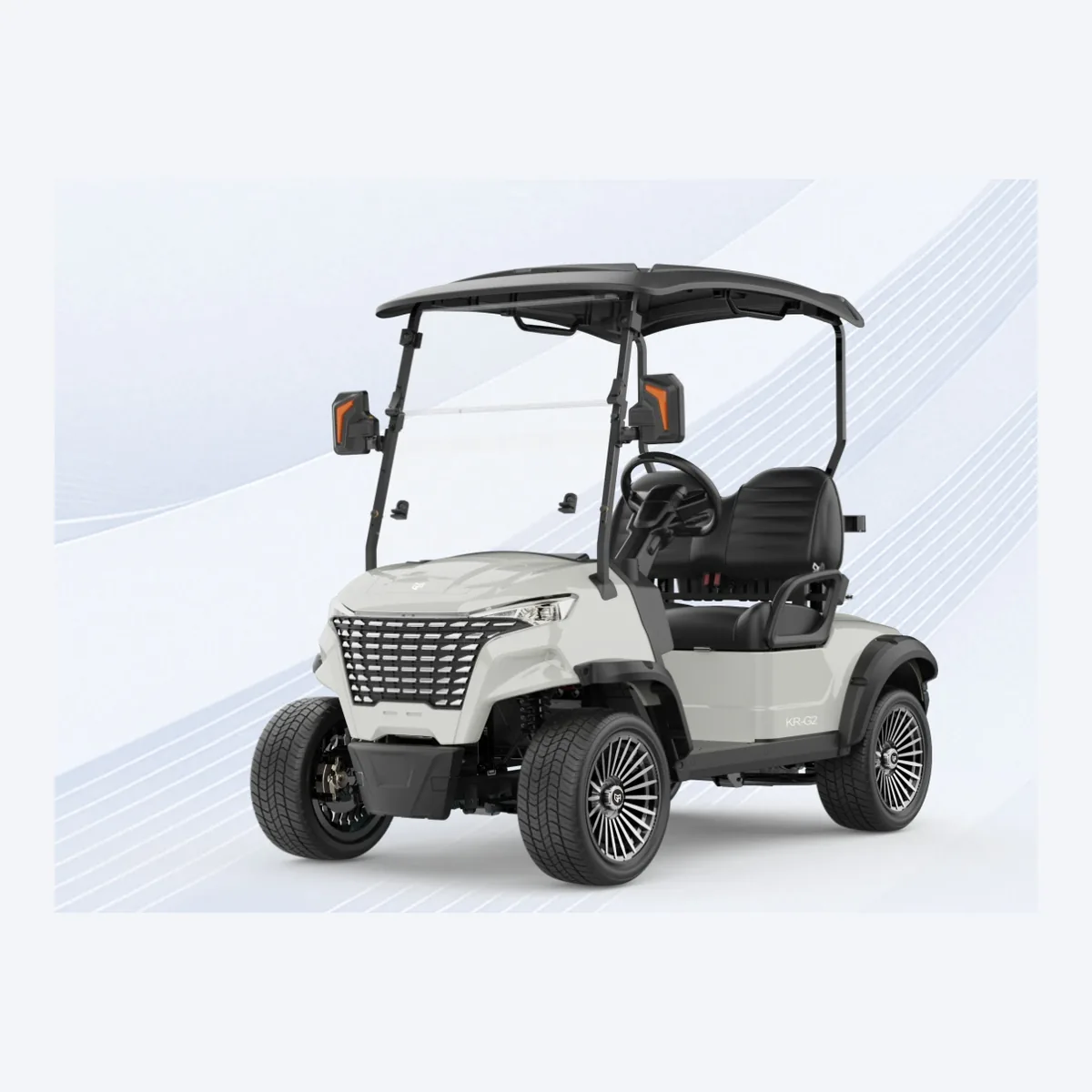
LiFePO4 charges faster and tolerates partial charging. On the Ridge and Coast platforms, a 51.2 V 105 Ah pack with a 25 A onboard charger returns to full in five hours or less. That opens opportunity charging between shifts and reduces the number of spare vehicles needed to cover a charging window.
| Cost line | Lead-acid | LiFePO4 |
|---|---|---|
| Purchase | Lower | Higher |
| Charging window | Long, usually overnight | Short, allows between-shift charging |
| Pack weight | Heavier | Lighter |
| Routine care | Water topping and equalisation | Management system monitoring |
| Replacement timing | Earlier in the vehicle life | Later, subject to duty cycle |
| Transport documents | Conventional | Battery test summary and MSDS required |
How does service life change the five-year total?
Service life depends on depth of discharge, temperature and charging habits, not on the calendar. A lead-acid pack kept at partial charge and cycled deeply will not last as long as one returned to full charge each night. A lithium pack treated the same way tolerates the pattern better.
The comparison should use the rated cycles on the pack datasheet and the site’s actual daily energy use. Divide the pack price by the expected cycles to get a cost per cycle, then multiply by the cycles the site will run in five years. This is where lithium usually closes the purchase gap on busy routes and fails to close it on short ones.
Which pack costs more to maintain?
Lead-acid carries routine labour: water level checks, terminal cleaning and equalisation charging. None of it is difficult, but it needs a technician with a schedule, and neglect is the main cause of early failure. In a fleet without a maintenance routine, the cheap pack becomes the expensive one.
LiFePO4 removes the watering routine and the management system protects the cells from the most common abuse. It does not remove inspection. Terminals, cables, chargers and the ventilation around the pack still need attention, and a fault in the management system needs a technician who can read it. A maintenance schedule that names the check and the interval is more useful than a claim that one chemistry needs no care.
How should a five-year comparison be built?
Build it line by line, using the quotation and the site’s own operating data. Start with the purchase price of each configuration, then add the charger and any electrical work, the energy used per day, the expected replacement and the labour for routine care. Add the cost of downtime if a cart is out of service.
Keep the vehicle constant. Comparing a lithium six-seater with a lead-acid two-seater measures the vehicle, not the battery. The GC-A is useful here because the same body, motor and options can be quoted with either chemistry, which isolates the battery decision.
Which duty cycle suits each chemistry?
Lead-acid suits short, predictable routes with a long overnight charging window: a clubhouse loop, a nine-hole course, a small estate. The capital cost is low, the route is known and the cart is idle long enough to charge fully.
LiFePO4 suits long routes, multi-shift operations and sites where charging space is limited. Resorts, campus fleets and rental operations that need the cart back in service quickly get more from the faster charge and lighter pack. Neither chemistry is universally better; the duty cycle decides, and the five-year arithmetic confirms it.
What changes if the site cannot charge overnight?
Overnight charging is the cheapest charging model because it uses off-peak capacity and needs no additional vehicles. A site that runs shifts around the clock, or returns carts at unpredictable hours, cannot rely on it. Lead-acid then becomes a constraint: each cart needs a long, uninterrupted window, so the fleet has to absorb the charging time.
LiFePO4 shortens that window, which can reduce the number of spare carts needed to hold the same service level. The saving is not in the battery price; it is in the vehicle count, the parking area and the labour of rotating carts through chargers. That is why the duty cycle, rather than the chemistry, should set the comparison.
The questions that decide the order.
Is lithium always cheaper over five years?
No. Lithium usually costs more at purchase and less in charging time, weight and replacement. It wins over five years when the cart covers enough distance, charges between shifts or needs to stay available for long days. On a short, fixed route with overnight charging, lead-acid can remain the lower total cost.
Can a lead-acid cart be converted to lithium later?
A conversion needs a compatible charger, a battery management system and mounting changes. It is technically possible but should be planned at order; retrofits vary by pack and by local electrical rules. A conversion also changes the vehicle weight and the documentation that travels with it.
Does lithium reduce maintenance cost?
It removes water topping and equalisation charging, which are routine lead-acid tasks. It does not remove inspection, terminal checks or brake and tyre work. The saving is mostly labour time and the risk of a pack damaged by neglect, not a maintenance-free vehicle.
Which chemistry is better for a hot climate?
Both are affected by heat, and both need ventilation and shade at the charging position. LiFePO4 tolerates partial charging better, which helps when a cart returns mid-shift. Ask for the pack datasheet and the storage guidance for the destination climate before choosing.