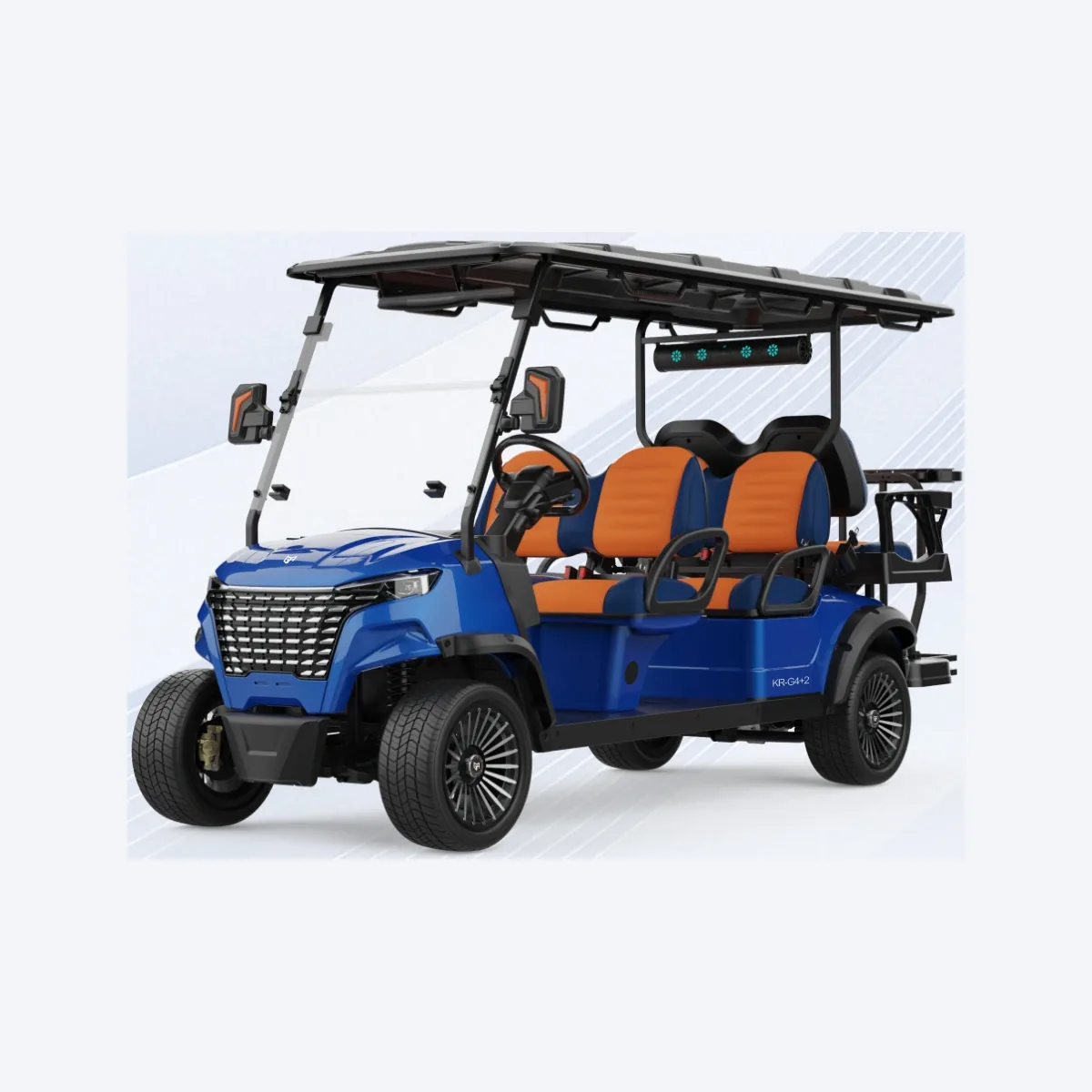
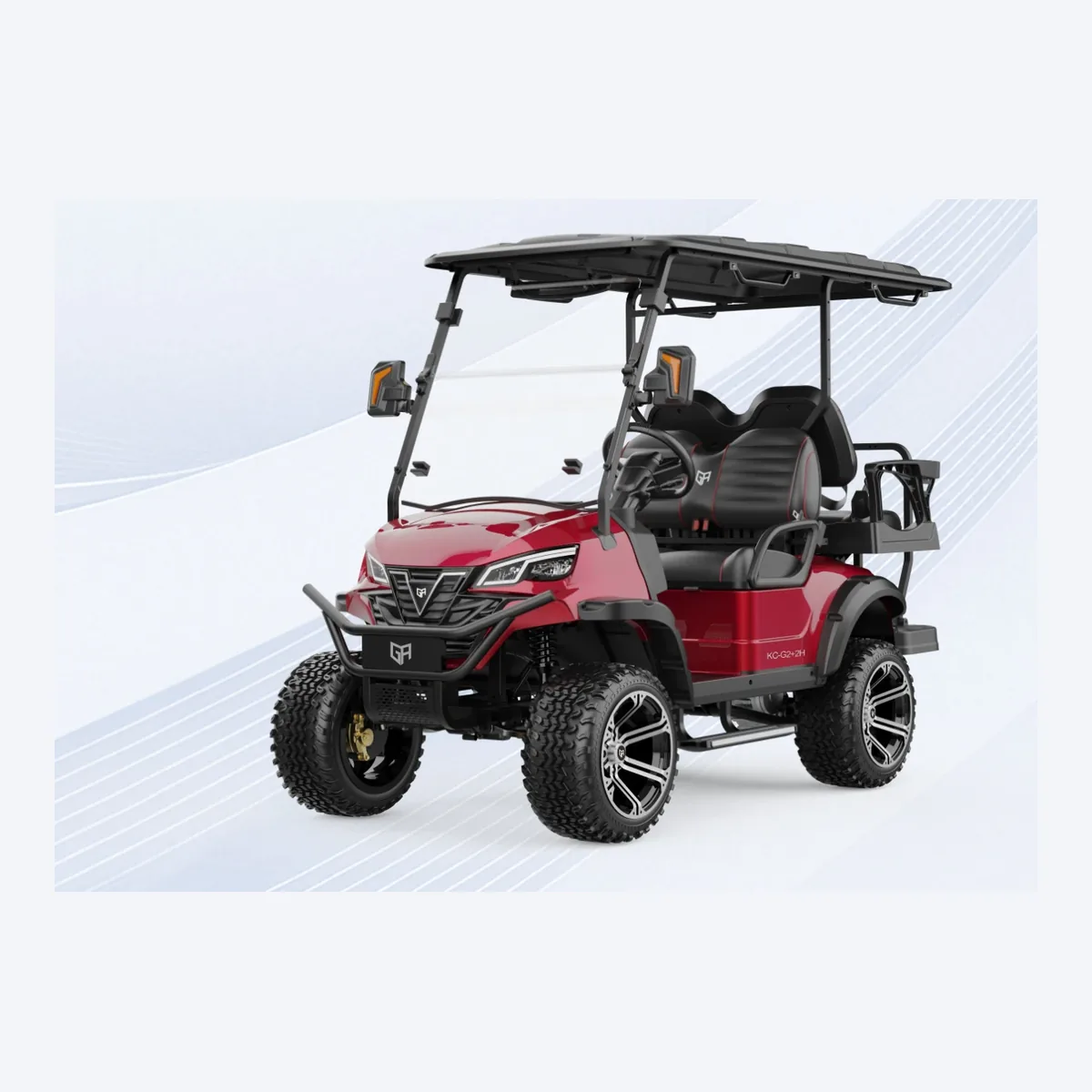
Golf Cart Safety Equipment Checklist
The equipment that commonly appears on a road-use list, the items that matter on private sites, and how to audit a cart before delivery.
Quick answer
A road-use list usually covers 2 mirrors, lights, a horn, seat belts and 4-wheel brakes. Private sites still need lights and a horn; confirm the list for the 48–72 V model and market.
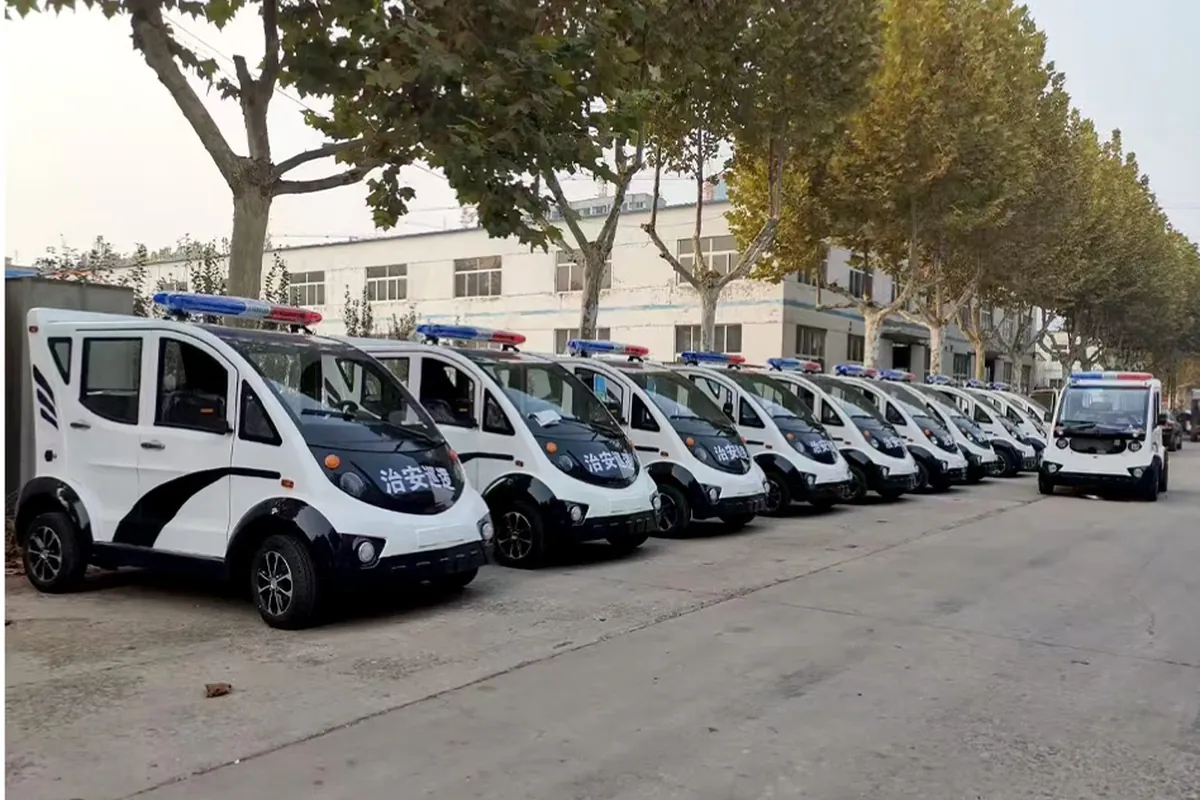
Safety equipment serves two purposes, and buyers often confuse them. The first is legal: a road-use category comes with an equipment list, and a vehicle that does not meet it cannot be registered or permitted. The second is operational: a cart carrying six guests on a dark resort path needs lights, belts and brakes whether or not a statute mentions them. A vehicle built only to the first list can still be unsafe on site; a vehicle built only to the second may never leave the property.
This article walks through the equipment that commonly appears on road-use lists, the items that matter on private sites, and a practical audit before delivery. It is general information, not legal advice. Equipment requirements vary by market and must be confirmed with the registration or inspection authority.
Which lighting items are commonly required for road use?
A road-use list usually covers a headlamp with low and high beam, tail lights, brake lights, a rear registration light, direction indicators, hazard warning lights, reflectors and, in some markets, side markers. The detail that decides compliance is rarely the bulb type. It is the beam pattern, the colour, the mounting height, the spacing and the approval marking on the lens.
On private land, lighting still matters. A cart used at dusk or in a service yard needs a white front light and a red rear light that other drivers can see, and a brake light that distinguishes braking from coasting. If the site runs evening transfers, treat lighting as a specification item rather than an accessory.
What do mirrors, horn and signals add?
Mirrors give the driver a view that the body and roof block. Road lists commonly require at least one exterior mirror, sometimes one on each side, and the mirror should be adjustable from the driving position. Convex glass widens the view but distorts distance, so the choice should match the route.
A horn is a warning device, not a way to clear a path. Road lists usually require one within a defined sound range; private sites may restrict its use near guest areas. Direction indicators should be visible from front and rear, and a self-cancelling function is convenient but not always required. Reversing alarms are common on utility carts and useful in busy service yards, although some sites disable them at night.
Which braking and restraint items should be specified?
The service brake should act on all four wheels and be matched to the loaded weight, not the unladen weight. A six-seat cart with passengers and luggage needs more braking than the same chassis empty, and the test should reflect that. A separate parking brake should hold the vehicle on the steepest slope it will use, including a loading ramp.
Restraints are the other half. Specify a belt for every designated seat, including the rear-facing bench, and check the anchor points rather than only the strap. Grab handles help passengers stay seated on uneven ground. A speed limiter set for the site is a safety item as much as a legal one, particularly where the same cart is shared between staff and guests.
Does a windscreen, roof or enclosure change the requirement?
Often, yes. If a windscreen is fitted, the market may require safety glazing, wipers and a washer, and the frame may need to meet a strength rule. A roof changes visibility and may need to be designed so that water does not pool or drip onto passengers. Doors and side curtains need latches that stay closed in motion but open from inside.
Enclosures also affect lighting and ventilation. A fully enclosed cart may be classified differently from an open cart in some markets, and added electrical equipment such as a heater, a sound system or a light bar should be rated for the vehicle’s DC system. Confirm any structural add-on with the authority before it is fitted, because it can change the category or the insurance position.
What equipment matters on private sites even when no law requires it?
Several items earn their place regardless of the statute. Seat belts and grab handles protect passengers. A reversing alarm and a working horn reduce collisions in service yards. Reflective markings make a dark cart visible at dusk. Wheel chocks and a charging-area emergency stop reduce battery risk. A fire extinguisher and a first-aid kit are cheap compared with the incident they address.
Then there are the procedural items: a daily walk-around checklist, a fault-reporting route, a passenger rule and a driver sign-off. These are not parts, but they are safety equipment in the sense that matters. A cart with good lights and no maintenance record is not a safe fleet.
| Equipment | Function | Commonly relevant on |
|---|---|---|
| Head, tail and brake lights | Visibility and signalling | Road and site |
| Direction indicators | Signalling turns | Road, and busy sites |
| Mirrors | Rear and side visibility | Road and site |
| Horn | Warning at corners and gates | Road and site |
| Seat belts and grab handles | Passenger restraint | Road and site |
| Service and parking brake | Stopping and holding | Road and site |
| Speed limiter | Site speed control | Site, sometimes road |
| Reflective markings | Low-light visibility | Site and road |
| Fire extinguisher | Charging and electrical safety | Site |
| Wheel chocks | Holding during service | Site |
How should a buyer audit equipment before delivery?
Build a line-item list with three columns: required by the destination market, required by the site or insurer, and optional. For each item, ask the supplier to confirm the part, the mounting position and the approval marking where one is needed. A photograph of the actual vehicle is more useful than a brochure illustration.
Inspect at pre-delivery, not at the port. Check that the lights work on every function, that the indicators flash at the correct rate, that the brake lights come on before the vehicle stops, that the belts latch and release, and that the parking brake holds on a slope. Record the serial number and the inspection date. Repeat the audit after any modification, because an added light bar or a replaced controller can change both the equipment list and the insurance position.
Finally, keep the audit with the vehicle file and give a copy to the site operator. The document is useful at registration, at insurance renewal and after an incident, when memory is a poor substitute for a signed checklist.
The questions that decide the order.
Are seat belts required on a golf cart?
On public roads, a road-use equipment list commonly requires a restraint for each designated seat. On private property the legal position varies, but belts and grab handles are still worth specifying, especially for rear-facing benches and for older or younger passengers. Confirm the local rule and the insurer's expectation.
Do LED lights meet road-use requirements?
Not automatically. What matters is the beam pattern, the colour, the mounting height and the approval marking where the market requires one. An LED lamp can be brighter than a halogen lamp and still fail because the beam is wrong or the housing is not approved. Check the list, not just the technology.
Is a horn necessary on a private golf course?
It is not usually a legal requirement on private land, but it is useful at blind corners, gateways and service yards. Some sites restrict horn use near guest areas. Specify it and write the site rule, rather than removing it because the law is silent.
How often should safety equipment be checked?
A daily walk-around for lights, brakes, tyres and mirrors, plus a documented periodic inspection. The interval should follow the site's risk assessment, the manufacturer's service schedule and any local inspection requirement. Keep the checklist with the vehicle record.