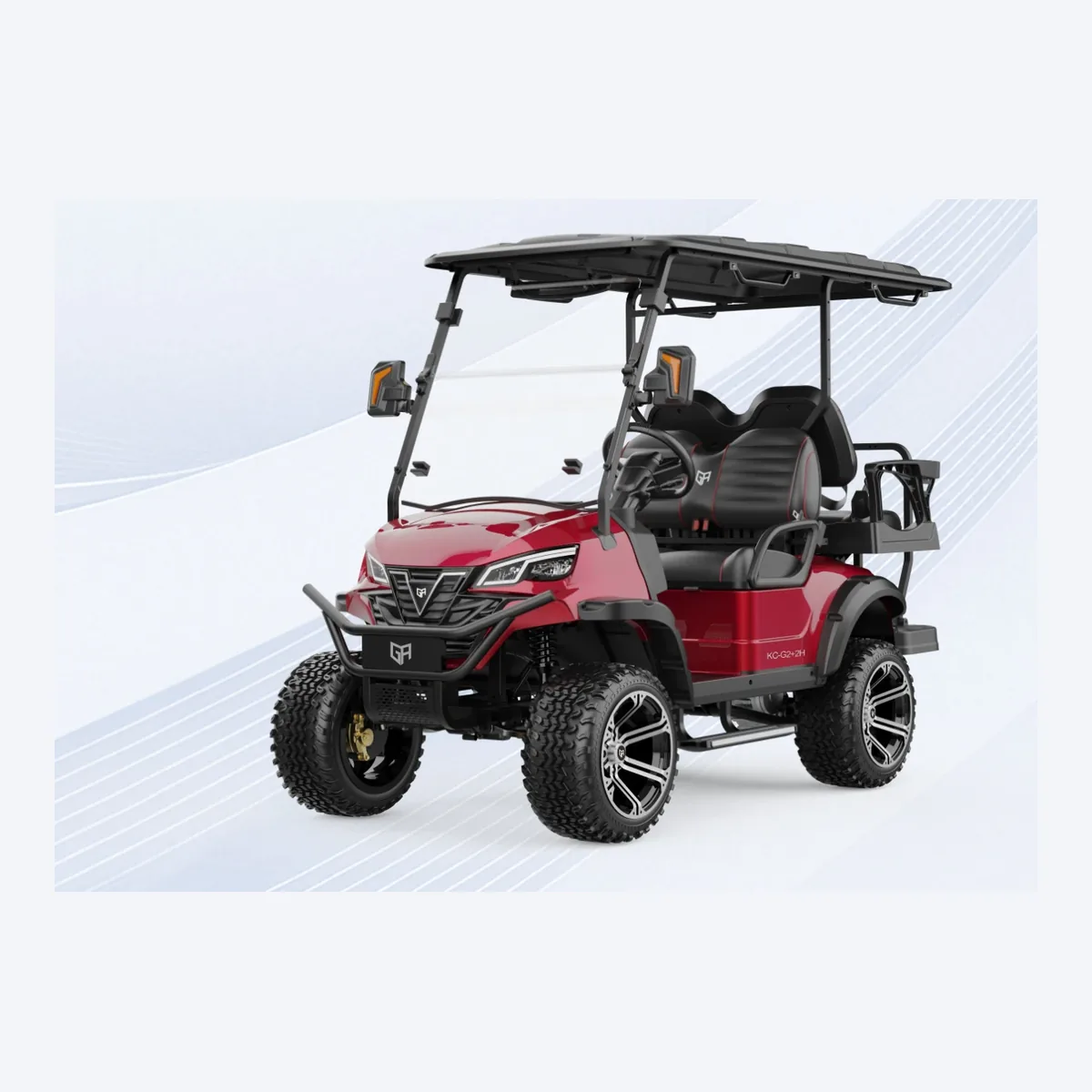
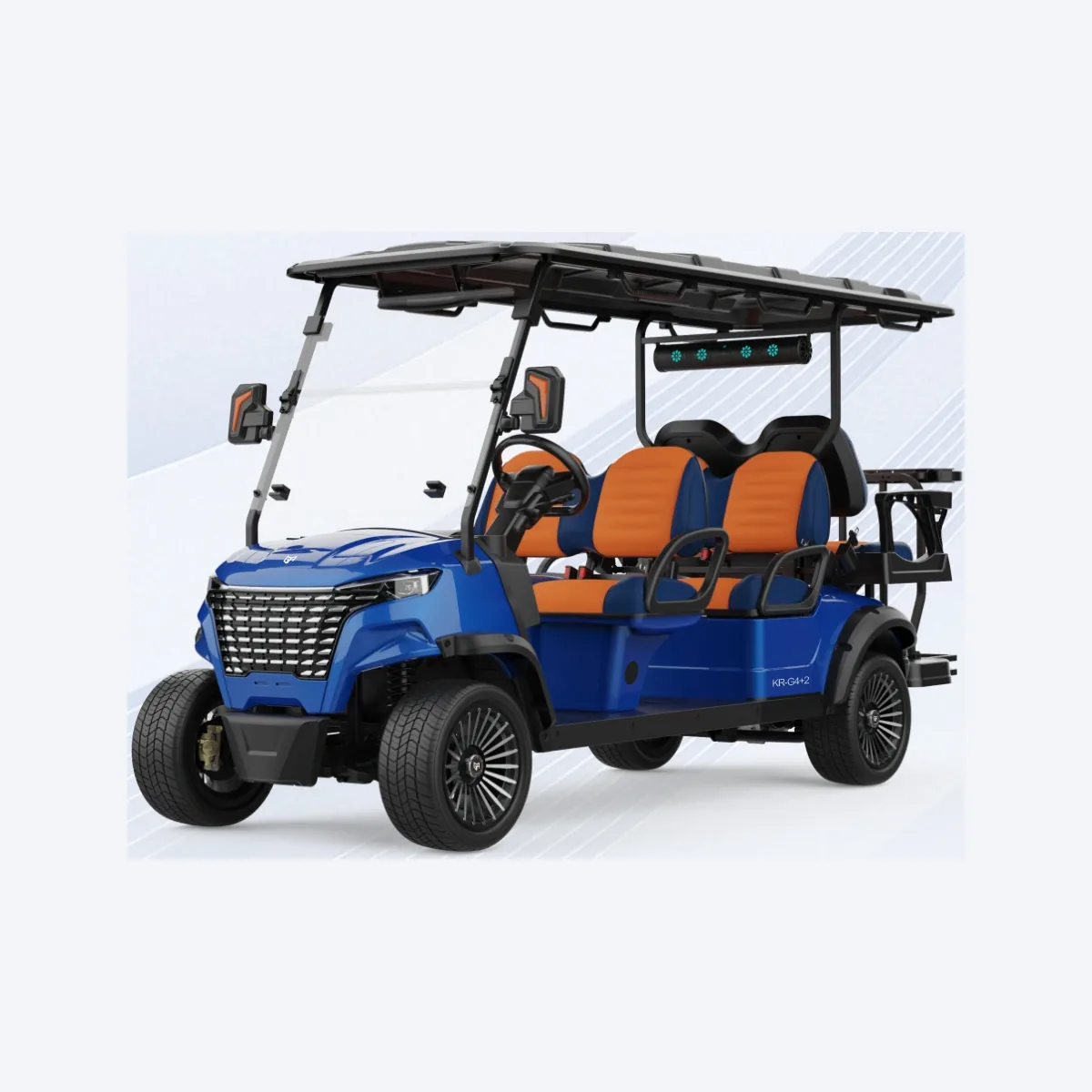
What Makes a Golf Cart Street Legal?
Street legal is a local status, not a build sheet. What authorities usually check, and how to confirm the equipment list before ordering.
Quick answer
Street legal is a local status, not a build sheet. Check 2 mirrors, lights, a horn, seat belts and 4-wheel brakes against the 48–72 V model and the local equipment list.
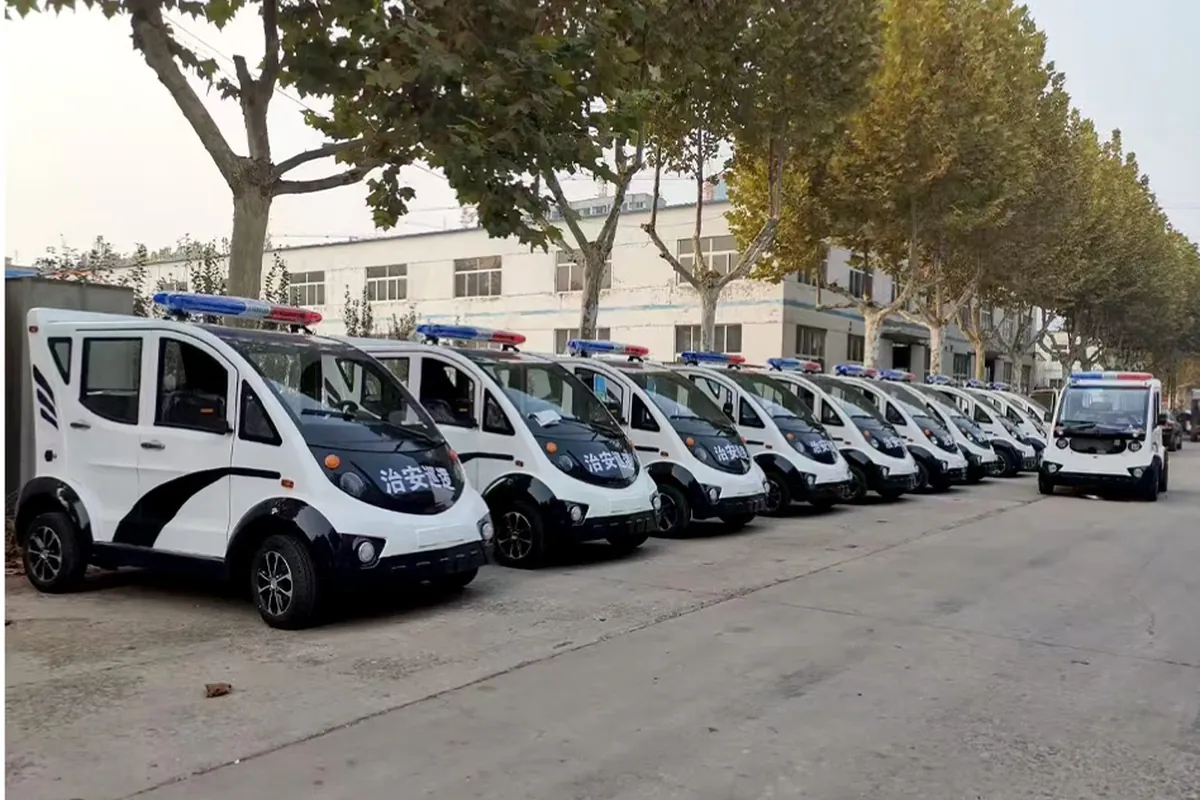
Street legal is not a build specification. It is a status granted by a jurisdiction, and it applies to a specific vehicle, in a specific place, under specific conditions. A cart with headlights, mirrors, a horn and seat belts looks road-ready, but the hardware is only one part of the answer. The same vehicle may be permitted on a residential estate road in one state and prohibited a few kilometres away in the next.
This article sets out the questions that usually decide the outcome, the equipment that commonly appears on a road-use checklist, and the documents a buyer should collect before placing an order. It is general information, not legal advice. Rules vary by country, state and sometimes municipality, and must be confirmed with the authority that will register or permit the vehicle.
What does “street legal” actually mean?
In practice, the phrase bundles several separate permissions: a vehicle category that is allowed on public roads, an equipment list that the vehicle meets, a registration or permit, insurance, and a licensed driver. A cart can satisfy three of these and still be illegal because the fourth is missing. That is why a supplier cannot declare a vehicle street legal on its own. The supplier can build to a specification and provide documents; only the destination authority can grant the status.
It also helps to separate “road” from “road”. Some rules cover all public roads, some only designated low-speed routes, and some only roads within a private community that is nevertheless regulated. The buyer should name the exact roads the cart will use before asking anyone what is required.
Which vehicle category is the cart being registered in?
Category is the first question because it drives everything else: equipment, approval route, plate, insurance class and driver licence. Many markets distinguish a golf cart, often limited to private property, golf courses and designated paths, from a low-speed or light four-wheeled vehicle, which is a road vehicle category with its own requirements. The boundary is usually drawn using seated capacity, unladen weight, motor power and maximum speed, and the thresholds differ between markets.
A six-seat resort shuttle should not be assumed to fall into the same category as a two-seat course cart. Ask the authority which category applies to the exact vehicle, with its dimensions, seat count, weight and governed speed in hand. If the answer is “none”, the vehicle is a private-property vehicle, and that is a useful answer rather than a failure.
Which equipment items are commonly required?
Road-use equipment lists differ, but they tend to cover the same functions. The table below summarises the items that appear most often and who should confirm each one. Treat it as a starting list for a conversation, not as a compliance checklist.
| Item | What it usually means | Who confirms |
|---|---|---|
| Lighting | Headlight, tail, brake and position lights, often with a defined mounting height | Registration or inspection authority |
| Direction indicators | Front and rear turn signals, visible from a defined distance | Authority and importer |
| Mirrors | At least one exterior mirror, sometimes two | Authority |
| Horn | Audible warning device within a defined sound range | Authority |
| Restraints | Seat belts or another restraint for each designated seat | Authority and insurer |
| Braking | Service brake and a separate parking brake | Inspection station |
| Identification | VIN or serial plate, and a mount for the registration plate | Registration office |
| Speed control | A governed top speed, set and documented by the manufacturer | Authority, based on category |
| Windscreen and wipers | Where a windscreen is fitted, wipers and a washer may be required | Authority |
| Tyres | Road-rated tyres in the specified size and load index | Inspection station |
Two practical points follow. First, an item that is optional on private land can be mandatory on the road; a rear-view mirror set and a horn are common examples. Second, the same item can fail inspection for a detail such as mounting height, colour or brightness, even when it is present.
What documents does the authority usually ask for?
Most registration processes start with proof of who made the vehicle and what it is. That commonly means a manufacturer’s statement of origin or an equivalent technical declaration, a specification sheet with dimensions, weight, motor power, battery type and governed speed, and a serial or VIN that matches the vehicle. The importer usually adds the commercial invoice, the customs entry and, where the market requires it, a conformity or approval document.
Ask the registration office for its document list in writing before the order is placed. A verbal answer at a counter is a poor basis for a production order, and the list sometimes changes with the category. If an approval or inspection is required, ask how long it takes and whether the vehicle must be presented before or after registration.
Why does a factory road package not guarantee road use?
Because compliance is a process, not a parts list. A vehicle can leave the factory with lights, mirrors, a horn and belts and still fail on category, brake performance, seat anchorage, identification or the absence of an approval document. The reverse is also true: an approved model can still be restricted to certain roads, certain hours or certain zones.
The honest position for a supplier is to state what the vehicle is, supply the technical documents the buyer requests, and decline to certify a market it has not tested. Buyers should be suspicious of any quotation that uses “street legal” as a specification line without naming the market, the category and the approval route.
How should a buyer verify before ordering?
Work in this order: name the exact roads and hours of use; ask the authority which category applies; obtain the equipment and document list; match that list to a model and ask the supplier to confirm each item in writing; confirm insurance availability and cost; then plan the inspection and registration steps into the delivery schedule.
Record the answers in the purchase contract as a statement of intended use and required documents, not as a promise of certification. Keep the authority’s written reply with the shipping documents. If the answer is that the cart cannot be registered, the buyer has lost a week rather than a container.
That sequence costs little and prevents the most expensive mistake in this category: buying a vehicle that is perfectly suited to the site but cannot legally leave it.
The questions that decide the order.
Can a supplier certify a golf cart as street legal?
Not on its own. A supplier can build to a specification and provide technical documents, but the road-use status is granted by the destination authority after classification, inspection or approval. Any quotation that promises street legality without naming the market and category should be treated with caution.
Is a golf cart with lights and mirrors automatically street legal?
No. Lights and mirrors are only part of an equipment list. The vehicle also has to fall into a road-legal category, carry the right identification and documents, and be registered or permitted. The same hardware can pass in one market and fail in another.
What is the first question I should ask the authority?
Ask which vehicle category applies to the exact cart, with its seat count, dimensions, weight, motor power and governed top speed. Category decides the equipment list, the approval route, the plate and often the driver licence and insurance class.
What if the cart will only be used on private property?
Private use usually removes the registration requirement, but not liability. Site insurance, workplace safety rules and internal operating limits may still apply. Confirm with the property owner, the insurer and the site safety officer before the fleet arrives.